A hospital has an address. A heartbeat does not. Between those two facts sits Biofourmis, a company trying to make the machinery of hospital care travel with the patient. Its most interesting product is the connection between a reading taken at home and someone qualified to act on it. A sensor can register trouble. Arranging the response is where the business gets complicated.
- Medical devices, predictive software, and clinical services support care at home.
- Hospitals and payers buy the system; patients enter through care programs.
- A 2024 merger and 2025 division sale sharpened the focus on care delivery.
01 / The interesting part comes after the alert
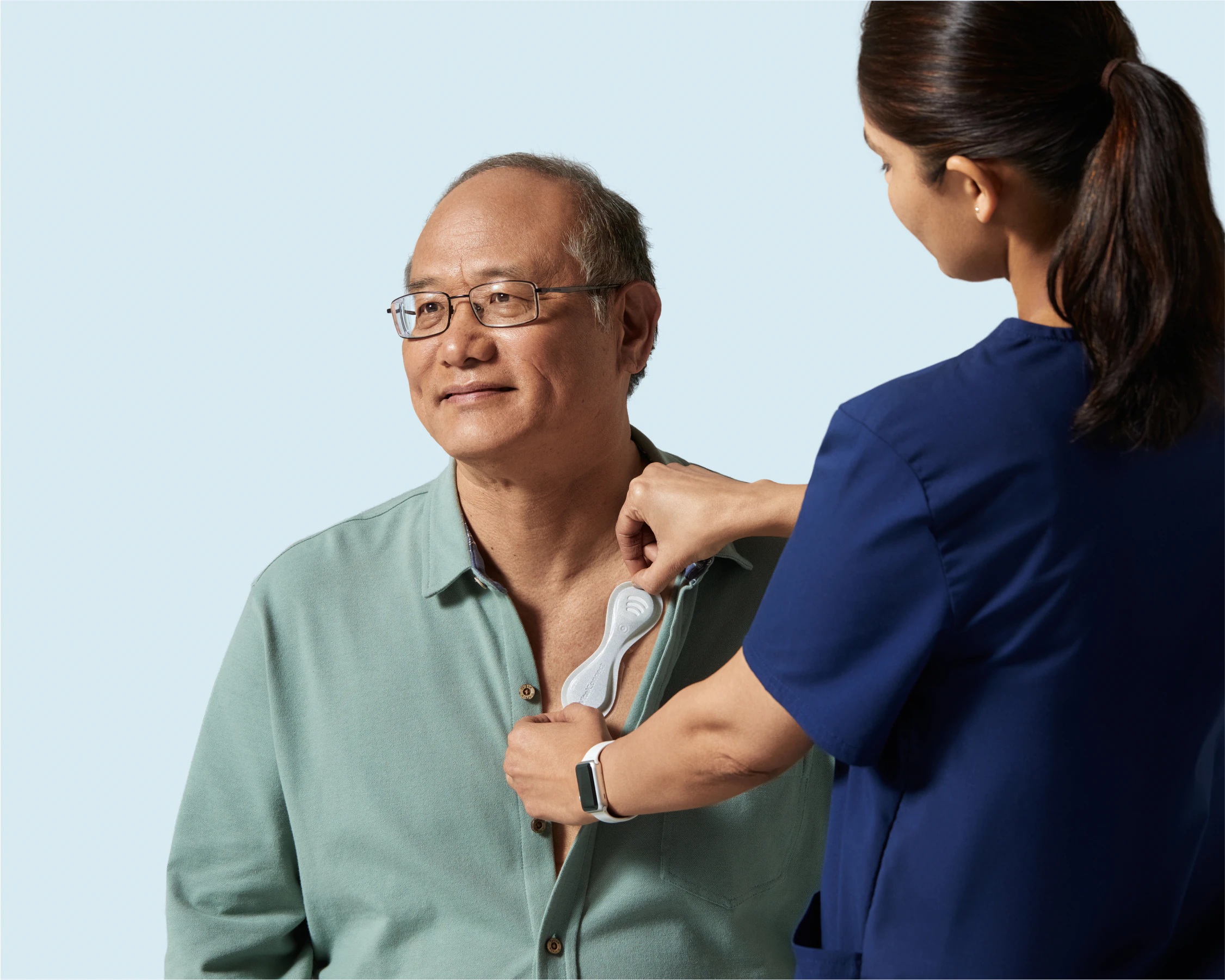
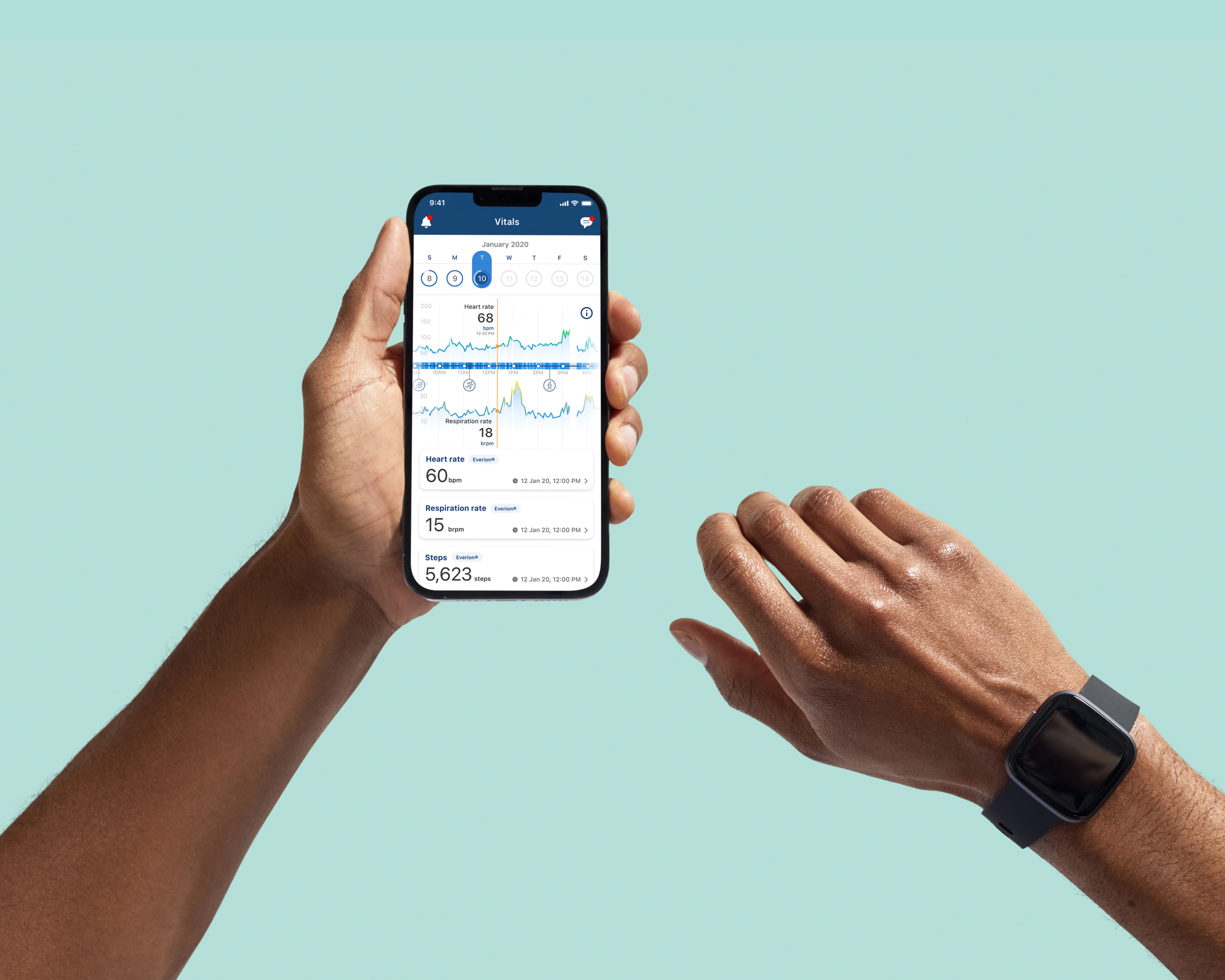
Biofourmis connects medical-grade devices to software that helps clinicians follow patients outside the hospital. Its Biovitals analytics build an individual baseline and flag meaningful departures. The distinction matters: a measurement has more value when the care team can see how it fits this particular person's pattern.
The patient has an app for care plans, symptoms, medications, and communication. Clinicians have a dashboard. Around that sits a less photogenic apparatus: coordinating appointments, arranging home services, integrating medical records, and supporting the people using the equipment. The company's expertise spans data science, clinical operations, and the logistics of getting care through a front door.
02 / A doctor enters the engineering story
The origin offers a clue. In 2014, before Biofourmis existed, Kuldeep Singh Rajput worked with cardiologist Maulik Majmudar through an MIT Media Lab REDX program developing affordable diagnostics. Rajput later left his doctoral program in Singapore and founded Biofourmis in 2015. Wendou Niu was his co-founder.
Majmudar stayed involved as an adviser, became a board member, and joined as chief medical officer in 2021 after working at Amazon. That appointment joined product management, data science, and clinical affairs under a physician. It also made the ambition explicit: move from monitoring patients to managing their care.
Regulation was part of that path. The Biovitals Analytics Engine received FDA 510(k) clearance for ambulatory physiological monitoring in 2019. That is a specific intended use. It should not be stretched into a blanket endorsement of every disease prediction or every service sold under the Biofourmis name.
- 01CollectConnected devices
- 02DetectPersonal baseline
- 03RespondClinical judgment
- 04FollowTrack the response
03 / What a hospital actually buys
The customers are health systems, hospitals, and payers. Hospital at Home supports inpatient-level care for clinically appropriate patients. Timely Discharge lets selected patients finish the last one or two days of a hospital stay at home. Other offerings cover skilled nursing needs and remote management after discharge. This is an enterprise platform with configurable services, sold through organizational agreements.
Consider AdventHealth. In January 2025, it announced plans to use Biofourmis for a program starting at Winter Park, Florida, with remote clinical support and Epic integration. Patients would continue into post-acute monitoring. The handoff is the point: leaving the hospital need not mean disappearing from the care team's view.
“We know people want to heal at home”
Maura Nazario, AdventHealth, January 2025
Lee Health's November 2024 announcement similarly combined an expanded remote monitoring service with plans for hospital-level home care. GE HealthCare added a different route to customers, announcing U.S. distribution of Biofourmis solutions in 2024. These agreements put the technology inside existing healthcare relationships.
04 / The number worth reading twice
Biofourmis highlights a 38% cost reduction associated with hospital care at home. The underlying randomized trial, published in 2020, included 91 adults at two sites. Adjusted direct episode costs were lower for the home group, which also had fewer readmissions and more physical activity.
Those details are the brakes on the headline. Patients were highly selected, and 63% of potentially eligible people declined participation. The finding supports a particular care model under particular conditions. It cannot tell a hospital what its next contract will save.
For a buyer, the useful calculation includes devices, staffing, home visits, integration, and local travel. A lower-cost episode still needs a workable operating budget. Procurement should compare the whole service against the work the hospital would otherwise perform.
05 / The company changed shape, too
Financing the expansion brought in substantial capital. Biofourmis raised $35 million in 2019 and $100 million in 2020. Its 2022 Series D reached $320 million after an Intel Capital extension. The reported valuation that year was $1.3 billion. Those figures describe financing, not customer prices or current worth.
The expansion encountered trouble. Layoffs preceded Rajput's departure as CEO in August 2023. In October 2024, Biofourmis merged with chronic-care company CopilotIQ under David Koretz. The companies described a practical customer complaint: managing multiple vendors meant repeated integrations, security reviews, and procurement.
Then, in January 2025, ActiGraph acquired Biofourmis Connect, the clinical-trials division. Care delivery and drug-development technology now had different owners. The sequence suggests a more focused business, although it does not establish why every earlier ambition changed.
There is also a governance issue. Singapore police announced financial-crime allegations concerning the former CEO and purported invoices totaling about US$16.5 million. Rajput was charged in February 2026 and intended to contest the case. These are allegations, not findings of guilt.

06 / Copy the handoff
Biofourmis operates in a crowded market. Current Health also combines monitoring, care pathways, logistics, and clinical support. The meaningful comparison is how each fits a hospital's staff, patients, and workflows. Biofourmis's combination of personalized analytics and coordinated services is its proposition; a sensor alone explains very little.
The transferable lesson is to design the response alongside the signal. Decide who reviews a change, who contacts the patient, and who can deliver treatment. Home care depends on suitable patients, connectivity, reachable clinical services, and usable equipment. Without those conditions, an elegant dashboard can become an exceptionally well-informed spectator.