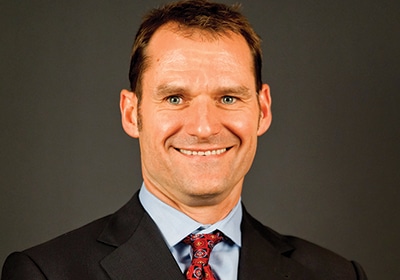
A shop window is an excellent place to display a jacket and a poor place to understand a retailer. For that, you need to go further inside, past the merchandise and into the systems deciding what gets bought, where it goes and whether anyone can find it. Bill Szlaius built his company around this less photogenic territory. The interesting part of his story is how much room he found there.
He co-founded Logic in 1997 with Prabhu Kumar. Around the turn of the century, the firm concentrated on retail as general technology services became more interchangeable. It was a consequential narrowing of the brief: fewer kinds of customers, more reasons for those customers to need help.
By August 13, 2024, when Accenture completed its acquisition of Logic, that specialist business had offices in 11 countries and served more than 150 retailers. The transaction brought approximately 800 professionals into Accenture Technology. Twenty-seven years separated the founding from the completed deal. The arithmetic is simple. The company building involved rather more moving parts.
An education in the back office
Szlaius’s preparation combined two ways of looking at a business. He earned a bachelor’s degree in electrical engineering at the University of Notre Dame and an MBA at the University of Chicago. One discipline asks how a system works; the other asks what makes it worth operating. Retail offers ample opportunities for the two to argue.
His early career put him close to both the software and its consequences. He began in Oracle’s consulting division, implementing platform solutions. He later managed the development and implementation of global manufacturing and supply chain systems at Wilsons Leather, the Minneapolis specialty retailer.
That move placed him inside the business receiving the technology. A consulting assignment has a scope. A retailer has another trading day tomorrow. The distinction is useful when considering a founder whose eventual company would make its living helping other retailers put systems to work.
It also gives his career a more concrete starting point than the familiar account of someone discovering a vast market. He had worked with the machinery already. Manufacturing, supply chains and enterprise platforms were part of his professional experience before Logic became an international consultancy. The later specialization followed ground he had actually walked.
The Retek opening
In Logic’s early years, Minneapolis software company Retek became an important customer. Retek offered packaged systems for running retail enterprises, creating a place for consultants who could make that software work within a particular business. Szlaius saw a market in the implementation work surrounding the product.
There was an awkward constraint. Retek’s customers included very large retailers, and the resulting assignments could exceed what a firm of Logic’s size could lead. Logic could contribute to those projects while the principal systems integrator carried the larger responsibility.
Oracle’s acquisition of Retek in 2005 changed the opportunity. Logic expanded its staff and took on complete implementations. Remembering the period, Szlaius put it plainly: “That’s when things took off.”
“That’s when things took off.”
Bill Szlaius, on the opening that followed Oracle’s acquisition of Retek
The useful distinction here is between knowing a technology and being ready to take responsibility for a whole project. The latter asks more of an organization: coordination, breadth and the ability to manage dependencies. For Logic, retail specialization became a platform for taking on a larger brief.
Following the next problem
Expansion can make a specialist business difficult to recognize. Logic’s acquisitions show another possibility: adding skills around the same customer. In 2014, it agreed to acquire Yomari Information Services, bringing business intelligence and analytics closer to its systems integration work.
Szlaius’s stated rationale was to make analytics central to the portfolio so clients could use their information to make better decisions. The business already helped connect complicated systems. The next question was what a retailer could learn from the information those systems produced.
A useful way to read this decision is as an expansion along the customer’s working day. Getting information into a system is one job. Making it useful to the person deciding what to buy, replenish or change is another. The purchase connected those responsibilities more closely within Logic.
It also brought a lasting leadership connection. Yomari’s founding CEO, Rupesh Pradhan, joined through the acquisition. He is now Logic’s managing director and head of operations, responsible for its daily operational and administrative functions. A transaction that added a capability also added a leader who remained part of the business.
In 2015, Logic acquired Austin-based Cascadera to strengthen point-of-sale and store systems work. The company’s range was widening around retail’s connected operations. That same year, Szlaius received an EY Entrepreneur Of The Year award for the Upper Midwest.
A broader brief for a familiar customer
By June 2022, Szlaius was describing a further change in Logic’s relationship with clients. The firm was investing in strategic consulting and organizing integrated practices around digital, merchandising, data and cloud. It was adding people who could help decide the direction of a project as well as deliver it.
His account began with concrete commercial pressures: converging shopping channels, disrupted supply chains, inflation and vacancies across retail organizations. These pressures touched different departments, but they could arrive at the same retailer at the same time. A decision in one part of the business could quickly become someone else’s implementation problem.
The distinction he drew was between completing a technology assignment to its specifications and helping achieve the commercial outcome behind it. Meeting a deadline matters. So does understanding why the client commissioned the work. A well-organized project still needs a useful destination.
Read across his career, this looks like another extension of the original retail focus. Logic was keeping its industry brief while increasing the kinds of responsibility it could take on. There is a practical attraction to that approach: people discussing strategy can remain close to the people expected to make it work.
It also changes the conversation with a customer. Questions about platforms lead naturally to questions about inventory, operating costs and service. Technology becomes one part of a decision that has to make sense to the retailer as a business.
A demonstration still has to survive the shop
Szlaius’s January 2024 reflections on the National Retail Federation gathering in New York offer a view of what caught his attention. He described a team spending time with retailers, walking the exhibition floor and attending sessions. His interests ranged from smart carts and RFID to artificial intelligence.
What makes the account revealing is its attention to application. Alongside the excitement about new tools, he highlighted discussions about selecting feasible uses for AI and keeping the scope manageable. A promising demonstration and a useful system operating across a large business make different demands.
His examples included technologies intended to improve fulfillment, stock visibility and checkout. These are recognizably retail concerns, even when the equipment doing the work changes. A customer waiting to pay has little interest in whether the delay is considered technically fascinating.
The pattern echoes the earlier choices at Logic. Start with a particular industry, then examine the tools that might help it work better. The interpretation is consistent with his published emphasis on supporting people, processes and technology together. It leaves room for curiosity without treating every new possibility as an obligation to buy.
For a founder whose business grew around enterprise systems, this is an interesting continuity. The products become more sophisticated. The question remains practical: where can the technology be made useful?
There is a discipline to leaving an exhibition with a smaller list than the one you could have made on arrival. His account gives readers a reason to think about selection as part of technology leadership. The difficult work begins when an organization has to choose where to put its time, people and money. In that setting, a clear boundary can be helpful. Logic’s history suggests a similar question at company scale: how much more can you learn about the customers you already understand? That reading connects his interest in new tools with the much older choice to specialize.
The logo changes; the work continues
Accenture announced its agreement to acquire Logic on July 16, 2024. Szlaius described the combination as a way to reach more clients and create opportunities for the team. The completed acquisition followed in August, placing the consultancy’s retail expertise within a much larger professional services organization.
In his public message after completion, he returned to his colleagues. His affectionate description of the team supplied a brief flash of wordplay: “Logicians are magicians.” It is a warmer phrase than systems integration ordinarily receives, although anyone trying to reconcile several business applications may appreciate the temptation.
The people are part of the point. Consulting companies carry much of their knowledge in the teams doing the work. A founder can choose a market and assemble capabilities; clients eventually experience those choices through the people answering questions and delivering projects.
Outside work, Szlaius’s interests include golf, downhill skiing, waterskiing, snowmobiling and family vacations. It is a fairly energetic itinerary. His public professional story, meanwhile, is notable for staying with an industry over a long period, even as the tools, organization and ownership changed around it.
The narrower bet kept producing new work: implementations, analytics, store systems, strategic advice. That is the instructive shape of his career. Concentrating on retail gave Logic a place to develop, and retailers kept presenting fresh questions. A shop window can be rearranged overnight. Understanding the business behind it takes longer.