A social network crashing under the weight of new arrivals is an awkward sort of success. On May 21, 2020, Minds briefly went down as more than 100,000 Thai users signed up in a day. For Bill Ottman, its co-founder and CEO, the interruption was evidence that an argument he had been making for years had acquired a very practical audience.
The newcomers were arriving amid concerns about Twitter and privacy. Among those opening accounts were opposition politicians, writers and government critics. Ottman greeted the influx with enthusiasm and an immediate engineering problem: Minds needed better Thai translation and localization. Some Thai developers were already helping with the code. Internet freedom had arrived with a substantial to-do list.
He also had a request for the new community: “Please make more memes about Minds”. It was a small, revealing flourish. Ottman could talk about digital rights and then ask for jokes. He wanted a network people could argue over, inspect and improve, but also somewhere they might enjoy spending an afternoon.
That combination runs through his public life. He is an advocate who operates a business, a critic of centralized platforms who must keep a platform running, and a founder who wants users to have more independence from founders. His story keeps returning to the same uncomfortable question: how much power should the host retain after everyone has arrived?
May 21, 2020. A surge, a brief outage, and an urgent need for localization.
Before the feed, a festival
Ottman’s route to social software passed through a rather different kind of gathering. Before Minds, he worked as marketing director at Gathering of the Vibes, the music and arts festival. He graduated from the University of Vermont; his professional biographies identify an English degree. The background is useful to remember when the conversation turns into a thicket of protocols and tokens.
A festival marketer has to persuade people to come together. A social-network founder has to persuade them to return. Both jobs concern attention, loyalty and the delicate business of making a gathering feel like it belongs to its participants. Ottman’s later work would turn those familiar questions into arguments about software ownership.
Minds began in 2011 and launched its web and mobile apps in 2015. Bill’s father, software entrepreneur John Ottman, became a co-founder and chairman. Mark Harding led the technical work as CTO, while Jack Ottman handled operations. Behind the broad ambitions was a small company with recognizable jobs: engineering, financing, support, keeping the site alive.
The family connection matters because this was never merely an opinion about how Facebook ought to behave. Ottman and his colleagues were assuming the less glamorous obligations of a competing service. Somebody had to answer the complaints. Somebody had to pay for the servers. An internet philosophy becomes considerably more exacting once it has an operating budget.
The audience belonged to someone else
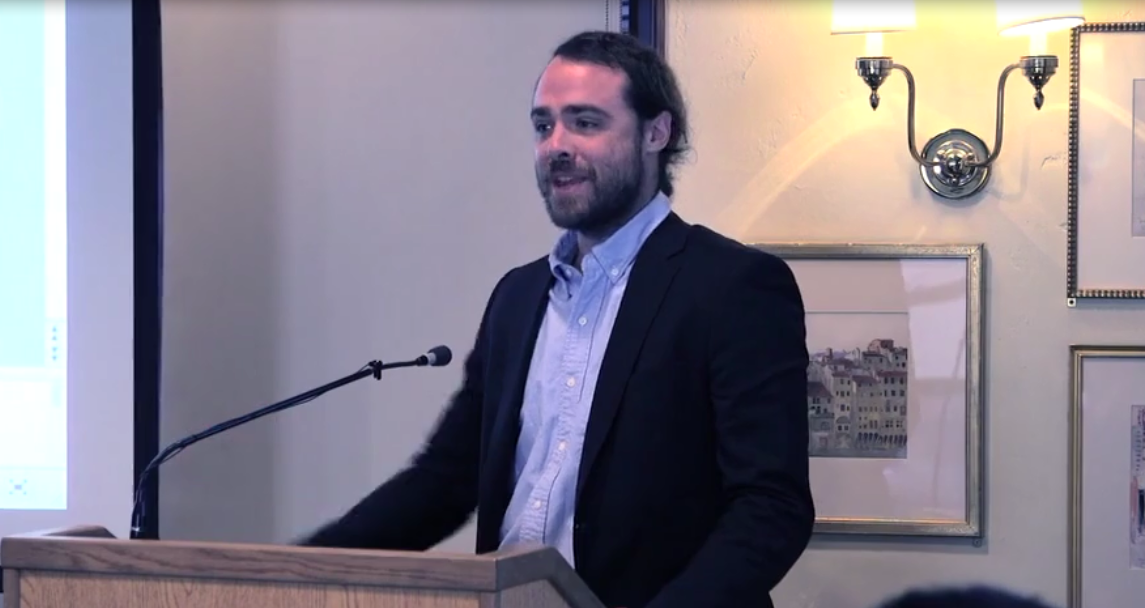
One of the formative business lessons was dependence. Minds had used Facebook pages to send traffic to its own site. When Facebook changed its algorithm, the reach fell sharply. The company described a corresponding collapse in revenue and a survival crisis. Its eventual answer was to build a community that returned directly, rather than depending on another network to deliver visitors.
Ottman has revisited that experience in interviews. The grievance is easy for any publisher or creator to recognize: acquiring followers does not necessarily secure access to them. You may cultivate an audience for years while another company retains the switch that determines who sees your next post. The followers are yours in the conversational sense. The distribution is somebody else’s property.
Minds tried a different bargain. Users could earn points, later developed into an Ethereum-based token system, and use them to promote posts. Its Boost product made distribution an explicit part of the service. The ambition was to give contributors a means of obtaining attention and participating in the network’s economy, instead of leaving every outcome to an opaque feed.
Cryptocurrency introduced its own practical constraints. In a 2018 interview, Ottman acknowledged that fully decentralized social networks were still beyond what the technology could support. He described a hybrid approach and incremental progress. Even an idealist needed working infrastructure. A beautifully sovereign post is of limited use if it never loads.
A company with a public inspection hatch
For Ottman, open source is a way of making a promise testable. Minds publishes its code, allowing developers to examine it and build from it. A user does not need to become a programmer to benefit from the possibility that someone else can scrutinize the machinery. The important change is who gets permission to look.
His work outside Minds follows a related thread. He has served as an adviser to Code to Inspire, which teaches coding to women in Afghanistan, and as a Boston Global Forum fellow. The Open Building Institute also listed him as an adviser on creating an open-source social network for participation and collaboration. These are different settings for the same interest in access to tools.
The financing offered another experiment in participation. In 2017, Minds raised roughly $1 million from more than 1,500 community investors. That meant some users could own equity as well as hold accounts. Community ownership is a phrase easily stretched into a slogan; here it included an actual investment transaction, with the ordinary risks that accompany investing in a young company.
Institutional backing followed. Medici Ventures invested in the company’s $6 million Series A in 2018. A $10 million Series B from FUTO followed in 2021. Ottman described that later backing as connected to building a decentralized, censorship-resistant network. The recurring challenge was to finance independence without allowing the mission to become something that existed only in the fundraising copy.
- 2011Minds beginsA company built around open social software.
- 2017The community investsMore than 1,500 backers join an early funding round.
- 2024Communities get their own appsMinds Networks offers branded spaces.
An open door has difficult guests
The hardest argument concerns who gets to stay. Minds’ permissive approach to speech has attracted criticism over extremist content. Ottman argues that expelling people from large networks can move them into more isolated communities, where their views encounter less resistance. That is his case for engagement. It does not remove the question of what other users must endure in the meantime.
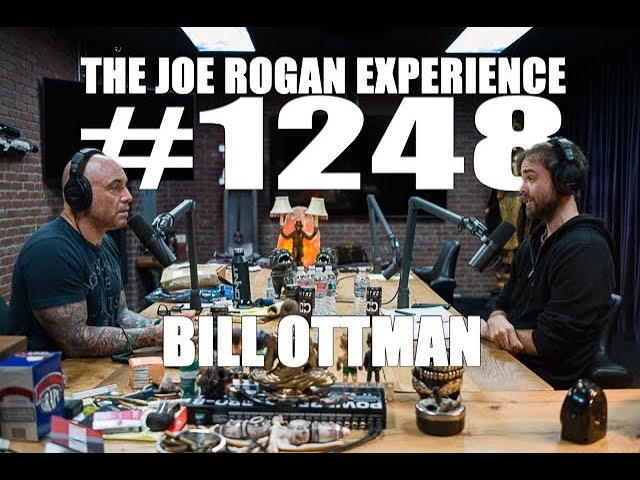
Daryl Davis became an important collaborator. The musician is known for conversations with members of the Ku Klux Klan, and Minds brought him in as an adviser in 2019. In 2022, Davis and Ottman appeared together on The Joe Rogan Experience. Their partnership made dialogue central to Ottman’s public account of how a network might handle deeply antagonistic beliefs.
In conversation with Jim Rutt, Ottman also described practical moderation: reporting tools, human review and an appeals jury drawn from 12 active users. Threats of violence were prohibited. The interesting detail is the appeal. Even a platform committed to broad expression makes decisions; the question becomes how a user can challenge one, and who has authority to reconsider it.
There is a gap between offering people a conversation and persuading them to have it. Software can supply a reply box, filtering controls or an appeal mechanism. It cannot guarantee patience. Ottman’s approach puts considerable faith in the possibility that people may change through contact. Its credibility depends on what happens in the community, far beyond the elegance of the principle.
A reply box cannot guarantee patience.
THE MODERATION DILEMMA
The price of a live audience
Ottman’s work on Fishtank takes the audience question somewhere louder. The interactive reality series involves continuous live streaming and viewer participation. His role has included its information technology; he has been identified as chief information officer. The connection may seem surprising beside the earnest language of internet freedom, but the engineering concerns are familiar: access, participation and the bill for delivering video.
In 2024, Ottman said moving Fishtank’s video infrastructure to Livepeer Studio had cut streaming costs by about half. He also said the service launched on the new infrastructure in two weeks. Those are company-reported results, but they explain the appeal in concrete terms. Open-source tools had to deliver a usable show, at a cost the operation could support.
Here the abstractions acquire a meter. Every live stream needs to reach a viewer; every extra interaction needs to work. A philosophy about handing people more control meets the ordinary impatience of someone waiting for video. It is a useful test for a founder accustomed to discussing the future: does the thing function this evening?
Lower streaming costs, according to Ottman. A reported operating result, rather than an independently audited comparison.
Give the gathering its own keys
Minds Networks, introduced in 2024, brought the ownership argument into a service for creators, businesses and communities. Customers could launch a branded community app on their own domain, with their own terms and content policies. The product gave Ottman a more specific proposition than asking the entire world to join one alternative social network.
It also returned him to the problem of reaching an audience. A creator’s community might want its own home, rather than a corner of a general-purpose feed. In this version of the business, Minds supplies the software for the gathering. The customer decides what kind of gathering to hold. The difference has consequences for branding, rules and the relationship with members.
Through 2025, Ottman continued discussing privacy and decentralized media in long-form interviews. His public manner also contains occasional impatience with the conventions of his own industry. On LinkedIn, he called the platform “socially acceptable spam”. It is a fairly economical review from someone whose professional life depends on persuading people that online communities can work better.
The Thai arrivals, the community investors, the moderation appeals and the streaming bills belong to one extended experiment. People need a reason to arrive, enough confidence to participate and some say over the terms of belonging. Ottman has spent years trying to make those expectations part of the machinery. The host still has work to do. His guests would like a set of keys.
Follow the conversation
Public profiles, longer conversations and further reading.