The useful observation arrived in the least romantic part of the restaurant business: watching what people ordered next. At Billy's, the American-style bistro Bill Dessel owned in Barrington, Rhode Island, a guest might begin with a sweet vodka cocktail and then retreat to light beer. The switch kept repeating. The customer was not abandoning the evening. The customer was editing it.
Dessel saw a gap between the full-strength cocktail and the familiar lighter option. He had spent years building brands and making products for other people. The restaurant, which he later described as a spontaneous purchase, gave him an unusually honest research lab. Nobody at the bar had been recruited for a focus group. They simply revealed the compromise with their wallets.
His proposed answer was KEEL: a vodka at 23.8% alcohol by volume, rather than the roughly 40% common to the category. The number was the product, but it was also the beginning of a long explanation. Dessel and his longtime friend Tom McGowan developed the idea for two years, then brought in former New England Patriots offensive lineman Matt Light. Three Rhode Islanders had a bottle. Now they had to persuade several systems that the bottle belonged.
01 / Before the bottleA career assembled sideways
Dessel's résumé reads like several careers that agreed to share a name. He studied economics at Boston College, where he met McGowan, and earned his law degree at New England School of Law. He began at Cookson Group as an attorney and Corporate Development Manager, coordinating acquisitions in the United States and Europe as the multinational business grew past $4 billion in revenue and entered the FTSE 100.
He later worked for a global law firm and helped open its first London office. Then came the factory floor. As president of Cowan Plastics and American Assembly, he oversaw work for brands including Titleist, Oral-B/Gillette, Boston Scientific and Mosquito Magnet. The Rhode Island Manufacturers Association named him Manufacturer of the Year in 2004. At FatHead, the sports-graphics company, he led legal work around acquisitions and recapitalizations, secured licenses, and worked on retail expansion.
The apparent zigzags carried useful equipment. Corporate development taught him how a transaction gets made. Law taught him where a promising idea collides with a rule. Manufacturing made quality and repetition concrete. Licensing made distribution visible. A restaurant placed him a few feet from the final customer. KEEL would demand every one of those lessons, sometimes before lunch.
02 / The category problemA product without a drawer
New products are often described as if invention were the hard part. KEEL's more stubborn problem was classification. Dessel recalled the government's response with admirable compression: “You can't make a light vodka, it doesn't exist.” The objection became fuel. He wanted to create not merely a brand but a new category of vodka.
The federal permit and label process took two years. The founders also wanted ingredients and nutrition information printed on every bottle, an unusual request in spirits at the time. Approval required persistence inside a bureaucracy whose forms had been designed for categories already on the shelf. KEEL launched in Rhode Island and Massachusetts in 2013 with its argument in plain sight.
“The government basically said you can't make a light vodka, it doesn't exist. That was our motivation.”Bill Dessel, 2019
Then came distribution, a maze with fifty local dialects. Dessel learned that a tasting permitted in a Massachusetts liquor store might not be permitted in Rhode Island. Distributors needed reasons to keep a young label in mind. Retailers needed to know where to place it. Bartenders needed a sentence short enough to repeat during a busy shift. Consumers needed to understand why a bottle of vodka carried an unfamiliar proof.
The founders self-funded the first year. Dessel later argued that the choice bought them learning time: which events worked, how customers distinguished the bottle, and what each market rewarded. They were told the first inventory could take two years to sell. According to the company, it disappeared in about three months. By 2019, KEEL said it had reached eleven states.
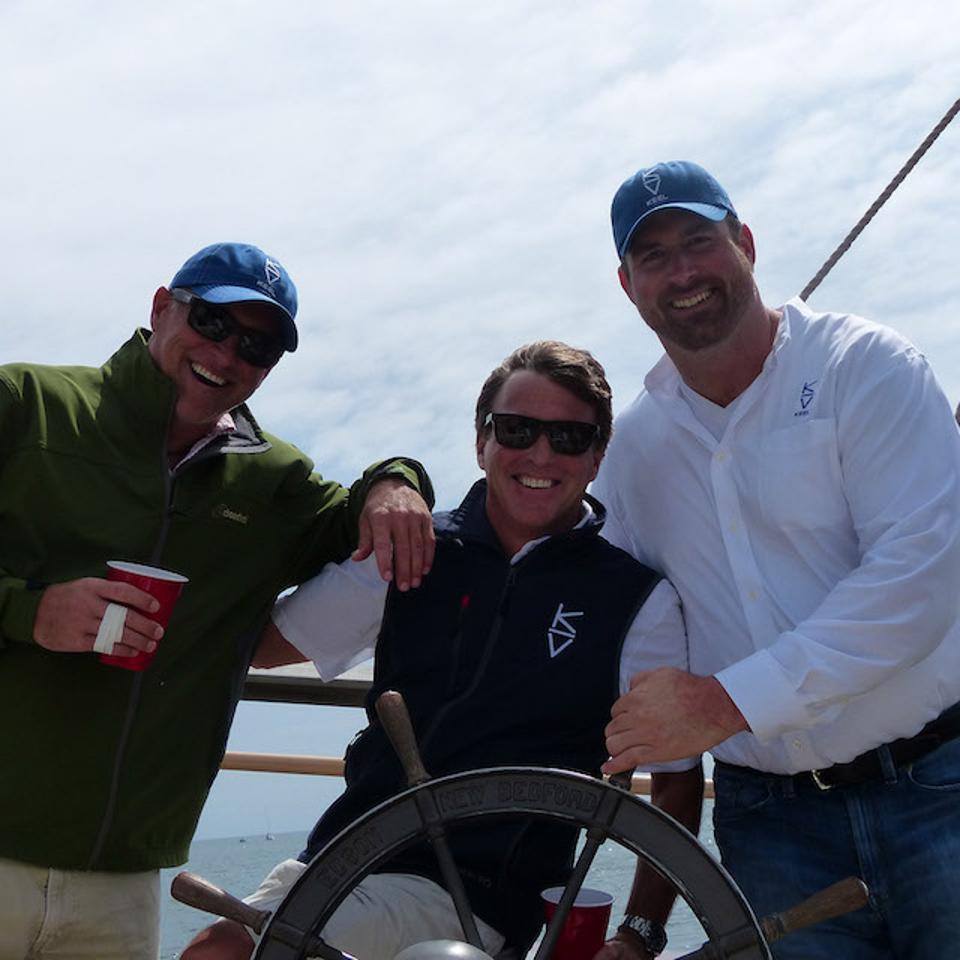
03 / The editWhen a lovely story meets a shrug
KEEL came dressed for the coast. The bottle resembled a sailboat. Nautical flags spelled the name. Early imagery leaned on sand, sun and sailing, while the keel itself offered a tidy metaphor for balance. It was coherent, local and a little too clever for its own good.
Market research showed that customers responded to the active-life positioning but were not especially moved by the sailing connection. Dessel did what founders regularly advise and less regularly enjoy: he revised his own idea. “Learn to let go of some of your original vision for a new reality,” he wrote in a 2014 account of launching a spirits brand.
Watch the second order
Behavior at Billy's revealed a compromise that a survey might have missed.
Buy learning time
Self-funding year one let the team test markets before adding outside pressure.
Treat the story as a draft
The sailing idea stayed, but customer research changed what led the pitch.
Give critics one turn
Dessel's “one and done” rule kept the company from wasting days on immovable skeptics.
This is the most portable part of his story. A brand is a hypothesis with attractive typography. The founder can know why every color and syllable is there, while the customer remains gloriously unburdened by the explanation. Editing the story is not disloyalty. It is what happens when curiosity defeats vanity.
Dessel had another metaphor for the early company: a garage band whose first single had reached the radio, though the Top 40 remained distant. He described year one as scenery outside a car traveling 90 miles per hour, an exciting blur with no pause to appreciate it. Both images contain the same modest admission. Momentum can feel like arrival if you do not look at the map.
04 / The long turn homeThe transaction as homecoming
The restaurant chapter closed in June 2016, when Dessel sold Billy's after seven years to focus on KEEL's expansion. The bistro had collected five consecutive Best of Rhode Island citations and, in the 2015 OpenTable ranking cited by his ACG biography, placed first in Rhode Island and eighth in New England. The accidental purchase had become both a respected business and the place where his next one began.
Dessel continued to bring his legal experience to privately held companies and served on the board of the Rhode Island Hospitality Association. In 2020, when the hospitality trade was under extraordinary pressure, he started the Lift Your Spirits campaign with support connected to KEEL and the National Restaurant Association Educational Foundation. The gesture fit a career in which restaurants were not an abstract sales channel. He had spent years paying the bills, hiring the staff and watching the room.
In June 2024, Newport Craft Distilling acquired KEEL. The buyer added the bottle to a Rhode Island portfolio that included White Squall vodka and gin, Sea Fog whiskeys and Thomas Tew rums. The deal also promised a piece of unfinished geographic business: KEEL production would return to Rhode Island.
“It has always been a dream of ours to produce our product, that was conceived in Rhode Island, in our home state.”Bill Dessel, announcing KEEL's 2024 acquisition
For a founder trained in acquisitions, the poetry is almost suspiciously neat. The brand was conceived by Rhode Islanders, borrowed its language from Rhode Island waters, found its first customers in Rhode Island, and finally gained a manufacturing home there through a transaction. Dessel said he was eager to work alongside Newport Craft and continue introducing KEEL to new consumers.
Thirteen years separated the idea from the acquisition. In that span, the visible object hardly changed: a clear bottle, a number, a name. Everything around it required translation. Regulators had to approve it. Distributors had to remember it. Stores had to locate it. Customers had to recognize the occasion for it. The real company was the chain of explanations connecting those people.
That chain explains why Dessel's odd assortment of jobs matters. He did not arrive at spirits after a straight apprenticeship in spirits. He arrived knowing how factories repeat, lawyers classify, deals close, restaurants breathe and customers change their minds between round one and round two. The category was new. The work was strangely familiar.
There is a founder lesson hiding beneath the nautical flags. A fresh idea may begin with noticing what everyone else accepts as normal. Building it means accepting that none of the surrounding systems will reorganize themselves out of politeness. You teach, revise, wait, and teach again. If the course changes, keep the useful parts of the boat.