Before Bill Crager helped build software for financial advisors, he wanted to write a novel. After college, while contemporaries headed for Wall Street, he waited tables, spent time in bookstores and tried to finish a manuscript. He came close, then took a job. Years later, the abandoned book still bothered him. But the attempt had supplied a useful education: how to begin when nothing exists yet.
That is an unusual qualification for a financial technology executive. It also makes his return to company building rather less surprising. In May 2026, two years after stepping down as Envestnet’s chief executive, Crager became founder and CEO of Field. His new subject was familiar: financial professionals surrounded by useful technology, doing too much of the work of making it cooperate.
A lifetime achievement award had arrived in 2024. Apparently, the lifetime still had appointments.
The internet was the opening
Crager graduated from Fairfield University in 1986. His undergraduate degree combined English and economics; he also earned an MA from Boston University. Before Envestnet, he was managing director of marketing and client services at Rittenhouse Financial Services, an investment manager affiliated with Nuveen. He understood the business from the side where products, clients and explanations had to meet.
In 1999, Crager joined Jud Bergman, Brandon Thomas and Jim Lumberg in founding Envestnet. Its public launch followed in 2000, with a software service for wealth management and two major custodial partners. The early company had about 50 employees, a Chicago headquarters and a New York office. Connecting the industry was an operating assignment from the beginning.
The timing mattered. Investing was becoming more concerned with the construction of a whole portfolio, while the internet offered a new way to distribute tools. Crager and Bergman saw room for independent advisors to deliver broader advice. An open platform could put investment offerings beside one another and reduce the manual effort required to use them. The commercial opportunity came from helping an advisor do more for a client.
That opportunity arrived with disagreeable weather. The dot-com collapse, September 11 and, later, the financial crisis made capital scarce and confidence fragile. Crager has described those periods as formative. The case for advice was particularly visible when people had difficult decisions to make. A product built to support the relationship had to remain useful when the relationship was under pressure.
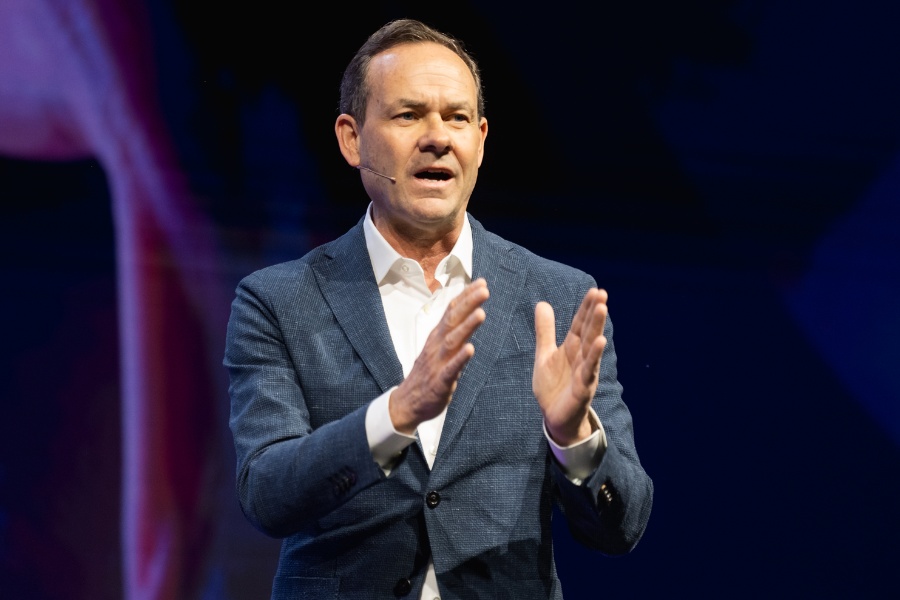
A platform becomes a profession’s plumbing
Crager became Envestnet’s president in 2002. The company’s development included acquisitions as well as its own products: Portfolio Management Consultants in 2001, followed over the years by businesses that brought more of an advisor’s working day into reach. Integration was part of the company’s founding strategy. The list of things worth integrating kept growing.
Financial planning illustrates the change. At the 2020 Technology Tools for Today conference, Crager recalled how Envestnet’s encounters at the event had helped lead to Tamarac and FinanceLogix. The previous year’s conference had featured a MoneyGuide partnership; Envestnet bought MoneyGuide for $500 million a month later. The conference floor could double as a map of the company’s future.
By 2023, he was describing a connected financial life that reached across investment management, insurance, lending and planning. The intended benefit was practical: a fuller picture of the client, less friction for the advisor, more room to tailor the service. Every additional capability widened the promise. It also made the question of how everything fitted together harder to avoid.
Historical Envestnet scale cited in Field’s biography of Crager. These figures describe the platform, not his personal assets or Field’s size.
In October 2019, after Bergman’s death, Crager became interim chief executive. His permanent appointment followed in March 2020. The partnership that had shaped his working life now belonged to the company’s history; the responsibility for leading the business remained immediate. His tenure connected the founder’s long view with the demands of running a public company.
Putting the relationship into words
The novelist did eventually get his name onto a book. In 2016, Crager and Jay Hummel published The Essential Advisor: Building Value in the Investor-Advisor Relationship. Jean Chatzky wrote the foreword. Its subject was a question software companies cannot settle with a product demonstration: what, precisely, does an advisor contribute that a client should pay for?
The book examined the client’s perspective, the effect of digital services and the need to communicate value clearly. Its framework connected the profession’s changing economics with the relationship across the desk. Technology could help an advisor serve people better; the advisor still had to make that contribution understandable. Owning useful tools did not automatically explain the bill.
One chapter treated discussions about fees as an opportunity to clarify the service and deepen a relationship. That is an appealingly direct approach in a business with a generous allowance of terminology. A client should be able to understand what is being done, why it matters and how the work relates to their circumstances.
Crager’s writing about leadership took a similarly human turn. In 2016 he argued for giving teams room to pursue their own vision. The following year, he wrote about attracting younger people into financial services as both future colleagues and future clients. A firm’s ability to change depended in part on whom it welcomed through the door.
“I think about leaving a mark.”
Bill Crager, on what success means to him, 2017
The award was followed by another start
Envestnet announced in January 2024 that Crager would leave the CEO role effective March 31. Beginning in April, he would be a senior advisor, concentrating on clients, partners and strategic initiatives. Board chair James L. Fox became interim CEO. The change ended a chapter in day-to-day leadership that had begun a quarter-century earlier.
That summer, Crager received InvestmentNews’s Lifetime Achievement award. Envestnet also agreed to a roughly $4.5 billion acquisition by Bain Capital, with strategic partners including BlackRock, Fidelity Investments, Franklin Templeton and State Street Global Advisors. The award and transaction offered two different measures of how far the original enterprise had travelled.
He stayed involved with the industry. In March 2025, FIDx announced his appointment to its board. Chairman Paul Hondros described Crager’s involvement with the company’s strategy from its early days. The insurance technology business addressed another connection advisors needed to make: bringing insurance solutions into the financial planning process.
In October 2025, Crager joined iAltA Holdings’ founding team. Backed by WestCap, the company was building infrastructure for private markets. Its network included Scott Ganeles, Bill Sherman and Laurence Tosi, people with experience in capital markets systems and investment technology. Crager brought the perspective of someone who had spent decades watching how those systems met an advisory practice.
The advisor has become the adapter
Field emerged in May 2026 from two iAltA acquisitions, BridgeFT and Precept. BridgeFT supplied multi-custodian data connectivity; Precept brought technology for connecting systems across the wealth industry. Together they formed the foundation for Crager’s next attempt to make a fragmented working environment easier to use.
Asked why he was taking another CEO job, he reached for baseball: “When you get called to the plate”. The problem had become approachable, in his view, because the technology had developed far enough. His proposal was to build a common data foundation beneath the systems firms already operated, including those handling public and private investments.
Field describes its work in three stages: translating records into a common language, understanding the combined information and putting it to work. That is a useful way to understand the ambition without a tour of the machinery. The firm wants an advisory practice to see its own information together and act on it more readily.
The measure of this venture will be what happens inside a working firm. Does the information agree? Can people use it with confidence? Does bringing it together release time for the client? Those are less theatrical questions than a prediction about the future of artificial intelligence. They are also questions an advisor can test.
Back to the household
By October 2026, Crager was explaining Field through an ordinary naming problem. A person might appear under a first name in one system, an account number in another and a family name elsewhere. The advisor had to reconcile the pieces. In his telling, professionals hired to provide advice had acquired an additional job as the industry’s integration department.
His proposed unit of attention is the household. Accounts belong within that larger picture, alongside the family’s plans and obligations. Artificial intelligence, he argues, becomes more useful when it can work across the information rather than encounter it in disconnected compartments. That remains his thesis for the business, with execution still the work ahead.
For all the discussion of data, his explanation returns to familiar human concerns: protecting what someone has earned, making decisions and finding security. In conversation with Tony Sirianni, he acknowledged their shared Bay Ridge, Brooklyn upbringing. The practical concern running through his argument was the relationship between hard-earned money and the person responsible for it.
There is a quieter side to his public life, too. Crager and Paul Hondros have owned racehorses together. The Crager family’s Villanova Queen won the Kensington Palace Handicap at Royal Ascot in 2023, with his son William there for the victory. Crager’s own account of racing stresses tradition and respect for the horse. It is an interest with its own demands on patience and judgment.
The next company now has a name, a team and a particular problem to solve. For Crager, another beginning means returning to the work that runs through his career: making the parts fit well enough that someone else can do their job. The unfinished novel remains an early chapter. There is plenty on the current page.
Continue the conversation
- Field: Crager’s current company ↗
- Envestnet on YesPress ↗
- Bill Crager on LinkedIn ↗ · His historical Twitter/X profile ↗
- Watch: Alt Goes Mainstream conversation, 2025 ↗
- Watch: Tony Sirianni’s Field interview, October 2026 ↗
- Watch: Envestnet Advisor Summit coverage, 2019 ↗
- Read: The Essential Advisor ↗
- Crager’s articles at WealthManagement.com ↗
- The 2017 conversation about writing and work ↗
- The 2024 career retrospective ↗