The first thing that failed at Beth Interactive was the plan. In 2010, Beth Hatcher was directing digital marketing for a hospital north of Chicago. Her husband had received a physics postdoctoral fellowship in Bochum, Germany, and Hatcher wanted to go with him. She asked her boss whether she could keep doing the job remotely. The answer was no.
Then came the useful qualification: she could keep doing the work if she became a vendor. It is the sort of bureaucratic distinction that sounds ridiculous until it changes a life. Employee from Germany? Impossible. Outside firm from Germany? Send an invoice.
Hatcher formed Beth Interactive and worked alone from a dining-room table, seven time zones from her first client. She hired one person in 2011. The family returned to Chicago in 2013. The little vendor arrangement widened into copywriting, website work, analytics and email. Then the firm narrowed again, intelligently, toward a corner of the market where Hatcher already spoke the language: healthcare fundraising.
The company began because an employer changed the contract, not the work. Beth Interactive has spent the years since changing the work, not merely the contract.The useful accident at the center of the story
The donor is not a demographic
Beth Interactive now describes itself as a digital-first philanthropy and communications agency. In ordinary English, it helps nonprofits decide whom to ask for money, what to say, where to say it and what to learn from the answer. Its customers are healthcare foundations, hospital systems, universities, independent schools and other nonprofits. The public client list includes AdventHealth Rocky Mountain Foundation, Avera Foundation, Boca Raton Regional Hospital Foundation, CommonSpirit, Essentia Health Foundation, John Muir Health Foundation, the Medical University of South Carolina and Operation Smile.
The service menu looks familiar at first: annual giving, email marketing, strategic communications plans and web audits. The distinction is what happens between those boxes. A campaign can begin with donor records, become a segmented appeal in print and email, pass through custom code and deliverability testing, and return as a report naming who clicked which link. That click can become a clue for annual giving, major gifts or planned giving.
That last turn is the company's real product. Plenty of firms can design an attractive email. Plenty of consultants can hand over a strategy deck. Beth Interactive positions itself in the untidy middle: the people who make the thing are close enough to the data to change the next thing. Its strategic planning starts with roughly five hours of discovery and ends in an average 79-slide presentation plus a 24-month calendar. Its web audits average 99 slides. Thoroughness is both the method and, occasionally, the joke.
The numbers got much louder
In 2024, the agency reported helping 54 clients raise more than $26.1 million. It sent 31.5 million emails, built 1,709 email campaigns and produced 177 annual appeals. In 2025, the fundraising figure rose 67 percent to more than $43.6 million. Beth Interactive also reported 3,804 email campaigns, 821 appeals, 17 new clients and work across 32 states.
These are company-reported totals, and they describe work done on behalf of clients, not Beth Interactive's revenue. But they reveal the shape of the operation. This is not a donation platform taking a percentage at checkout. It is a labor-heavy service business: fundraisers, writers, designers, project managers, email specialists and analysts acting as an extension of an advancement office.
The newest service makes that logic unusually clear. Its Mid-Level Donor Retention Analysis looks for supporters who once gave meaningful amounts and then slipped away. Beth Interactive says the analysis surfaced more than $8.4 million in lapsed revenue in 2025, while identifying people suited for recapture, cultivation or an upgraded ask. The insight is pleasingly unfashionable: before purchasing a new audience, inspect the one already in the database.
The agency says combined print and email outreach has increased giving 74 percent more than print alone across its campaigns. It reports average year-over-year growth of 23 percent for year-end appeals and a 3:1 average return. Email donors stewarded for a year gave an average $130 more, according to the company. The point is not that one channel defeated another. The channels performed better when they shared a memory.
What does all this cost?
Beth Interactive does not publish a current rate card. It scopes plans and implementation, then provides an itemized quote. Public nonprofit filings offer a partial window: ten reported fee-for-service engagements from 2021 through 2024 totaled roughly $1.8 million, with individual fees ranging from $8,000 for email consulting to $435,000 for philanthropy marketing. An older agency directory listed a $5,000 minimum project and an hourly range of $100 to $149.
Those figures are historical examples, not today's menu. Nine of the ten filings did not report a directly associated amount raised, so they cannot support a neat agency-fee-versus-donations calculation. Consulting, retainers and multiyear infrastructure work rarely fit into one campaign total.
The more useful buying question is whether a nonprofit needs a deliverable or a working partner. A small team might hire Beth Interactive to run an appeal from strategy through the final analytics report. A larger advancement office might use only copy, segmentation or an audit. The agency's public materials repeatedly offer both models. It can own the whole sequence or take one stubborn piece.

The parts worth stealing
The first is the closed loop. Do not separate the people who write the appeal from the people who read its results. Put them in the same meeting. Ask what changed in the donor file, not just whether the email beat a benchmark.
The second is year-round stewardship. Beth Interactive treats an appeal as one moment in a sequence of newsletters, thank-yous, events and personal signals. An annual-giving program is healthier when the donor hears from the organization before the organization needs something.
The third is multichannel restraint. Use print and email together when the audience responds to both, not because every campaign needs every channel. Test subject lines, message, images and timing. Personalize beyond a first name. Fix the donation page before paying to drive more people toward it. And keep a report legible enough that the next decision is obvious.
This approach has conditions. It needs usable donor data, permission to segment and a client willing to act on uncomfortable findings. It is a poor fit for an organization seeking self-serve software, instant scale with no internal participation, or a generic campaign copied across unrelated audiences. The 79-slide plan is valuable only if someone owns month one.
A company with a paper colleague
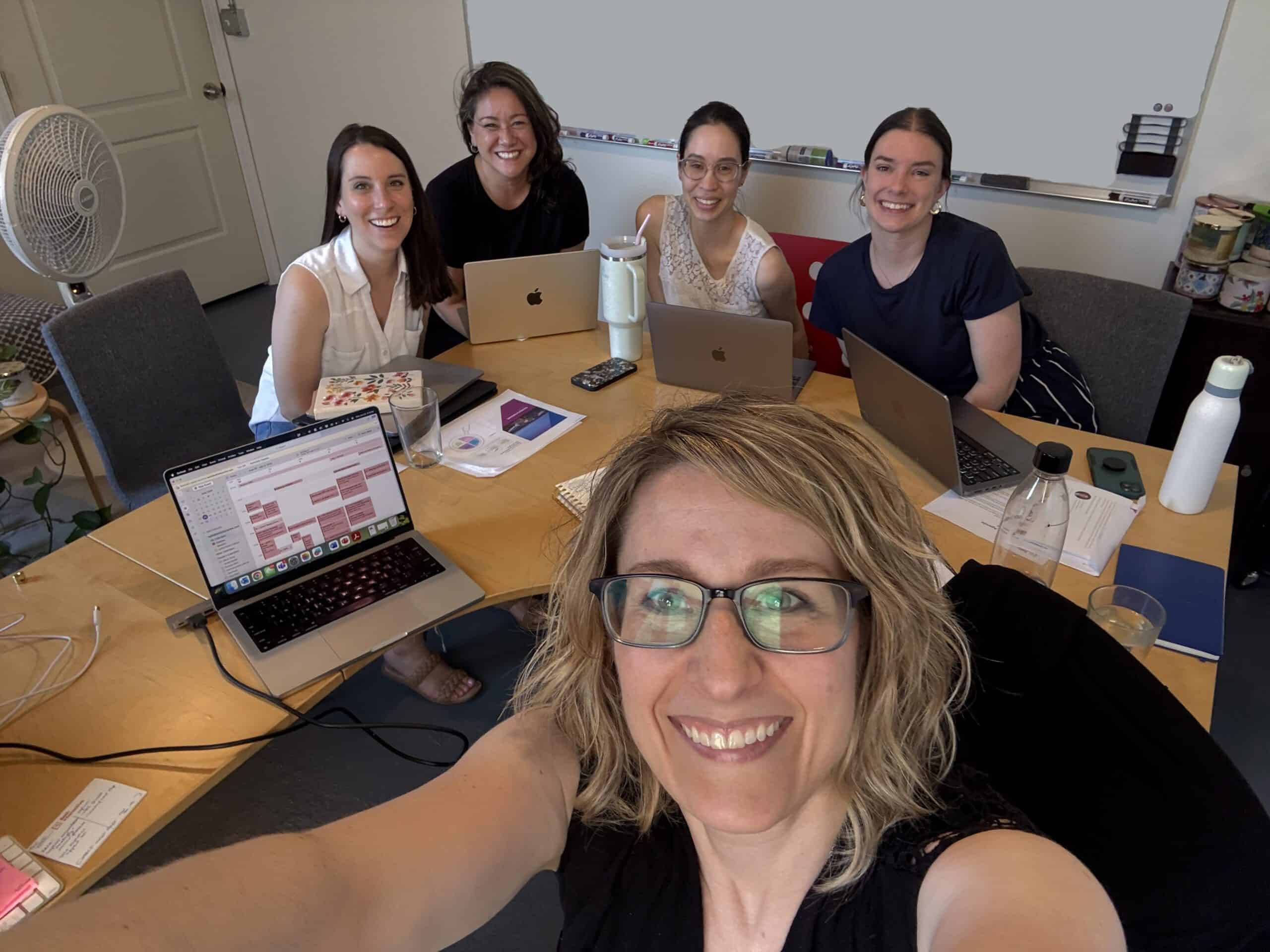
Beth Interactive has grown to 20 people, distributed across Chicago and several states. The team meets in person twice a year, maintains a "nerdy" group chat and uses midweek GIF check-ins. When a colleague missed a retreat, the others made a full-size paper version of her. A shark has become an informal mascot. The company claims 3,729 jokes a day, a statistic that has not been subjected to the same rigor as its email reporting.
The playfulness matters because the work is precise and repetitive. In 2025, 3,804 campaigns meant 3,804 rounds of details: names, links, codes, devices, approvals, segments, deadlines. The agency says it tests emails on 72 mobile and desktop environments. This is where the brand promise lives, less in a grand theory of generosity than in the refusal to let the donate button break on somebody's phone.
Sixteen years ago, Beth Hatcher's request to work differently was rejected. What changed her mind was not a flash of founder mythology. It was her boss offering a narrower door. Hatcher walked through it, kept the client, and gradually built a company around noticing doors that other people miss: the lapsed donor, the unclicked link, the message sent at the wrong hour, the old print letter that works better when an email arrives beside it.
The story began with distance. The business grew by paying very close attention.