Being second is an awkward distinction. First gets the origin story. Third gets to call the previous two an era. Second must walk into a room where everyone remembers how the furniture was arranged, then decide which pieces deserve to stay. Bernard Zovighian took that seat at Edwards Lifesciences in May 2023, following Mike Mussallem, who had led the company since it became independent in 2000.
The succession had been announced months earlier. Zovighian became president in January, with the chief executive role to follow at the annual meeting on May 11. There was time to work alongside Mussallem and the board before the handover. At a company accustomed to one chief executive for more than two decades, even the calendar made an argument for continuity.
He arrived with experience that made the appointment intelligible to people inside the business. He had joined Edwards in 2015, run an established division, then taken on a newer one. Before that came almost 20 years at Johnson & Johnson. His career had involved learning organizations from within, across functions and countries, long before he was asked to put his own stamp on one.
The interesting question was how much of a stamp the place needed. A successor can spend a fortune proving that a new person has arrived. Zovighian chose a more exacting problem: deciding which parts of an inherited organization should anchor its next decisions.
A résumé with moving boxes
His education combined science and business, with two master’s degrees from universities in Marseille, France. Those subjects offer different habits of thought: how something works, and how an organization gets it made. The combination is a useful starting point for a career spent moving between technical work, commercial judgment and responsibility for people.
At Johnson & Johnson, where his tenure ran from 1995 to 2014, he held increasingly senior roles, including regional leadership outside the United States and worldwide responsibility for a division. The public career record describes a long apprenticeship inside a large institution. There was considerable variety within that apparently steady employment history.
A transfer changes more than the view from a window. It changes whose judgment a manager relies on, which assumptions survive a meeting and how quickly authority translates into trust. For an executive moving across national borders, a familiar job title can conceal an unfamiliar job. The organization chart is usually the easiest document to translate.
His later official biography emphasizes a global outlook and a team approach. Those are common executive phrases. In his case, the record of assignments gives them some substance. The eventual CEO in Irvine had spent years leading businesses in different settings before taking responsibility for the whole company.
to the CEO chair at Edwards
Eight years before the handover
Zovighian joined Edwards in January 2015 as a vice president and general manager. In 2016 he became a corporate vice president. A further move in January 2018 put him in charge of a different business, where he helped establish a global organization. The sequence gave him experience with both an existing operation and the work of building another.
That distinction matters in a succession. An established division asks a leader to understand what already works, protect standards and keep improving. A newer operation asks for commitments before the results are visible. The same executive has to judge when consistency is useful and when a team needs room to depart from precedent.
By the time the board chose him, he had been tested inside both settings. His promotion brought operational knowledge into the chief executive’s office, along with relationships formed over eight years. Familiarity can become a limitation if it closes off questions. It can also spare a new leader the temptation to confuse a lack of personal knowledge with a lack of institutional competence.
The board’s account of the transition stressed long-term succession planning and his experience running global businesses. That framing puts the appointment in its proper scale. This was a decision about responsibility for an organization, with a period of preparation built into the transfer.
- 2015Joins Edwards
- 2016Corporate VP
- 2018New division
- 2023President → CEO
The useful embarrassment
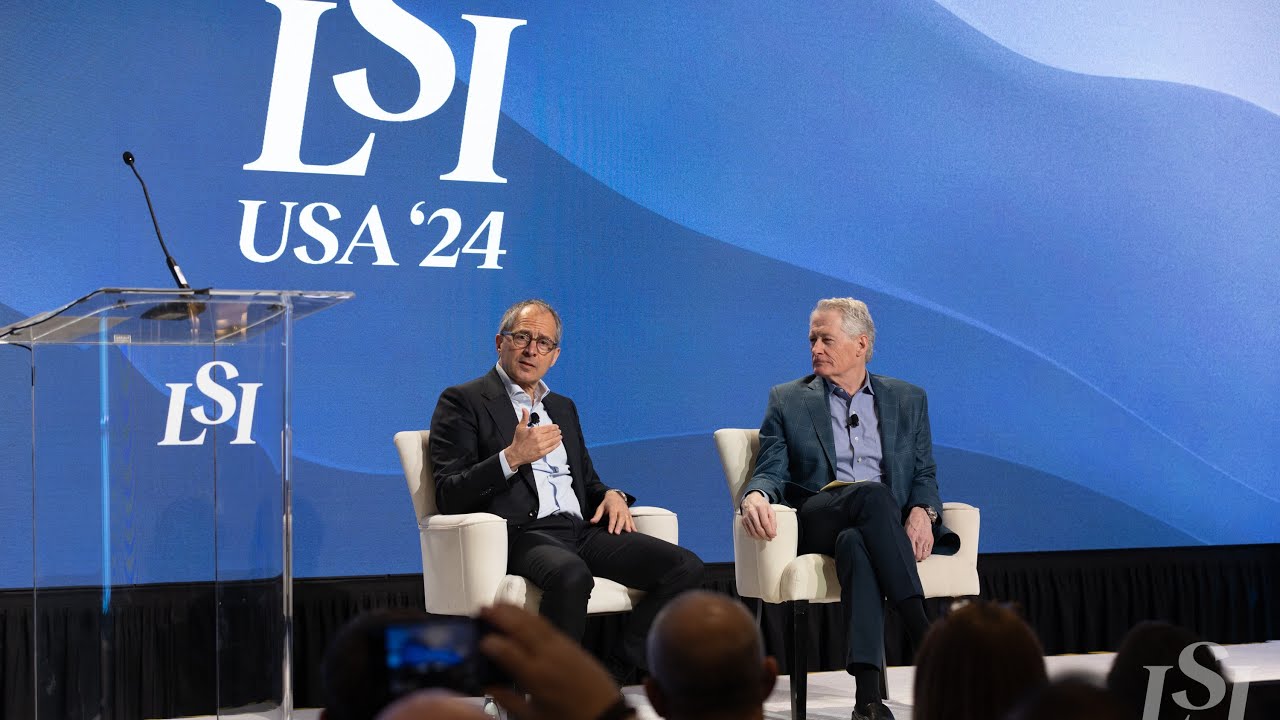
At LSI USA in 2024, speaking with investor Paul LaViolette, Zovighian offered an unusually revealing example of his judgment. A team had supported a project he wanted to stop. They carried on. It eventually became a success. In his telling, employees had felt able to proceed despite his objection.
He also described nine moves in 20 years at Johnson & Johnson, across locations and functions. The same appearance began with a joke about his accent and the sound system. Taken together, the remarks gave the audience something more interesting than a polished promotion history: a senior executive willing to recount being overruled by events.
The project story deserves care. It does not establish that every disagreement at Edwards ends well, or that every rejected idea deserves a budget. It does show the example Zovighian chose when explaining what he valued. He presented the team’s persistence as a strength. His own initial assessment supplied the embarrassment necessary to make the point credible.
Authority is easier to celebrate when the boss turns out to be right. A story in which the team earns the better ending asks something more of the narrator. It leaves open the possibility that the person with final responsibility can have an incomplete view. For anyone trying to build an organization that keeps learning, that is a useful admission.
What he kept from Mike
Zovighian’s comments about Mussallem return to culture, values and the conditions that allow people to develop ideas. In a published reflection on his predecessor, he credited Mussallem with making those commitments part of the organization. The emphasis was on habits that could survive a change at the top.
An inheritance of that sort can be inconvenient. Buildings and balance sheets arrive with records. Culture depends on what people expect to happen when a decision becomes uncomfortable. A successor has to make those expectations visible through choices, especially when the choices involve time, money or an uncertain result.
Zovighian’s USC Schaeffer biography identifies employee career development and trusted partnerships among his priorities. Both take time. A capable colleague does not become more capable because a chief executive announces a new phrase. A partnership gains value through repeated work. These are commitments whose quality becomes apparent gradually.
There is also a practical generosity in giving a predecessor credit. Mussallem’s long tenure was an unavoidable part of the job Zovighian accepted. Acknowledging what he learned makes the relationship part of the explanation for his leadership, while leaving him responsible for the decisions that now carry his name.
“I learned how to stay true to our core values”
Bernard Zovighian, reflecting on Mike Mussallem
A smaller perimeter, a larger decision
Continuity did not mean leaving the corporate portfolio untouched. In 2024, Edwards completed a $4.2 billion sale of a business to Becton, Dickinson and Company. The transaction closed on September 3. Whatever language accompanies a strategy, transferring an operation to a different owner gives it a concrete boundary.
In February 2025, Zovighian described the preceding year as consequential. He explained that the buyer’s commitment to long-term investment and the existing culture had helped distinguish its offer. His account treated the destination of the business as part of the decision, alongside Edwards’ desire for a more concentrated portfolio.
A divestiture presents a particular test for a successor. Keeping everything avoids some immediate arguments but preserves every claim on management attention. Selling creates another set of obligations: choosing an owner, explaining the rationale and making the remaining company’s priorities clear. Focus acquires meaning through what a company is willing to transfer.
The result also raises the standard for the person making the decision. Once the perimeter is drawn more tightly, there are fewer places for an ambiguous strategy to hide. Capital allocation becomes easier to describe and easier to question. A narrower brief can leave a chief executive with a more exposed judgment.
Value of the business sale to BD, completed September 3.
The work after the announcement
By 2026, the company’s proxy described Zovighian’s responsibilities in terms of strategy, financial goals, talent, culture and board governance. Its assessment of the previous year pointed to more than $1 billion of investment in the technology pipeline and infrastructure initiatives. It also discussed changes to executive team governance intended to improve agility and the speed of business.
These are the less photogenic parts of leadership. An announcement takes a morning. Infrastructure and organizational changes demand follow-through across budgets, teams and reporting relationships. The distinction between a decision and its implementation grows more expensive as the organization grows.
His public schedule has continued beyond the quarterly reporting cycle. An LSI Europe keynote conversation with Scott Pantel was published on October 9, 2026. A CEO and investor roundtable featuring Zovighian, Kevin Lobo and Pat Beyer followed on October 12, moderated by Antoine Papiernik. These appearances place him in continuing discussion with executives and investors outside Edwards.
For someone whose career began with assignments inside a large company, the current role comes with a broader audience. Employees need direction they can act on. Directors need oversight they can exercise. Investors need an account of where resources are going. Each audience hears the same decision through a different set of responsibilities.
Second, with decisions of his own
The career that led Zovighian to Irvine offers no need for an invented conversion scene. There are degrees, assignments, promotions, a long tenure at one company and a substantial tenure at another. There is a planned handover, followed by decisions whose consequences extend beyond the moment they were announced.
His most revealing public anecdote remains the project he wanted to stop. It gives the smooth career chronology a welcome snag. The leader who recounts it has to allow his team the credit and his earlier judgment the correction. An organization can use that example, provided it remains possible to repeat the disagreement.
Being second leaves Zovighian with a peculiar freedom. The company’s beginnings are already secure in someone else’s history. His task is to make choices that hold up under his own responsibility: which people to develop, which work to fund, which operations to keep and which convictions to revise. The title has transferred. The judgment has to be exercised every day.
Keep the conversation going
Watch the conversations, explore the career record, or follow his public updates.