A bot can have excellent credentials and dreadful intentions. It can arrive through a familiar service, introduce itself correctly, and proceed to make a nuisance of itself. For Benjamin Fabre, that awkward distinction has become a business, a book, and an argument about how the internet should work.
Fabre, the co-founder and CEO of DataDome, came to this problem from an unusually instructive direction. His earlier company, TrendyBuzz, used bots to analyze online conversations. Automation was how the work got done. When Linkfluence acquired TrendyBuzz in 2014, he and his longtime business partner Fabien Grenier already understood something that would prove useful in their next venture: the same technical capabilities could serve very different purposes.
There is a pleasing complication in that beginning. A founder who has built useful bots cannot sensibly declare war on every automated visitor. He has to distinguish. That requires more patience than a blanket prohibition, and rather more engineering. It also gives Fabre a consistent subject as the machinery changes around him. A web crawler, a fraud operation, an AI shopping assistant: each presents a version of the same problem. What should this particular visitor be allowed to do?
The listening business
Long before DataDome, there were dashboards. TrendyBuzz, founded in late 2007, helped businesses follow their reputations online. By 2010 its service gathered material from more than a million indexed sources, turning the chatter of blogs, news sites, communities and social networks into something a communications or marketing team could inspect.
The interface offered different views of that activity: a chronology, quantities, influential sources, popular videos. Customers included L’Oréal, SFR and Nestlé. Think of the task as making a very crowded room legible to someone responsible for a brand. The conversations were already happening; the software helped a business hear them.
At the i-expo trade show in 2010, Fabre was amused and pleased to find that an entrepreneur so thoroughly involved in the web could meet people in person. It is a small detail, but a welcome one in a career usually narrated in requests per second. There was a person behind those dashboards, discovering the advantages of a room with actual visitors.
By the time DataDome launched in 2015, Fabre and Grenier were working on their third company together. Their partnership supplied continuity. Their experience supplied a problem worth pursuing.
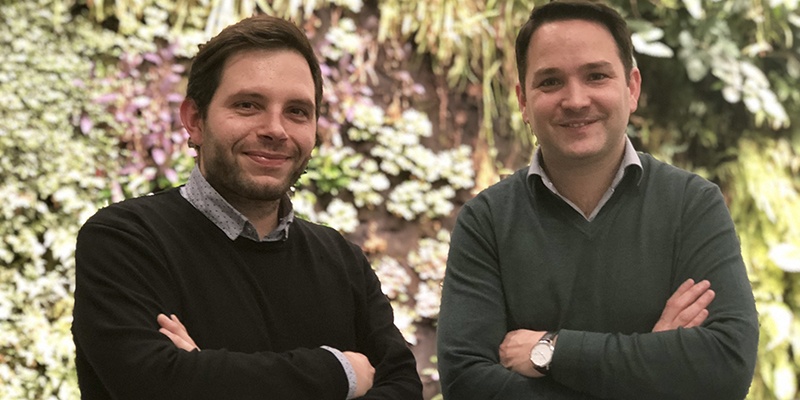
First, persuade people there is a problem
Early DataDome had a sales difficulty familiar to businesses that spot trouble before their customers do: people had to accept that the trouble existed. Fabre and colleague Benjamin Barrier spent time persuading businesses to let them examine their website traffic. A problem hidden inside ordinary activity is difficult to sell from a slide.
The early customer groups were media, e-commerce and classified sites. DataDome examined automated visitors and helped distinguish useful activity from harmful activity. A crawler could serve a legitimate purpose. Other automation could test stolen login details at a speed no human intruder could sustain. The traffic counter alone offered little comfort.
Scale was part of the design from the beginning. Fabre and Barrier described the need for global infrastructure and software able to grow with demand. Detection also had to improve continually as bot behavior changed. The commercial conversation and the engineering conversation were therefore tied together: show a customer what is arriving, then keep making sense of it tomorrow.
It is an unglamorous discipline with a stubborn deadline. Attackers do not wait for the next product presentation. Nor does a website close for the evening so its defenses can have a quiet think.
The engineer changes chairs
Fabre began DataDome as its chief technology officer, building the early technical team. In 2021, he moved to New York to help expand the business in the United States. The company said it doubled both revenue and headcount that year, with the US its fastest-growing market.
The next change was a redistribution of responsibility among people who already knew the business. In 2022 Fabre became CEO. Grenier continued as chairman, and Gilles Walbrou, previously vice president of engineering, became CTO. The founder who had helped build the system would now lead the company from its American market.
The transition matters because it changes the questions arriving at a desk. Technical architecture remains consequential, but customers, hiring and the organization itself require decisions too. In Fabre’s case, the appointment also made geography part of the operating plan. New York was where a growing share of the opportunity required attention.
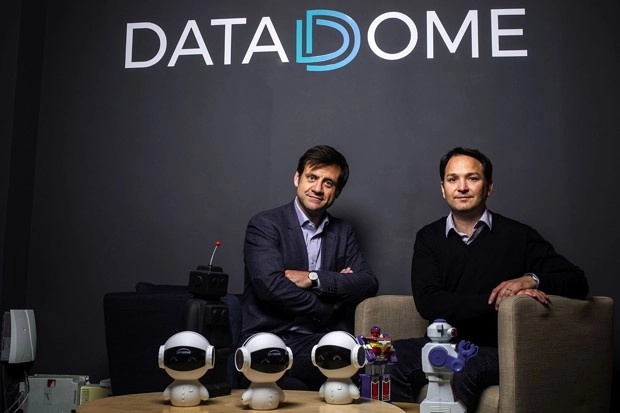
A photograph of Fabre and Grenier sitting together supplies a useful counterweight to the solitary-founder story. This was a partnership with a history and a division of work. Changing the person in the CEO chair did not require pretending the company had been created by one pair of hands.
Two countries, several interpretations of enthusiasm
Running across the Atlantic brought a different kind of translation problem. Fabre has described the difficulty of expressing enough optimism for American employees while sounding credible to French colleagues. An announcement can cross an ocean intact and arrive with a different meaning.
His response included intercultural coaching. He also learned that American job candidates might ask directly about investors and available cash. Those questions belong in the conversation when joining a young company means taking a substantial personal risk.
In 2024, Fabre became co-president of La French Tech New York alongside Caroline Faucher-Winter. He welcomed the opportunity to contribute to the French entrepreneurial community in the United States. It is a practical extension of his own experience: building a company abroad involves people who can explain the local assumptions, as well as the local paperwork.
The work is less photogenic than a funding announcement. Yet an organization depends on colleagues understanding one another’s decisions. A founder can explain the product perfectly and still leave half the room wondering what he meant about next year.
A large number, and the work behind it
In March 2023, DataDome announced a $42 million Series C led by InfraVia Growth, with existing investors Elephant and ISAI participating. The company earmarked the money for commercial expansion and research and development. Fabre’s technical responsibilities had changed, but the need to keep improving detection had followed him into the chief executive’s office.
At the time, DataDome said it protected more than 300 enterprises. It also reported stopping over 250 billion online fraud attempts during 2022. Those are company-reported figures, and they describe the volume of the work rather than a final victory. A service handling automated threats has another working day immediately after its annual tally.
Fabre’s explanation of the approach emphasized assessing each request and adapting as the threat changed. He also wanted protection to remain unobtrusive for consumers. These requirements pull on the same system from different directions. A defense must intervene when needed while allowing ordinary business to continue.
By the company’s tenth anniversary in May 2025, he was arguing for cybersecurity and fraud prevention to work across the customer journey. The ambition was broader than defending a login page. The organization on the other side of an attack should be able to see the whole sequence.
- 2007TrendyBuzz begins
- 2014Acquired by Linkfluence
- 2015DataDome launches
- 2021Fabre moves to New York
- 2022CTO becomes CEO
- 2025First book published
The inconvenience of being innocent
For a customer trying to complete a purchase, being mistakenly treated as an attacker can feel like an especially witless form of customer service. Fabre has made that problem part of his public argument about security. He asks vendors to measure both kinds of error: legitimate users challenged, and malicious activity allowed through.
In April 2025 he described DataDome’s commitment to a 0.01% false positive rate and rejected promises of perfection without measurement. That number is a stated company commitment, rather than a guarantee that a particular visitor will never encounter difficulty. The distinction is central to his argument: a measurable error is something a team can investigate and improve.
His formulation is terse: “We do math. Science. Accountability.” There is some pleasure in hearing a technology executive leave magic out of the sales pitch.
This concern also appears in his writing about AI agents. An assistant acting for a customer might perform exactly the transaction a retailer hopes to receive. A defense that treats automation itself as sufficient evidence of wrongdoing risks turning away business. Security therefore needs a useful account of context. The innocent visitor deserves more consideration than a suspicious-looking browser and a locked door.
“We do math.
Benjamin Fabre · April 2025
Science. Accountability.”
The customer’s journey is interrupted.
The business remains exposed.
A proper introduction is only the beginning
In March 2026, Fabre described a case involving Facebook’s crawler. Attackers, he said, had caused genuine Facebook infrastructure to fetch pages repeatedly, using a trusted service to scrape content. The caller’s identity checked out. The activity still needed scrutiny. DataDome detected the behavior and reported the abuse to Facebook.
The example makes his position concrete. A familiar identity can be used in an unwelcome way. An unfamiliar automated visitor might, conversely, be acting in a business’s interests. The decision needs to consider what is happening during a session and what the business wants to permit.
That reasoning has become increasingly relevant to AI agents. DataDome’s current Agent Trust product describes continuous identity verification alongside controls for automated activity across websites, apps and APIs. In June 2026, the company was named a Leader in the Forrester Wave for Bot and Agent Trust Management Software.
The recognition gives Fabre a milestone. The changing category gives him more work. A security business that began by explaining bots to customers now has to explain why an automated customer might be welcome, and when that welcome should end. The doorman has acquired a more complicated guest list.
A book, and a question that survives the next machine
Fabre published his debut book, Bots Unmasked: Exposing Cyberfraud in the Era of AI, in March 2025. It brings together case studies and lessons about automated attacks and their defenses. Jordan Harris, a fraud prevention executive, and Julie Tsai, a board member and investor, supplied endorsements. For a founder whose early work included persuading people that bots were a problem, a book is another way to make the machinery visible.
His more recent writing asks a wider question about building a company amid continual technological change. In July 2026, he argued for investing in foundations that remain useful when the next threat arrives. He identified real-time processing, continuous learning and shared signals as operating commitments behind that approach.
Read alongside his career, the argument has a certain economy. He has moved from listening to online conversations to defending online businesses; from building a technical team to leading a company in another country. The tools and responsibilities have changed. The habit of examining behavior has stayed useful.
A founder cannot arrange for the internet to stop inventing visitors. Fabre’s proposition leaves room for their arrival. Give them a hearing. Watch what they do. Keep the door working for the people who came to buy something.
Continue the conversation
Explore Fabre’s writing, interviews and work.