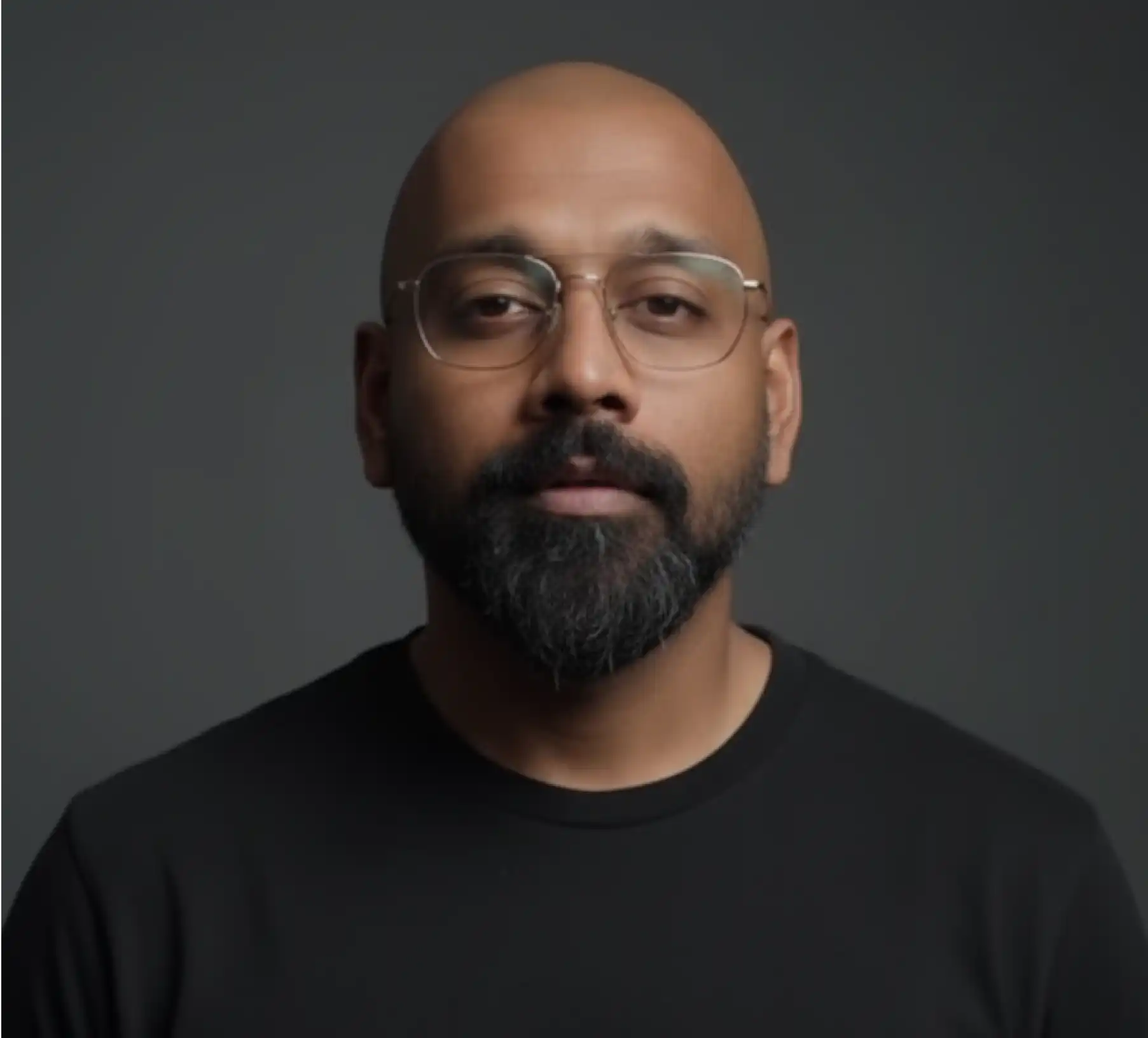
Siva Surendira runs Lyzr AI from an office at 155 2nd Street in Jersey City, which is close enough to Manhattan that the enterprise sales work is easy, and far enough from San Francisco that nobody expects him to open with a pitch deck. He does not open with a pitch deck. When Lyzr raised its $8 million Series A in 2025, an AI agent named Sam handled the outbound. Agents selling agents is either a very elegant demonstration of the product or a marketing story so good it should be true. Both things can be correct at once.
The company he is building calls itself an Agentic Operating System for enterprises, which is the sort of phrase that either becomes a category or becomes a footnote, and Surendira has been saying it since 2023. The market is starting to say it back. In March 2026, Accenture Ventures led a $14.5 million Series A+ into Lyzr at a valuation of roughly $250 million. Accenture is also a customer, which is the sort of arrangement where the wedge and the check come from the same address. Founders spend years looking for that arrangement.
Surendira is not new at this. His first company was PowerUpCloud, an AWS consulting firm he built in India and sold to Larsen & Toubro's IT arm, LTI, in 2019. He stayed. He ran the AWS business globally and grew it, by his own account, six times over. Then in 2023 he left to build Lyzr, which serves Fortune 500 customers in finance, retail, and government - three of the most conservative buyer categories in the enterprise. If you can sell agentic infrastructure into a regulated bank, you can sell it into almost anywhere else.
The pitch, if you strip it down, is that most AI copilots are isolated tools bolted onto workflows and that the next thing is a coordinated set of agents that share context, guardrails, and orchestration. Lyzr calls the orchestration model "managerial, DAG, and hybrid," which is a technical way of saying: sometimes one agent supervises others, sometimes work runs in a pipeline, and sometimes it does both. Surendira has argued, publicly and often, that the era of siloed copilots is over. Whether that is a prediction or a marketing position depends on which quarter you ask. So far the quarters are agreeing with him.
His public voice is a Twitter handle: @theAIsailor. It is a small thing, and it tells you a lot. He describes Lyzr's product in the language of navigation and instrumentation, not the language of intelligence and personality. "Agents are not designed to please you," he has written. "They are designed to work reliably." This is not the tone of a consumer AI founder. It is the tone of someone who has already sold enterprise software once and has learned that the customer wants uptime and audit trails, not charm.
Surendira studied electronics and communication engineering at Coimbatore Institute of Technology, graduated in 2008, then did the standard Indian engineer-to-cloud pipeline: Tesco, Pearson India, data engineering roles, then the founder detour. Later, Harvard Business School executive education. It reads on paper like a resume, and in practice like a long apprenticeship in enterprise buying behavior. The moves Lyzr is making now - safety guardrails baked in at the architecture level, sovereign deployment options, deterministic execution language for compliance-heavy industries - are not the moves of a first-time founder guessing at what banks want. They are the moves of someone who has already lost a deal or two to a security review.
There are things the profile does not tell you. Lyzr's website is loud, its founder is measured. The company's messaging leans on phrases like "Organizational General Intelligence" and "safe AI," which are big claims dressed up as inevitabilities. But the underlying bet is smaller and more specific. Surendira thinks the enterprise AI stack will collapse toward an infrastructure layer that resembles what AWS did to servers. He is trying to be the layer. It is a big swing. He has swung once before and connected.
What makes him worth watching is not that he is a founder in New York, or that Accenture invested, or that he speaks at FinovateFall. It is that he is very deliberately not doing the thing every other AI founder is doing. He is not building a consumer app. He is not chasing model benchmarks. He is not moving to San Francisco. He is in Jersey City, building the boring layer under the interesting layer, and he has already done this once before. That is usually how enterprise categories get built - by someone patient enough to build them twice.