On December 27, 2024, the service people hired to keep their financial lives orderly stopped operating. Bench customers suddenly faced a bookkeeping problem and an access problem. With year-end approaching, the distinction was academic. A business can survive an untidy desk. Its missing financial records are a different proposition.
- The offer: a dedicated bookkeeper, software and finished monthly financials for U.S. small businesses.
- The rupture: a liquidity crisis stopped the original business; service resumed under Employer.com in January 2025.
- The buying decision: compare the work delivered, the commitment required and how you keep your records.
Bench Accounting by Mainstreet still sells an appealing idea: someone else will do the books. Its history makes that promise more interesting. Here is a business built around removing a small, recurring anxiety, which briefly became an unusually large one.
The person was the product
Ian Crosby’s account of the company’s beginnings contains a useful embarrassment. Early users received the service free. When billing began, he told Mixergy, two-thirds left. The team had been listening to people whose enthusiasm did not survive an invoice. Payment supplied a much better filter for feedback.
Crosby and fellow founders Jordan Menashy, Adam Saint and Pavel Rodionov were working on a stubborn problem. Business owners needed reliable accounts, yet learning accounting software was another job. The company emerged through Techstars NYC in 2012 as 10Sheet, then adopted the Bench name in 2013, emphasizing the human relationship.
The ordering mattered. A named bookkeeper gives an owner somewhere to send a question. An account connection gives the software somewhere to fetch transactions. Both are useful. Only one can explain an unfamiliar entry. Bench made that relationship central to a service delivered through its own software.
“We had been taking feedback from people that really didn’t value what we were doing.”
Ian Crosby, on free beta users, in his Mixergy interview
This is the distinction between buying a tool and buying an outcome. Bench’s customers include freelancers, professional firms, shops and trades. They need monthly accounts without building an accounting department. A bookkeeper categorizes and reconciles; the owner receives statements and answers questions about transactions that need context.
The books improved. The cash ran out.
In June 2021, Bench announced $60 million in Series C financing and a broader financial-services offering. Shopify and Sage joined existing backers. Banking, cards, payroll, taxes and advice were part of the ambition. The company wanted a larger place in its customers’ financial lives.
Serving those customers still required a business that could fund itself. The trustee’s preliminary report gives the awkward arithmetic: revenue reached roughly US$48.9 million in the year ended March 2024, up from US$43.2 million. The annual loss narrowed from US$29.3 million to US$13.5 million. Improvement and solvency were moving on different clocks.
The March 2025 trustee report supplies the immediate trigger. A forecast showed another US$7.7 million would be needed through March 1. National Bank of Canada declined additional liquidity, citing performance, increased exposure and continuing cash burn. Operations ceased on December 27. What failed first was the ability to keep financing the work.
Employer.com announced its rescue on December 30. The subsequent asset-purchase agreement specified C$13 million, plus assumed liabilities and cure costs. Bench now says service resumed in January 2025. The original entities’ bankruptcy and the operating service’s restart belong to the same story, but represent different legal events.
The transition also left uncomfortable terms. Bench’s FAQ said earlier payments were ineligible for refunds and tied completion of previously paid work to an active subscription. For customers, continuity involved deciding whether to continue paying. Today’s company says completed work can be exported even after a subscription ends.
The useful distinction is between a good service and a dependable provider. A customer can like a bookkeeper and still need to understand the company employing that person. A year of prepayments makes the relationship longer before it makes the work complete. The transition brought that timing problem into view.
What the subscription buys now
Today, Bench sits inside Employer.com’s expanding collection of business services. Employer.com acquired MainStreet in May 2025; Bench’s LinkedIn identity now includes Mainstreet. The bookkeeping proposition remains recognizable: imported transactions, human review, monthly reports and an optional handoff to tax professionals.
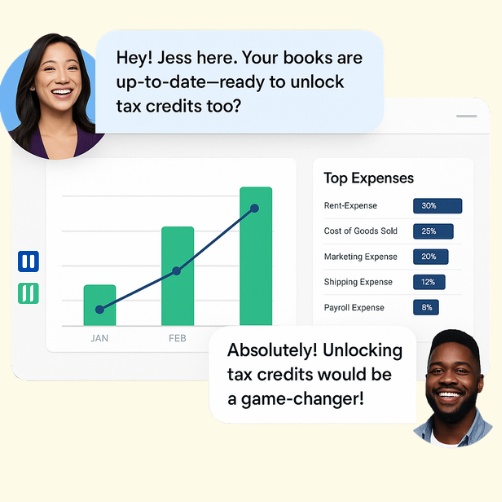
Monthly bookkeeping supplies income statements, balance sheets and year-end financial records. Bench lists connections to Shopify, Stripe, Square and Gusto alongside financial accounts. Its tax service adds filing and advisory from licensed professionals. Catch-up work addresses the less photogenic reality: sometimes the owner arrives months behind.
Those are advertised U.S. dollar monthly prices, checked October 24, 2026. Annual discounts are available. Tax plans carry commitment and enrollment conditions; confirm catch-up scope before signing. There is also an hourly alternative: US$55 plus US$1,200 onboarding for a bookkeeper working inside your QuickBooks Online account.
That alternative changes the comparison. An owner happy with QuickBooks can buy help within an existing system. Someone wanting a managed platform can choose Bench’s own. Pilot, independent bookkeepers and CPA firms compete for related work, while do-it-yourself software leaves more of the process with the owner.
Keep a copy. Keep asking.
There are two useful ideas to copy here. For founders, charge early enough to find customers who value the work. For buyers, test the service’s handoffs: ask what arrives each month, what you must supply, and how a new accountant would receive the records.
Bench acknowledges that owners still need to provide documents and explain some transactions. Slow replies delay the books. A business needing specialized accounting should establish scope before subscribing. The attraction is relief from routine work. The practical test is whether the arrangement produces understandable accounts that remain accessible when circumstances change.
Bench’s walkthrough makes a useful qualification to the phrase “real-time”: reports update as the bookkeeper completes the work. An imported transaction and a reviewed set of accounts are different stages. For an owner making a decision today, asking which stage the numbers represent is sensible. So is reviewing a sample monthly package before choosing a plan. The dashboard should help you ask better questions about your business.