He spent ten years writing the checks. Then he built the thing he wished existed: a store that drives to you.
Walk down a street in the San Francisco Bay Area and you might get a notification: the bakery is two blocks away, the croissants are warm, tap to flag it down. That is Jingle, the company Baris Karadogan co-founded in 2022 and runs as CEO out of Menlo Park. The premise is almost stubbornly simple. Instead of a warehouse that waits for your order and then scrambles a courier across town, the store stocks a van, drives through neighborhoods, and pings the people nearby.
Think of the ice cream truck. Now apply that logic to bread, ice cream, mani-pedis, personal training, knife sharpening, grooming. The vendor is already moving, already stocked, already close. Karadogan's bet is that this collapses two things conventional delivery cannot fix at once: the fee and the wait. Jingle charges a flat $2.99 to deliver, and there is no fixed storefront soaking up rent before a single croissant is sold.
It is a contrarian read on a crowded market. Everyone else optimizes the route from a kitchen to your door. Karadogan moved the kitchen.
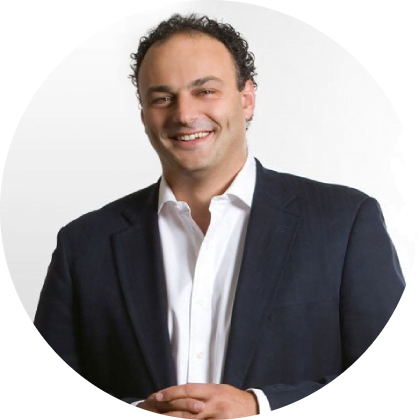
Eliminate high delivery fees and wait times for foods and services, and create a new channel for artisanal local stores to grow.
Conventional delivery is a "pull" system - you order, then a courier is dispatched to fetch it. Jingle flips the arrow. The store is already on the road with inventory, so the customer is the last step, not the trigger.
A local artisan stocks a vehicle - far less capital than a brick-and-mortar shop.
The mobile store drives a neighborhood route, like a modern peddler's cart.
Nearby users get an app notification: we're close, here's what we've got.
Tap to order. Flat $2.99. Minutes, not the better part of an hour.
Karadogan's comparison is the ice cream truck against the fixed-base store. The truck is cheaper and faster because it is already in motion and already near you. Jingle generalizes that one happy accident of childhood summers into a platform.
Mobile beats fixed on the two things customers actually feel.
A van is a fraction of the cost of a storefront, which is the part the artisan feels. The flat fee and the short wait are the parts you feel. Both sides of the marketplace get the same upgrade.
Illustrative comparison of the Jingle "push" model versus conventional fixed-base delivery, per the company's stated thesis.
Before the seed round and the pitch decks, there was a boy in Istanbul listening to trucks. Produce vendors rolled through the streets with a man on a loudspeaker calling out the day's harvest. Decades later, that sound is the whole company.
The same kid was coding on a Sinclair Spectrum, one of the early home computers, and dreaming of a place called Silicon Valley. He would get there. Two graduate degrees from Stanford - an MS in engineering and an MBA - and a career that put him at the center of the venture world he'd imagined from across an ocean.
What is unusual is that he didn't leave the loudspeaker behind. Most founders bury their origin stories under jargon. Karadogan kept his out front, where you can hear it.
I can still hear the trucks driving through the streets of Istanbul with a guy on a loudspeaker yelling, 'peppers, tomatoes!'
That was heaven. And Silicon Valley was a dream.
For roughly a decade, Karadogan was the one being pitched. He invested across digital media, semiconductors and communications - the unglamorous plumbing of the internet - as a partner at ComVentures and Fuse Capital, after starting as an associate at U.S. Venture Partners. He has sat in the rooms where founders sweat. He has sold a company and acquired two others.
That history is the quiet advantage behind Jingle. When he walked into Bessemer's seed round, he wasn't a first-timer learning the choreography. He'd written the song.
From the chair that judges to the chair that builds.
The pivot from investor to operator is harder than it looks. Pattern-matching deals and shipping a marketplace are different muscles. Karadogan made the jump anyway, trading a portfolio for a single, specific bet on how local commerce should move.
He spent nearly a decade on the board of the California Audubon Society and watches birds for real. Favorite sighting: the varied thrush, a shy orange-and-slate bird of the Pacific woods. A man who can wait silently for a thrush can wait out a market.
The part he keeps returning to isn't logistics, it's the artisan. A van costs a fraction of a storefront, so a small baker or trainer can start moving without signing a lease. Jingle is, in his framing, a growth channel disguised as a delivery app.
Science-minded, nostalgic, long-term. He builds a company from a sound he heard as a child and a model borrowed from ice cream trucks. That's not a quarterly thinker. That's someone playing a longer game than the fee war everyone else is fighting.
It is not a flashy bird. It hides in damp Pacific forests and you usually hear it before you see it - a single, eerie, held note. There's something on-brand about a founder whose delight is a creature you find by listening. Jingle, after all, is a business built on a sound: a loudspeaker, a jingle, a notification that says we're nearby. He spent nine years on Audubon's board. He is still, fundamentally, a person who pays attention to what's passing through the neighborhood.
Jingle started in the San Francisco Bay Area with a plan to roll into Southern California and beyond, up the West Coast. The ambition isn't to out-discount the delivery giants on their own field. It's to change what "delivery" means - from a courier fetching your order to a store that was already coming your way.
If it works, the next time you hear something coming down your street, it won't be a man with a loudspeaker. It'll be a phone in your pocket, doing the same old neighborly thing in a brand new accent.