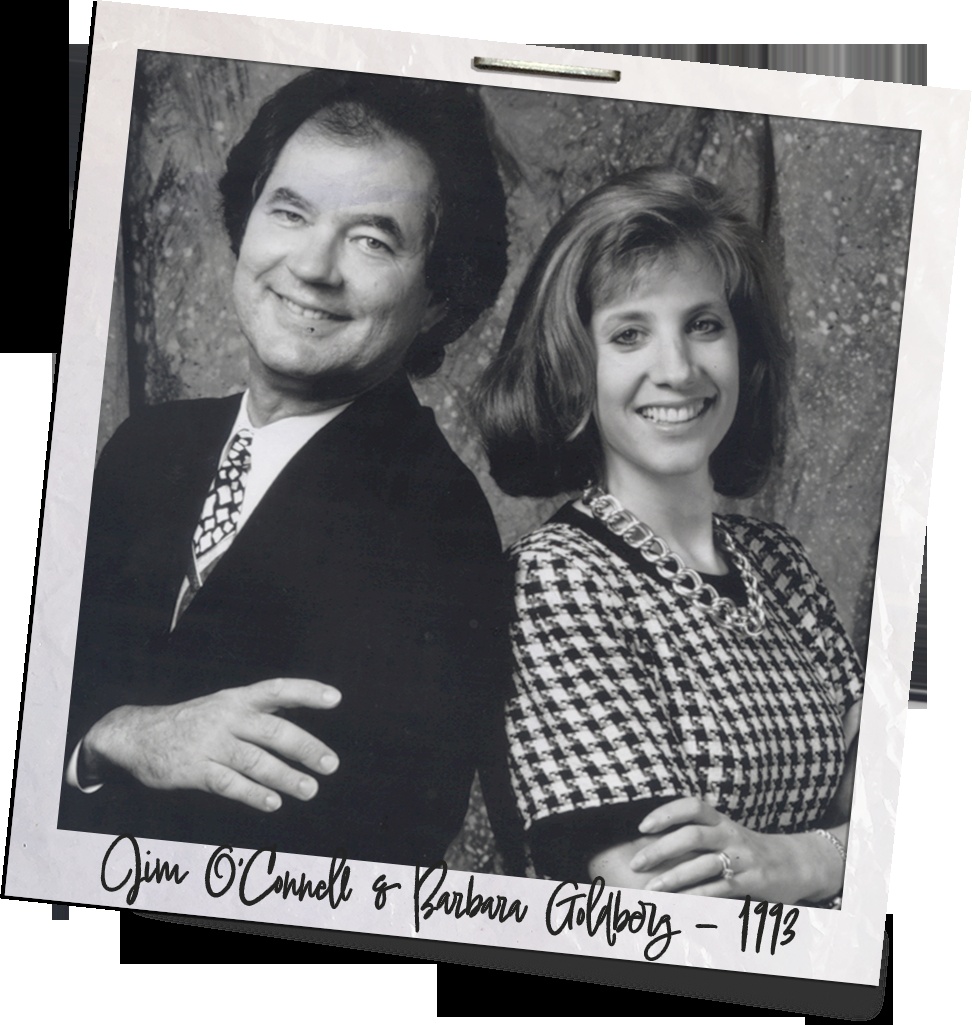
A paper napkin is a forgiving place to start a business. There is room for a few intentions, perhaps a name, and very little space for the complications. In 1993, Barbara Goldberg and her colleague Jim O’Connell used one over lunch to map out a public relations agency. She was 27. The idea was to put more good news into circulation. The details would occupy rather more paper.
Thirty-three years later, Goldberg is CEO and founding partner of O’Connell & Goldberg, based in Fort Lauderdale. The napkin belongs to the origin story. A Monday conversation offers a better view of the person running the business now. Her team gathers to talk about current events, cultural shifts and whatever has caught someone’s attention. Occasionally, that requires the boss to learn an influencer’s name.
There is a companion lesson. Years ago, a younger staffer told Goldberg she had never heard of Billy Joel. For someone whose cultural reference points include the Partridge Family and Bobby Darin, this was news of a rather different order. Imagine discovering that the Piano Man needs an introduction. Goldberg’s response has become part of her argument for bringing different generations into the same conversation.
The useful detail is her willingness to remain in it. Experience can make a person quicker at recognizing a familiar situation. It can also make unfamiliar situations easier to dismiss. Goldberg has given those unfamiliar subjects a regular place on the calendar. Monday arrives whether the chief executive has mastered the latest Instagram feature or not.
The small plan, and the long apprenticeship
Goldberg’s founding recollection is modest in scale: two colleagues, lunch, a simple strategy. There is no elaborate retrospective claim that they anticipated the communications business of 2026. They wanted to build something positive and were nervous about starting. The uncertainty makes the decision recognizable. A prospective founder can prepare a plan; she still has to become the person who carries it out.
Her own preparation included the University of Miami, where she studied from 1984 to 1988. Her activities included Hillel, student programming and serving as a resident assistant in Pearson Hall. These are places where participation brings practical obligations. An event needs organizing. People need answers. Someone has to notice who has been left out of the conversation.
O&G developed around the phrase “Good People Make Good News.” In an industry devoted to finding the memorable line, this one has proved durable. Its usefulness depends on the work underneath it: advising clients, dealing with journalists, building campaigns and maintaining relationships after an announcement has passed. A motto is pleasantly short. The obligation to live with it lasts considerably longer.
The firm’s early work included Tiffany & Co.’s Bal Harbour store. Its later client work has ranged across real estate, restaurants, hospitality, education and nonprofits. Moving between those settings means encountering people with different priorities and different ideas of what counts as interesting. The founder who began with a simple intention built a career around the particularities.
Billy Joel, meet the algorithm
Goldberg calls her Monday gatherings coffee talks. In her February 2026 reflection on the practice, she describes learning about unfamiliar influencers and Instagram features, including the world around Campbell Puckett. She also writes about younger colleagues missing references she had assumed were common knowledge. That discovery is useful professional information. A message built on a reference the audience does not recognize has some explaining to do.
“PR is translation work,” she writes. The phrase puts a practical frame around the coffee. A team can test an idea against several sets of cultural knowledge before sending it into the world. Someone catches a reference that has aged badly. Someone else supplies the context that makes a new trend worth understanding. Agreement is less useful here than a well-timed question.
There is an appealing lack of ceremony about learning this way. The chief executive has to admit she does not know something; a younger employee has to explain why it matters. Both have something at stake in getting the explanation right. The client’s audience will not conveniently share the age, habits or reference points of everyone in the meeting.
Goldberg has carried this subject beyond the office. In July 2026, her agency announced the publication of her Sun Sentinel opinion piece on collaboration across generations. She was making a case for businesses to exchange knowledge across age groups. The everyday mechanics matter: give people room to contribute, and allow their expertise to appear somewhere other than their job title.
“PR is translation work.”
Barbara Goldberg, February 2026
Influencers
Cultural trends
Relationships
Cultural memory
An intern gets the questions
In April 2026, Goldberg sat down with intern Lauren Rosenblatt to discuss what the work looked like from the newest seat in the agency. Rosenblatt had expected a concentration on writing and communications. She discovered relationship building, brand strategy and the overlap between PR, social media and influencer partnerships. The job description had acquired quite a few verbs.
Rosenblatt also described a difference between classroom deadlines and client work. In the office, a change of direction can rearrange the day. Her favorite assignment involved planning social content with a mentor, then seeing it published and watching how audiences responded. That sequence supplies an education a classroom exercise can only approximate: make a decision, release the work, encounter the result.
Her account returned to the Monday talks. The meeting Goldberg describes as a way to keep learning was also visible to an intern as part of the agency’s working life. That is a small but useful test of a leadership habit. A practice has more weight when someone new can recognize it without needing the founder’s explanation.
A separate account of the team’s learning exchange described Goldberg helping account supervisor Carson Celio become more comfortable starting conversations in person. Digital fluency and ease in a room are different kinds of competence. The interesting thing about their exchange is its reciprocity: there is something for each person to teach, and something for each to practice.
The responsibility came before the title
Another line through Goldberg’s life begins before the agency. As a teenager, she became an international vice president of USY, the Jewish youth organization. College brought further involvement with Hillel. In a May 2026 reflection, she credited her mother with teaching her to participate in Jewish communal life, contribute to it and take responsibility for it.
That history helps explain her appointment that month as board chair of Goodman Jewish Family Services of Broward County. The position followed years of volunteering and philanthropic involvement. Her stated work with the board and executive leadership includes advancing the organization’s priorities and expanding access to services. Goodman JFS provides food assistance and financial support, among its community programs, and serves people of all backgrounds.
Goldberg describes the connection between her personal commitments and professional work as something that developed naturally. When she founded O&G, she had not set out to make Jewish organizations part of its practice. Over time, that work became part of a wider pattern of community involvement. A person can begin by choosing a profession and discover that her earlier responsibilities have followed her into it.
The family story continues through three daughters, one of whom is a rabbi. Goldberg writes about watching each express her Judaism in her own way. Her account makes room for difference within continuity. The common thread is participation: a relationship with a community becomes something people do, in forms that belong to their own lives.
Two chapters in one working life: communications and community responsibility.
A title for Rosie, too
There are formal ways to describe the organization Goldberg has built. O&G was recognized among Florida’s Top 100 Women-Led Businesses in 2025, for a second consecutive year. That August, it also announced its inclusion among Florida Trend’s Best Companies to Work For. These are agency distinctions; they place her leadership in the context of a workplace shared by many people.
The agency’s account of that workplace includes professional development through O&G U, mentorship and time for staff volunteering. In September 2024, it expanded its Tampa Bay presence with senior account executive Melanie Parncutt joining Josie Smith. Growth, at that scale, has names attached. It involves people learning the business, taking responsibility and bringing knowledge of their own communities into the room.
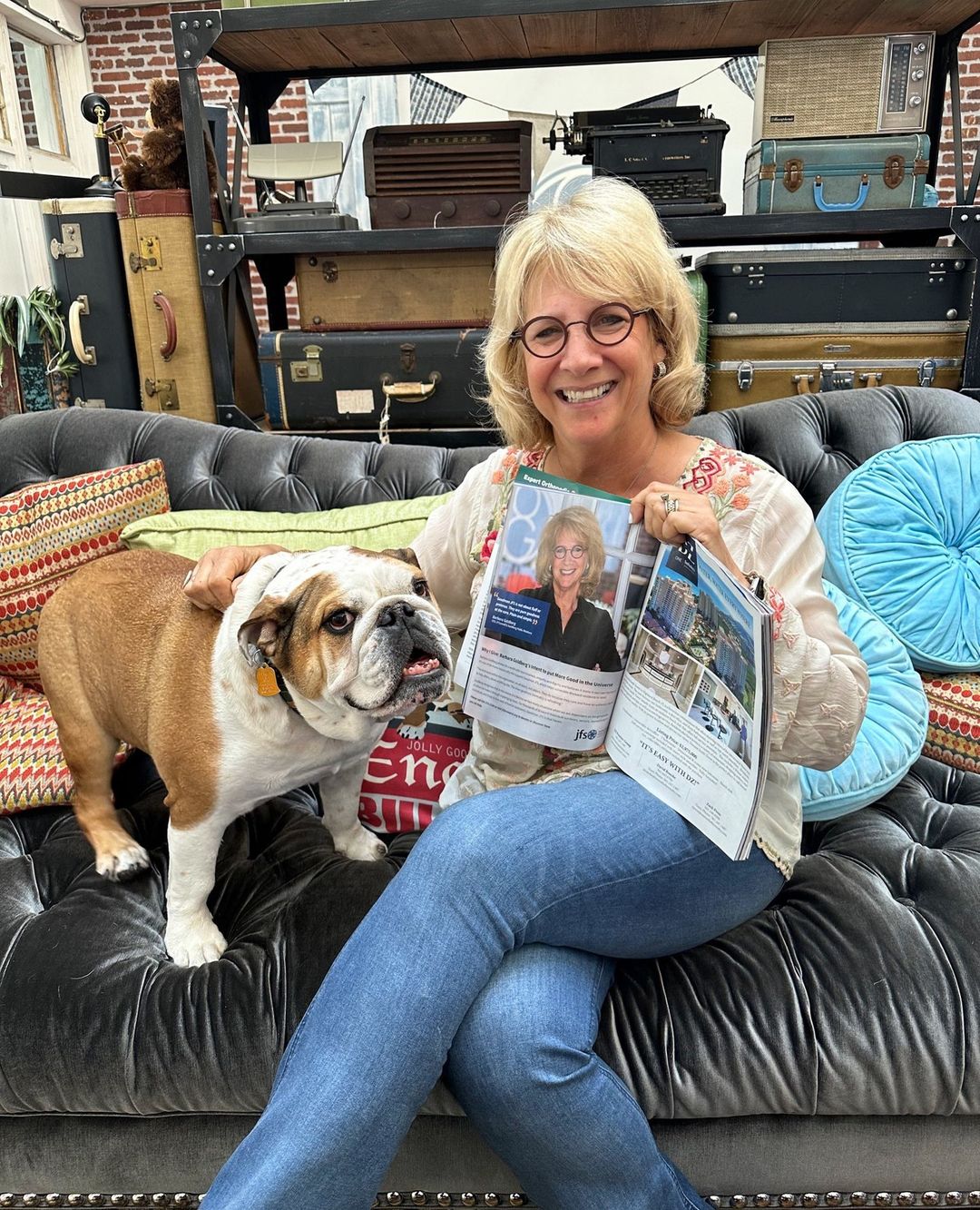
Then there is Rosie. Goldberg’s dog has the agency title “Director of Drool,” a job description with admirable clarity. In a candid photograph, Goldberg holds open a magazine featuring her while Rosie stands beside her on a sofa. The dog looks considerably less concerned with the coverage. Public relations can arrange a great many things; canine editorial interest remains beyond its jurisdiction.
The detail belongs because Goldberg’s public identity has room for being a mother, a grandmother and Rosie’s owner alongside being a CEO. The workplace gets some of that personality too. A company needs people capable of serious judgment. There is no evident reason they must surrender their sense of the ridiculous at the door.
Grandparents in the feed
In September 2026, the team published its predictions for the coming fall. Goldberg’s contribution was the return of comfort content, particularly grandmotherly and grandfatherly wisdom online. Colleagues supplied predictions about casual Instagram posts, nostalgic audio and local campaigns. It was a playful exercise, explicitly offered as a forecast rather than a set of established outcomes.
Her choice makes a fitting coda to the year’s conversations. The founder learning influencer names can also see a place for older voices in the feed. An audience may arrive for novelty and stay for something familiar. Knowing which is happening requires paying attention to people, including the people whose habits are easiest to take for granted.
The paper napkin could accommodate a founding intention. It could not have contained Billy Joel’s surprising absence from a colleague’s musical education, an intern’s view of the work, or the peculiar dignity of a dog with an executive title. Those details arrived with the people. Goldberg’s continuing task is to make room for what they know. Monday offers another opportunity.
Keep the conversation going
Explore Goldberg’s work, reflections and conversations.
- O’Connell & Goldberg - agency website
- Barbara Goldberg on LinkedIn
- Her reflection on community and responsibility
- Her essay on working across generations
- News of her Sun Sentinel workplace op-ed
- Watch: communications for lasting impact on YouTube ↗
- Watch: adapting when plans change on YouTube ↗
- O&G on Instagram / Facebook