The first audience problem was rather personal. Aaron Hawkey and Robert Angarita had a way to livestream their recreational soccer games. They had rather less evidence that anyone wanted to watch them. In a later interview, Hawkey offered a useful review of the programming: “Turns out that nobody wants to watch Rob and I play soccer.”
- BallerTV films amateur sports for families, athletes, coaches and scouts.
- Live coverage becomes replay footage, downloads and highlights.
- Its advantage combines event access, camera technology and the work of getting games online.
There is a small business lesson hiding in that unflattering scouting report. Being able to broadcast a game does not create an audience. Someone needs a reason to care. The founders eventually found those people among parents and relatives of youth athletes. A game invisible to almost everyone can be indispensable to the grandmother who cannot make the trip.
A game invisible to almost everyone can be indispensable to the grandmother who cannot make the trip.
The soccer game with no audience
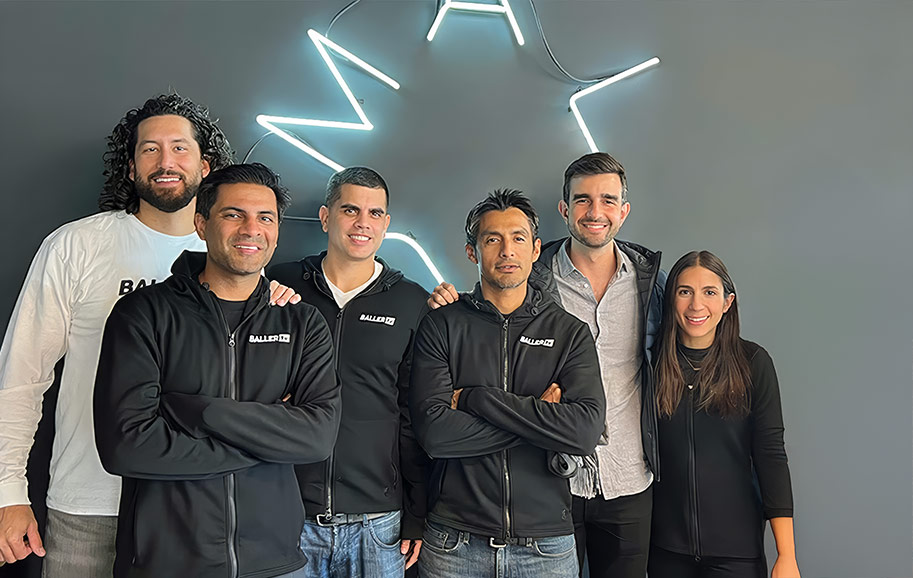
BallerTV took shape in 2016. Hawkey and Angarita had already built Cramster, the study service acquired by Chegg in 2010. Sports gave them another shared interest to pursue. The important adjustment was whose sports they would broadcast. Their founding colleague Sandeep Hingorani brought relationships in grassroots basketball, helping turn a broad streaming idea into something with customers attached.
The change required patience and money. In their 2019 founder interview, Angarita described an early cash squeeze during which eight team members accepted reduced salaries for roughly six months. That is a concrete cost of the search, even without a tidy startup budget. The failed assumption concerned demand for the founders’ own games; family feedback pointed toward a different audience.
The camera has to get there first
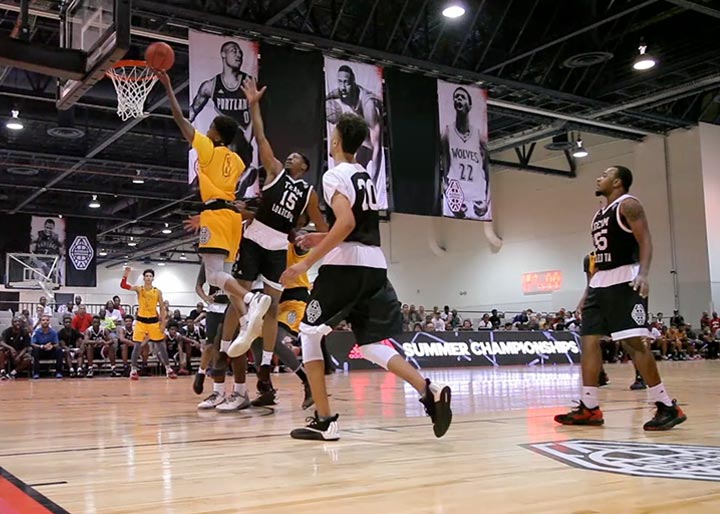
Consider the peculiar economics of a youth tournament. Several courts may be busy at once. Each has a small, highly interested audience. A television production crew would be an awkward fit. An unattended phone creates a different set of problems. The service has to capture enough games, cheaply enough, while making the result straightforward to find and watch.
BallerTV approached that problem with mobile broadcasting tools and a network of videographers. Its expertise includes the practical work around the software: arranging coverage, deploying equipment and supporting simultaneous streams. A polished video player is useful only after somebody has managed to produce the video.
In September 2019, it acquired FieldVision, whose autonomous filming system used computer vision to track players and the ball. At that point, BallerTV reported covering more than 250,000 games since 2017. The acquisition added automation to an operation that already knew how to reach tournaments. The combination helps explain the company better than the label “streaming platform” alone.
A viewing moment becomes a reusable recording. Conceptual workflow.
A recording that keeps working
A live broadcast has an appointment built into it. An archive changes the timetable. BallerTV lets subscribers search for an event or team, narrow the results and return to a full replay. A parent can revisit the finish. A coach can look again at a possession. The same recording answers different questions for different people.
The company also offers downloads, athlete profiles and highlight tools. Its recruiting guidance encourages players to claim a profile and assemble footage that coaches can review. These are ways to make performance visible. A clip cannot promise a scholarship, and a player still needs the right competition, ability and outreach. But having footage makes showing a coach what happened much easier.
That gives BallerTV a place among several overlapping markets: family entertainment, amateur sports production and game-film tools. LiveBarn and GameChanger are adjacent viewing alternatives. For the family choosing what to buy, though, the first comparison is unusually simple: which service actually has this tournament? Coverage can settle the decision before a feature comparison begins.
What a seat on the sofa costs
BallerTV’s public support table lists annual Bronze, Silver and Gold plans at $95.40, $155.40 and $239.40. It also lists quarterly options. The plans differ in monthly live-event allowances and simultaneous viewers. Replay access appears across all three. Silver and Gold include five monthly download credits; the table lists none for Bronze.
$95.40Bronze / year
$155.40Silver / year
$239.40Gold / year
A separate help page lists extra game downloads at $14.99 for subscribers and $29.99 for non-subscribers. The useful buying habit is to locate the event first, then check access, the actual billing period and download needs. An advertised monthly allowance and the amount charged for a year answer different questions. The business earns from access to the footage and from additional ways to keep or use it.
The calendar is the product
In September 2021, BallerTV acquired NextPro, expanding its route into soccer and lacrosse. NextPro brought relationships with nearly 400 event operators; the deal’s terms were undisclosed. Buying access to competitions complements buying technology to film them. Each solves a different part of the same coverage problem.
The event directory in October 2026 includes basketball and college club soccer, with listings in the United States and Canada. It is a reminder to judge this business by the games it can deliver. A service built around physical events depends on those events happening, cameras working and connections holding. In March 2020, the pandemic shut down the youth sports activity on which BallerTV depended.
The useful idea to borrow is specific: find a group that already cares intensely, then remove an obstacle between that group and the thing it cares about. It works only when people want the access and production can serve them economically. BallerTV learned the demand lesson on its own soccer field. Somewhere beyond the bleachers was a family waiting for a picture.