Consider the predicament of a dairy cow. Choline is useful to her body, but getting it there presents a problem: the rumen can break it down before it reaches the small intestine. Put the nutrient into the feed and you have solved the purchasing problem. You may still have a delivery problem. Balchem sells a way through that second difficulty.
- Balchem supplies ingredients to the companies behind foods, supplements and animal feeds.
- Its specialty is making ingredients survive, stay stable and release under the right conditions.
- The business generated $1.037 billion in sales in 2025.
Its ReaShure product wraps choline in a protective coating designed to withstand the rumen and make the nutrient available farther along the digestive tract. The central idea is almost comically practical. An ingredient’s presence is one thing. Its arrival is another. That distinction helps explain a company whose products connect dairy nutrition, sour candy, vitamin supplements and industrial bakeries.
A business that began upstairs
Balchem’s first laboratory occupied the top floor of the Chemists Club in New York City. In 1967, encapsulation expert Dr. Leslie Balassa founded the company with a group of entrepreneurs and investors. Its first manufacturing site was a former dairy in Slate Hill, New York. It became publicly traded in 1970. The early geography is pleasing: chemistry upstairs, production in an old dairy, then decades spent figuring out what else the chemistry could do.
Today, the connection is clearer in the laboratory than on a supermarket shelf. A baker wants a leavening agent to wait. A supplement formulator wants an active ingredient to remain stable. A dairy nutritionist wants a nutrient to survive digestion’s opening act. Each customer has a different finished product. Each needs control over what happens along the way.
The recipe includes a clock
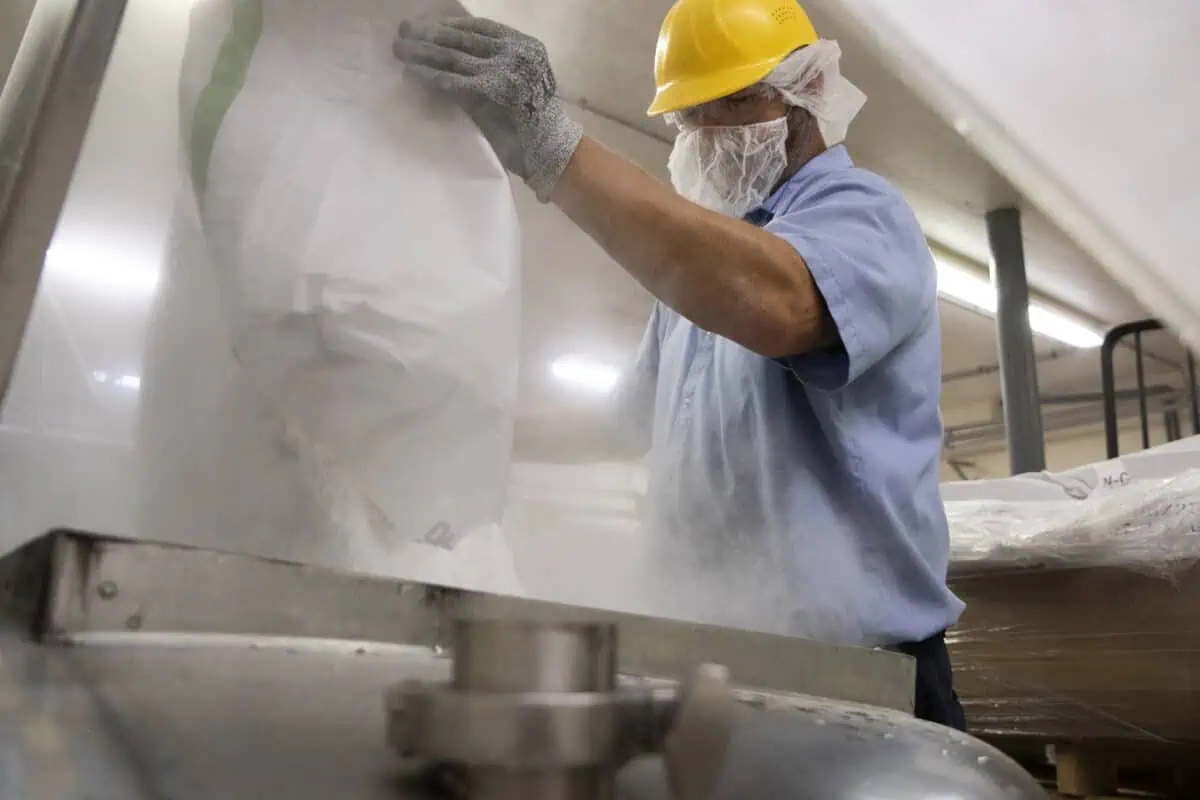
Balchem’s food microencapsulation process repeatedly moves particles through a mist of coating droplets, building a shell around the active ingredient. Temperature, moisture or mechanical force can affect release. Those details matter because a useful chemical reaction at the wrong moment can spoil a manufacturer’s plans. BakeShure addresses leavening and preservation; ConfecShure handles ingredients such as confectionery acids; VitaShure tackles nutrient delivery and taste masking.
There is no universal wrapper. Balchem asks manufacturers about their processing conditions because a coating must survive the actual system and then release appropriately. That qualification is essential. A technology suited to one line can be wrong for another. The practical lesson for a product team is to map the journey first: mixing, heat, moisture, storage, consumption. Test where the ingredient loses its usefulness.
The buyer is usually another business. Balchem sells ingredients and customized systems through its own salesforce, distributors and agents, with application expertise alongside the material. Food and beverage manufacturers, supplement formulators and feed producers are central customers. Consumers encounter the results in finished products. In this market, a purchasing decision includes taste, handling, reliability and the cost of making the finished item.
Buying the next piece of chemistry
Balchem has also bought expertise. In February 2016, it announced the acquisition of Albion International for $111.5 million in cash, subject to adjustments. Albion brought mineral amino acid chelates, specialized salts, mineral complexes and a portfolio of more than 100 patents. The deal expanded human nutrition and agricultural micronutrients together. One acquisition could reach two very different customers because the underlying mineral science had uses in both.
In 2022 came Kappa Bioscience, the Norwegian vitamin K2 specialist behind K2VITAL. The announced enterprise value was about $338 million. The strategic fit included Kappa’s vitamin platform and European access, alongside Balchem’s US presence. These were substantial purchases of scientific capabilities and market access, financed within an established public company rather than through a startup funding round.
$154.8 million in GAAP net earnings.
Ingredients add up.
The portfolio reaches beyond nutrition for people and animals. Metalosate supplies chelated minerals for crops. Performance Gases packages and distributes gases for applications including medical-device sterilization and fumigation. That business introduces a different set of customers and operating demands. The company is best understood as several specialist businesses, rather than one ingredient stretched across every possible use.
Then the ingredient bought a football ticket
In May 2024, VitaCholine became a partner of the New York Jets. The agreement included website branding, stadium exposure and rights in the United States and United Kingdom. For a company that mostly sells to manufacturers, it was an interesting trip downstream: persuade the person choosing the supplement to recognize the ingredient inside it.
On the February 2026 earnings call, chairman and CEO Ted Harris described the Jets investment as a pilot. He said it helped broaden the choline conversation beyond infant and child cognition toward adult uses. A subsequent partnership with Bayern Munich’s women’s team, he explained, reflected management’s assessment of the approach. The sponsorship’s price was not disclosed.
“we viewed it as a successful venture”Ted Harris, on the Jets partnership / February 2026
A coating cannot protect a budget
Technical usefulness does not remove commercial friction. In 2023, animal-nutrition sales fell as customers faced difficult markets; management discussed inventory reductions, pressured dairy economics and weakness in European animal protein. A product can perform while its customer postpones an order. Specialty ingredients still compete on price, service and the customer’s ability to earn a return.
By the third quarter of 2026, Balchem reported $290.7 million in quarterly sales and $46.7 million in net earnings. The latest numbers give scale to the idea that began upstairs in New York. For manufacturers, the useful question remains wonderfully specific: where does this ingredient stop doing what we paid it to do? Balchem has made a substantial business out of staying with that question.