In November 2022, the people building Backpack learned a crisp lesson about where money lives. Their company had a wallet designed to let users hold their own crypto assets. Yet $14.5 million of its operating funds sat at FTX when that exchange collapsed. The amount represented 88% of Backpack’s working capital. A company preaching control had discovered, at corporate scale, what happens when control is elsewhere.
The story did not end in the usual place. Backpack kept building. In 2025 it acquired FTX Europe for a reported $32.7 million, took responsibility for a claims process involving roughly 110,000 former customers, and eventually opened a regulated derivatives platform. The symmetry is almost too tidy for fiction: the startup wounded by FTX bought a piece of FTX. The work behind that sentence was less tidy.
- Backpack runs a self-custodial wallet, a crypto exchange, and a Solana NFT community called Mad Lads.
- Its European expansion came with customer restitution work and more than a year of dealmaking and regulatory preparation.
- Its latest wager connects brokerage ownership to tokenized securities and a shared trading portfolio.
The first product was a way out
Founder and CEO Armani Ferrante was already familiar to Solana developers. He created Anchor, a framework used to build applications on that blockchain. Backpack began in 2022 as a wallet, built by Coral, with the more eccentric ambition of making NFTs behave like apps. The company called them xNFTs. Instead of keeping a token as a picture and visiting a separate website to use it, a holder could launch an experience from inside the wallet. The idea was ambitious; the practical appeal was simple: fewer disconnected doors.
Coral raised $20 million in a strategic round co-led by FTX Ventures and Jump Crypto in September 2022. FTX’s failure followed within weeks. It took the cash that Backpack says was held on the exchange, and it poisoned the name of one of the round’s lead investors. The wallet remained the foundation, but a wallet alone could not solve the other half of the user’s problem. People still wanted liquid markets and fast execution. They also wanted to know what would happen if the venue itself failed.
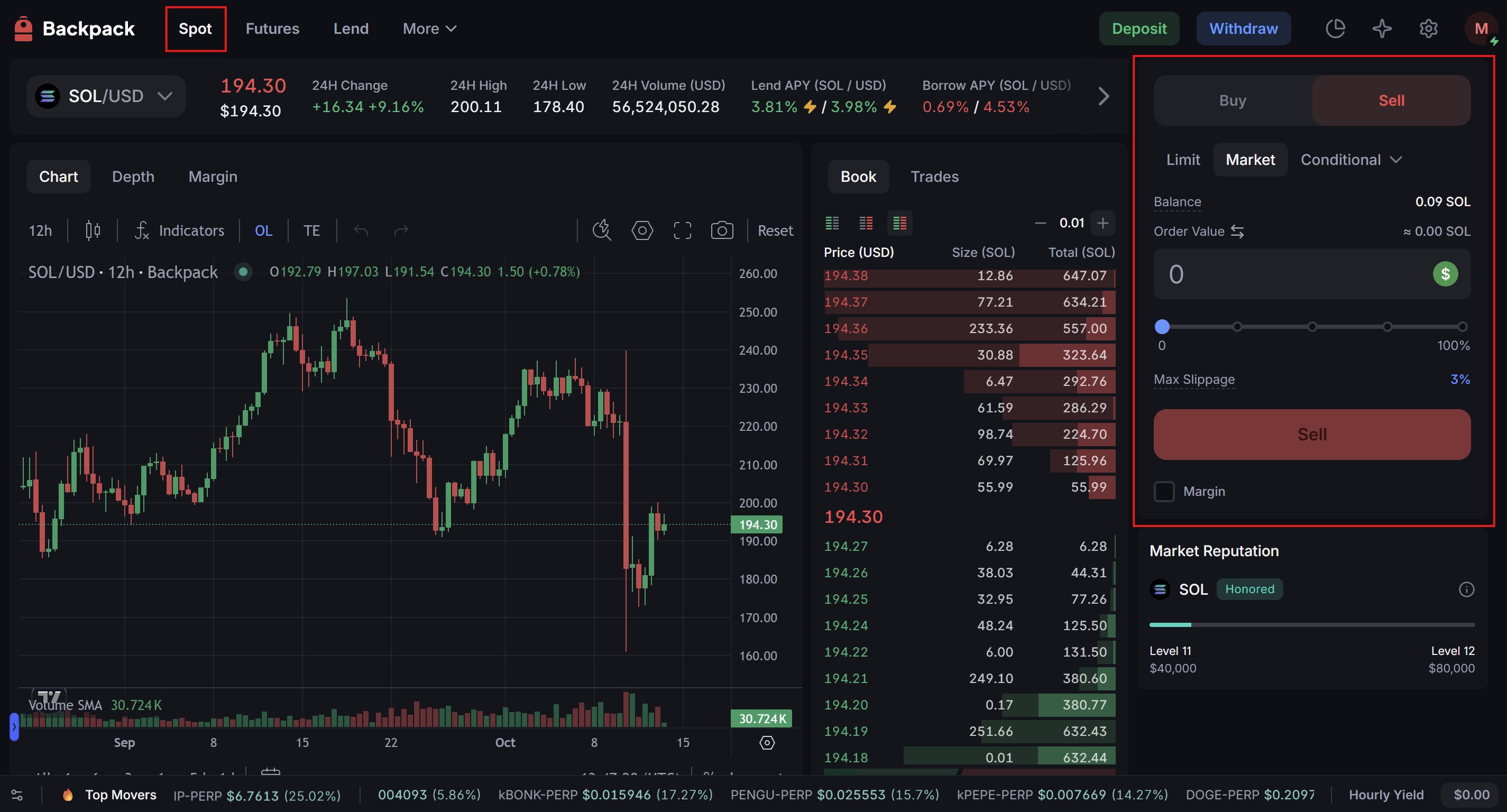
Backpack’s answer was to build an exchange alongside the wallet. The two products are related, but they are not the same arrangement. In the wallet, the user holds the keys. On the exchange, the user gets the familiar machinery of an account: order books, spot markets, perpetual futures, margin, lending and a customer service desk. Moving between them is the point. A DeFi user can keep assets in self-custody for onchain activity, then move funds to the exchange when centralized liquidity is useful.
A collection, a crowd, an exchange
The path to traders ran through an NFT collection. Mad Lads launched in April 2023, in a market hardly famous for its cheerfulness at the time. It gave Backpack a community that used the wallet rather than merely admired its roadmap. Later that year, Backpack Exchange secured a Dubai VARA license for exchange services. The regulated entity is Trek Labs Ltd FZE, licensed for retail, qualified and institutional investors under specified activities.
By February 2024, the company had raised a $17 million Series A led by Placeholder VC at a reported $120 million valuation. Backpack said it passed 500,000 verified exchange users by March. Those numbers show demand, though volume and registrations should never be confused with a durable business. The exchange makes money from trading and financing services; the wallet’s current pitch includes zero Backpack platform fees for swaps and bridges across supported chains. Network costs and the economics of the route still deserve inspection.
“We’re at this inflection point in the industry where we’re rising out of the ashes of FTX.”Armani Ferrante, on the case for a more mature crypto market
The acquisition came with people attached
Buying FTX Europe was more than buying a permission slip. Backpack says the deal required more than six months of due diligence before CySEC approval in January 2025, then another six months of work with regulators before it launched EU perpetual futures that September. In between came the less glamorous obligation: helping former FTX EU customers withdraw eligible euro balances. Backpack opened a claims portal, required identity checks, and began processing EUR withdrawals in May. Its own FAQ warned that bank processing and volume could make distributions take weeks.
This is the part a competitor cannot copy with a landing page. A license can let a company offer a product. Claims work asks whether the company can handle the consequences of someone else’s failed product. The acquisition’s reported $32.7 million price leaves out the staff, controls and time required to make the platform usable. Backpack EU began with more than 40 trading pairs and up to 10x leverage. It also began with a history that every former FTX customer could remember.
Then the stock market walked in
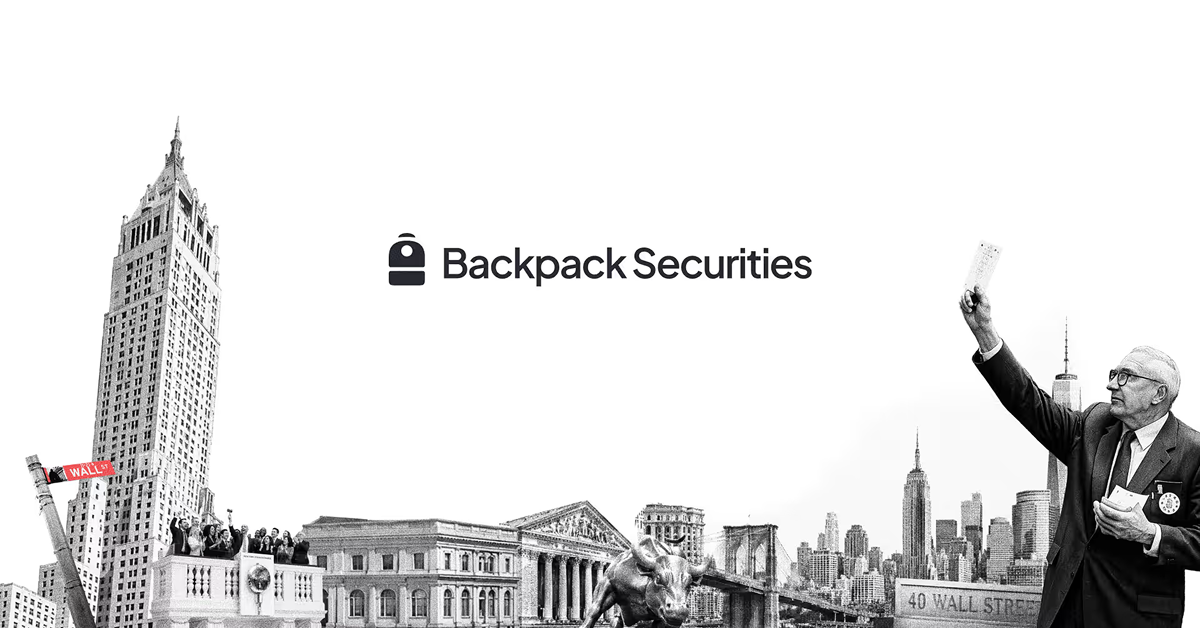
In June 2026, Backpack introduced Backpack Securities. The proposition is subtler than putting a stock ticker beside Bitcoin. For eligible users, it says a share purchased through its brokerage is a real security entitlement under established US securities infrastructure. A linked tokenized security can then move onto Solana and be redeemed back through the brokerage system. The company presents that two-way route as a way to combine familiar shareholder rights with the transferability of a blockchain asset.
The distinction matters. A stock-shaped token can represent many things: a claim on a share, a derivative payoff, or simply a promise from an issuer. Backpack’s design stresses the legal connection to the underlying security. It has also started listing equity perpetual futures, including contracts tied to Nvidia and Apple, where the trader holds a derivative rather than the stock. One screen can now contain products with very different rights and risks. That makes clear labeling as important as clever plumbing.
The company also launched its BP token in March 2026, using fee discounts and rewards to tie frequent traders more closely to the platform. It has described a route by which certain long-term holders may obtain company equity, subject to terms. That is a proposal with legal machinery attached, not a shortcut around it.
Backpack is competing with exchanges such as Coinbase, Kraken and Binance for trading, wallets such as Phantom and MetaMask for self-custody, and brokers for securities customers. Its strongest argument is the journey across those categories. A user can hold assets privately, trade in an order book, use collateral, and - where eligible - move between a brokerage entitlement and a tokenized security. The test is whether that journey remains intelligible once the products multiply.
There is a useful lesson here for any company that wants to bundle adjacent services. Backpack did not begin with a diagram of every product it might someday sell. It began with a wallet and a community, learned an expensive lesson about custody, then built the trading venue its users still needed. Europe required buying an existing regulated business and doing the claims work that came with it. Securities required legal infrastructure as well as code. The sequence is repeatable only where each new layer solves an existing user problem and the operator can absorb the obligations it creates. It would break down where liquidity is too thin, regulatory permission is missing, or the user cannot tell a share, a token and a derivative apart.
Backpack’s irony is its best headline, but not its business. The business depends on whether people who remember FTX will trust a company that survived it - and whether that company can keep explaining exactly where the money, the keys and the rights sit.