Michael Weisz has spent much of his career looking for doors. In finance, a door is rarely marked “private.” It is more often disguised as a minimum investment, a relationship, a thick memorandum, or the quiet presumption that the room was not built for you. Weisz learned the geography of those rooms in specialty credit. Then he helped build a digital entrance to them. In September 2026, he accepted a new job with an even stranger architectural brief: chief executive of Kamino, a Solana-based credit protocol that wants to give tokenized assets somewhere useful to go.
The move sounds like a leap from Wall Street to crypto. Look closer and it is almost stubbornly consistent. Yieldstreet, the company Weisz co-founded in 2015, tried to make private-market investments available through a screen. Kamino is trying to make assets on public blockchain rails financeable, distributable and liquid. One business began with the storefront. The other begins beneath the pavement.
“I have worked on the same problem at three levels,” Weisz said when his appointment was announced, “finding differentiated assets, distributing them through a regulated platform, and now rebuilding the infrastructure underneath both.” It is an unusually tidy sentence for a career spent in untidy markets.
The train into the city
Long before the CEO titles, there was the Long Island Rail Road. Weisz has recalled cutting school to ride into Manhattan and wander around Wall Street. The great buildings supplied the theatre. The markets supplied the puzzle. He became interested in risk before he properly knew what the word contained: appetite, price, timing, fear, documentation and the chance that the collateral may not be where everyone thought it was.
Work also had a domestic example. His father would leave home at five or six in the morning and travel for a week or two at a time. Weisz later described that routine as his model for what serious effort looked like. The lesson was not subtle, but useful lessons seldom need to be.
After studying finance at Touro College, Weisz joined a New York credit opportunities hedge fund with about $1.2 billion under management. He worked his way to vice president. The job put him close to asset-based lending, where cash flows and collateral matter more than a beautiful story. He later co-founded Soli Capital, a specialty-finance firm, in 2013.
His education came in the odd corners: supply-chain receivables, litigation finance, loans secured by art, marine assets and, in one memorable example, financing for professional athletes during lockouts. These were not cocktail-party stocks. They were situations in which complexity could hide either opportunity or a trap. Weisz learned to look for mispriced risk. He also saw how few ordinary investors ever got to look at all.
A storefront for the private market
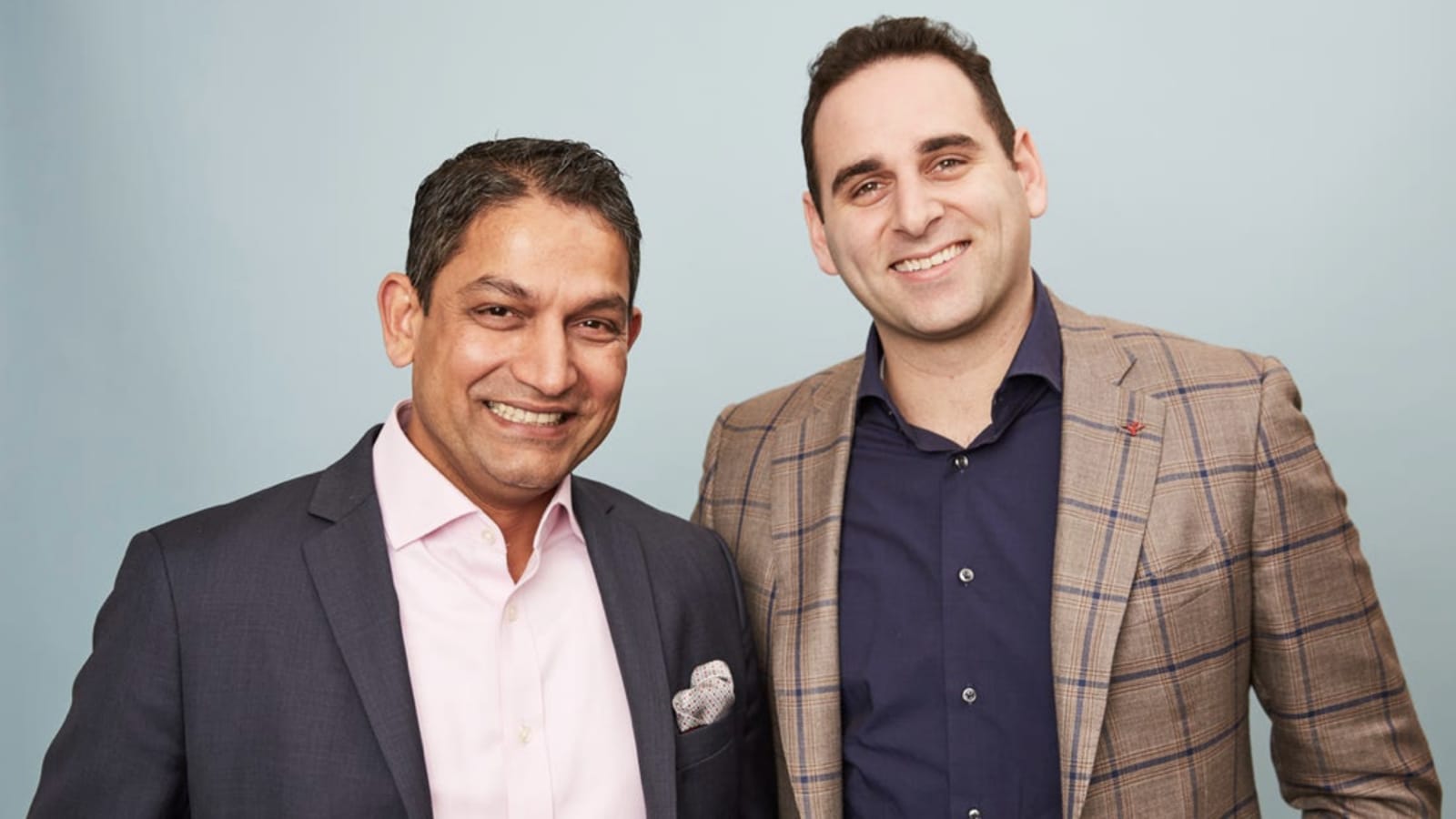
Weisz met technology entrepreneur Milind Mehere and found a complementary grievance. Mehere had grown frustrated that non-correlated, income-producing investments were difficult to reach outside elite networks. Weisz knew the assets and the originators. Mehere understood consumer technology and scale. Together, they formed Yieldstreet around a thesis that became Weisz's refrain: access to institutional-quality alternatives was “fundamentally broken.”
The early product turned a private offering into something a person could browse, study and fund online. The catalogue grew beyond specialty credit into real estate, private equity, venture capital, art finance and short-term notes. Education had to travel with distribution. A legal-finance deal or a loan backed by a painting cannot be explained with the familiar grammar of a public stock.
There was a retail instinct in Weisz's approach. Family-office adviser Joe Reilly remembers finding the young platform and getting Weisz on the phone for roughly half an hour to walk through a deal. Later, when the business had more machinery, the founder still spoke about unfamiliar assets using a story about his father learning to like sushi. People rarely develop an appetite for a thing they have never been allowed to try.
The company raised substantial outside capital and moved from one-off offerings toward funds and portfolios. In 2023, Weisz moved from president to chief executive as Mehere shifted into an advisory and board role. That year Yieldstreet also agreed to acquire Cadre, adding a technology-enabled real-estate platform. By 2025, its 360 managed portfolios connected investors to strategies involving Goldman Sachs Asset Management, Carlyle and StepStone Group. The front door had become a corridor.
The price of a wider door
Access, however, does not retire risk. It can make risk easier to buy. That distinction became the hardest chapter in Yieldstreet's story.
In 2023, the Securities and Exchange Commission brought a settled action against Yieldstreet and its registered investment adviser over a $14.5 million marine-finance offering made in 2019. The agency found that the company failed to disclose information showing an elevated risk that it could not seize the ship serving as collateral if the borrower defaulted. The borrower later had the ship deconstructed without repaying the loan, leaving investors facing losses. Yieldstreet agreed to cease and desist and paid more than $1.9 million in penalties, disgorgement and interest, without admitting or denying the findings.
Access carries a second obligation
A simple interface can reduce friction. It cannot simplify the collateral, cure a disclosure gap or create liquidity where none exists. For a platform selling complexity, explanation and controls are part of the product.
The episode is central to understanding what comes next. Weisz did not leave his first company with a pristine founder's fable. He left with growth, partnerships and product invention, but also with a public lesson in the distance between opening a market and governing it. When he later wrote that building Yieldstreet had demanded “discipline, listening, resilience, and humility,” the nouns had acquired receipts.
In 2025, he passed the CEO role to the company's leadership team. He began investing in founders, advising public and private company executives, and considering another operating job. His children prompted a Thanksgiving reflection on the decade. For the first time in nearly 20 years, he wrote, he had room to pause. Founders are not famous for enjoying empty calendars. Weisz soon found a new one to fill.
After the token comes the market
Kamino's origins are crypto-native. Its protocol runs on Solana and combines lending, borrowing and liquidity infrastructure. By the time Weisz arrived, it had operated through several market cycles and had begun building markets around tokenized real-world assets. The appointment came with a New York plan: hire an institutional team across finance, product, law, compliance and business development, close to the asset managers and service providers the company wants to reach.
Weisz's pitch is notably post-tokenization. Representing an asset on a blockchain is useful, but it does not conjure a functioning market. The asset still needs buyers, eligibility rules, documentation, servicing, pricing, collateral management and an exit. In his telling, the missing product is the system around the token.
What comes after tokenization
That is why his hiring makes more sense than the words “fintech executive joins DeFi” suggest. Kamino already had engineers and on-chain markets. Weisz brought an institutional contact book, distribution experience and familiarity with the dreary but essential work that surrounds private assets. He also brought the scar tissue of what happens when controls fail to keep pace with reach.
The task is full of contradictions. Kamino wants the openness of public rails and the confidence of regulated institutions. It wants assets to move more freely while respecting the restrictions that make many private assets private. It wants liquidity without pretending everything is liquid. In finance, the more seamless the experience looks, the more seams somebody has had to sew backstage.
The same obsession, one level down
Weisz has said his ambition is to widen access to investment opportunities and let investors borrow against assets that were previously difficult to finance. That goal connects the schoolboy staring at Wall Street towers, the specialty lender studying obscure collateral, the founder making alternatives clickable and the new CEO talking about blockchain rails.
It also sets the standard by which this second act should be judged. Transaction volume is not trust. A token is not liquidity. An institutional logo is not due diligence. The useful question is whether Kamino can make on-chain credit more legible, more controlled and more useful without importing every old weakness along with the assets.
Weisz once asked whether a company could affect many people and still be very successful, or whether the two aims were mutually exclusive. The question survives because it has no permanent answer. Each product, credit decision and disclosure answers it again. At Yieldstreet, he pushed open a door and learned how much responsibility sits in the hinge. At Kamino, he is working on the rails. They are less visible than a door. They determine where everything can go.