The most revealing object in enterprise software is often the thing nobody celebrates: the layer in the middle. It sits between a business application and the disagreeable facts beneath it - a particular database, a particular operating system, a particular machine with its own particular temperament. When that middle layer works, the application appears calm. When it does not, an employee who wanted to ship an order acquires an unwanted education in infrastructure.
Axel Allgeier has spent much of his career in that middle. At J.D. Edwards, he was the principal architect and inventor of Configurable Network Computing, known with the blunt affection of the trade as CNC. The architecture helped the company's applications work across different hardware, operating systems and databases. It became a foundation of EnterpriseOne, the suite that followed J.D. Edwards' earlier World product. The business user saw an application. The architecture saw a collection of differences that needed to be negotiated before breakfast.
This is less cinematic than a garage origin story. It is also closer to how large software systems earn their keep. Portability is a promise made in a sales meeting and redeemed in thousands of engineering decisions. Allgeier's work made that promise plausible, then followed him through a remarkable chain of corporate owners and into a company of his own.
The portability problem grows up
Allgeier arrived at J.D. Edwards after earning a BA in computer science from Princeton. His early patent work shows the shape of the era. A 1999 patent, assigned to J.D. Edwards World Source Company, addressed the retrieval of data across primary and secondary locations in a network. The language belongs to distributed computing before the cloud turned location into an abstraction and an invoice. The concern remains familiar: data sits somewhere, an application needs it, and the system should find it without making the user referee the trip.
He rose to vice president of development and led tools teams at J.D. Edwards and PeopleSoft. Then came the consolidation years. PeopleSoft bought J.D. Edwards in 2003. Oracle completed its acquisition of PeopleSoft in 2005. Products, teams and loyalties had to pass through those doors. Architecture had to keep working while the name above it changed.
Principal architect of Configurable Network Computing and later a vice president of development.
Led tools teams as J.D. Edwards became part of a larger enterprise software portfolio.
Held engineering leadership posts and led the creation and launch of a cloud middleware service.
Co-founded Nextworld, returning to platform design with cloud-native and metadata-driven materials.
Allgeier stayed at Oracle for nearly twelve years and held several vice president of engineering roles. By 2014 he was presenting Oracle's integration cloud work, and his later biography credits him with leading the creation and launch of a cloud middleware service. The technical vocabulary had evolved from network configuration to cloud integration. The central concern had barely moved: isolate the application from the machinery, guide people through complex flows, and give different systems a civil way to speak.
Across three corporate eras and a startup, the recurring product is a boundary: business intent on one side, technical machinery on the other.The through line in Allgeier's work
A startup with institutional memory
In July 2016, Allgeier left Oracle. The following chapter was not an escape from enterprise software so much as a return to the workshop. He co-founded Nextworld in Colorado with executives whose own histories ran through J.D. Edwards, including Vito Solimene and Kylee McVaney. Ed McVaney, one of the original founders of J.D. Edwards, backed the company and participated in product design. At launch, Allgeier and Solimene were described as co-chief software engineers.
The early company was discreet about exactly what it was building. Trade reporting in September 2016 found a few useful clues: a responsive web client, public and private cloud deployment, Java and Linux on the server, and an ambition to reduce the effort required to develop enterprise applications. The ingredients looked contemporary. The cooks had seen several generations of kitchens burn.
Nextworld emerged as a cloud-native platform for building and extending enterprise applications. Its method relies heavily on metadata: descriptions of fields, rules, workflows and interfaces that can be interpreted by the platform instead of being buried in hand-written custom code. This distinction matters when software changes. Traditional customization often becomes an expensive heirloom. It must be tested, repaired or rebuilt with every upgrade. A metadata-driven system aims to preserve the business's intent while the platform underneath continues to move.
Allgeier's public biography says he has spent much of his career building software that abstracts complexity from end users, with simplicity too often neglected in enterprise systems. That belief could sound like a design slogan if his patent record did not supply such specific footnotes. The inventions bearing his name deal with integration guidance, web interfaces insulated from underlying technology, automated transaction engines, sparse and base metadata layers, asynchronous saves for large transactions, no-code creation of enterprise software, and real-time aggregation of business data into analytical cubes.
The autobiography hidden in patents
Patents are notoriously poor beach reading, but they can form an accidental autobiography. Allgeier's begin with the question of where data lives. Later work asks how an integration tool can guide a user, how a web application can remain neutral about the runtime below it, and how a long save can finish in the background without taking the user's work with it. The recent Nextworld patents ask how a domain expert can express an application as intent and metadata, allowing the platform to generate the necessary artifacts.
The progression is tidy enough to look planned, though careers rarely are. In each case, some piece of infrastructure threatens to intrude on the human task. Allgeier and his collaborators place a layer between them. Good abstraction can feel like subtraction. Underneath, of course, someone has added a great deal.
His collaborators matter. Patent documents repeatedly pair his name with Vito Solimene and, on other inventions, with broader engineering teams. Nextworld itself was built by a group with shared institutional memory. Software architecture is sometimes narrated as solitary cleverness. Enterprise software, where accounting rules meet databases and an innocent button can initiate a multinational transaction, is emphatically a team sport.
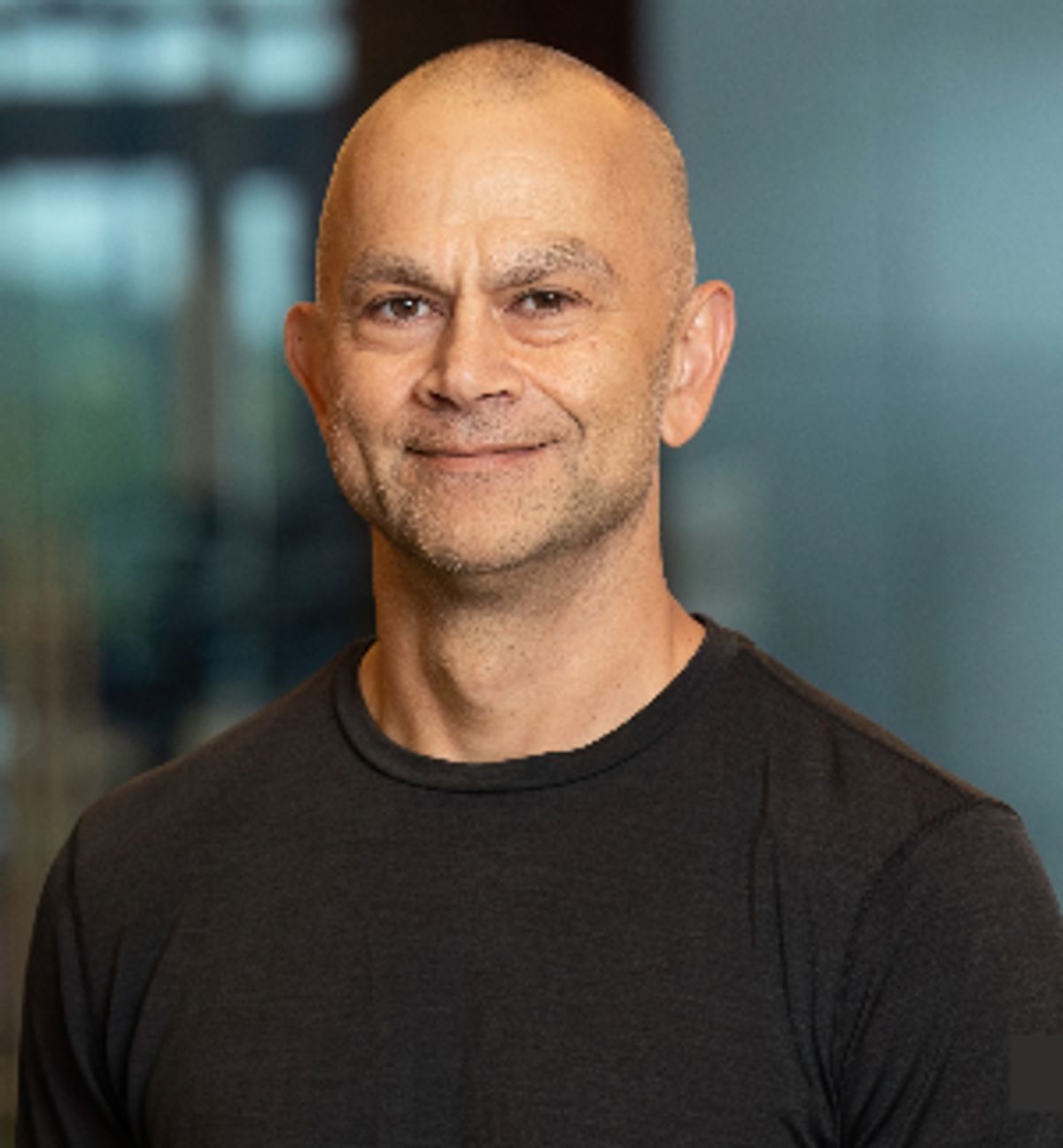
Allgeier's public profile offers small clues about the person outside the diagrams. He is based in Parker, Colorado. His company biography says he spends time on Colorado outdoor activities with his family and is hooked on CrossFit. LinkedIn lists English, French, Greek and German at varying levels of proficiency. None of this explains an architecture. It does, however, make the architect less abstract: a multilingual Princeton graduate in Colorado, still voluntarily choosing difficult repetitions after the workday ends.
The second draft acquires AI
By 2025, Nextworld had moved from quiet startup to a company announcing a $65 million Series F round led by McVaney Investment Partnership. The company said the money would support product innovation, global expansion, partnerships and customer growth. Its target customers included manufacturers, distributors and software businesses - organizations where a small process exception can grow into a large spreadsheet ecosystem with surprising speed.
The platform has since adopted the era's unavoidable new ingredient: AI. Nextworld describes an AI-native approach in which agents can help specify, build and test applications. For Allgeier's long-running project, AI changes the interface between intention and implementation. It does not repeal the architectural duties below it. Security, transaction state, integration, data models and upgrades remain stubbornly real. A fast generator merely arrives at those obligations sooner.
That makes his older work newly relevant. If a prompt can create business software, the quality of the abstraction layer becomes more important. Someone still has to decide what gets generated, how it behaves, which constraints survive a change and where accountability lives. The cheerful ease of creation needs an adult in the basement.
Simplicity in enterprise software is not the absence of machinery. It is machinery that knows where to stop.A design principle, repeated across the record
Allgeier is now listed by Nextworld as founder and Chief Product Officer. The title is appropriate. His career has lived at the seam between technical architecture and the product experience it permits. He has seen enterprise software move from client-server networks to cloud services, from coded customization to metadata, and from visual tools to agentic development. Each transition promised to free users from the previous layer of complexity. Each created a fresh layer for engineers to tame.
There is a pleasant stubbornness in spending thirty years on that bargain. Configurable Network Computing tried to let software travel. Cloud middleware tried to let systems converse. Nextworld tries to let business intent survive the journey from description to application and from one release to the next. The second draft is written in newer language, but the sentence underneath is the same: the system should do more of the remembering.