Consider the apartment swimming pool. It photographs beautifully. It promises a different sort of Saturday. But the tenant who never swims still helps support the machinery, maintenance and space behind it. For an apartment owner, this creates an awkward question: how much of the product is the customer actually buying?
- AvalonBay develops apartments as well as operating them.
- Four brands serve different budgets and ideas of a good home.
- Its August 2026 merger created Vivmark Residential.
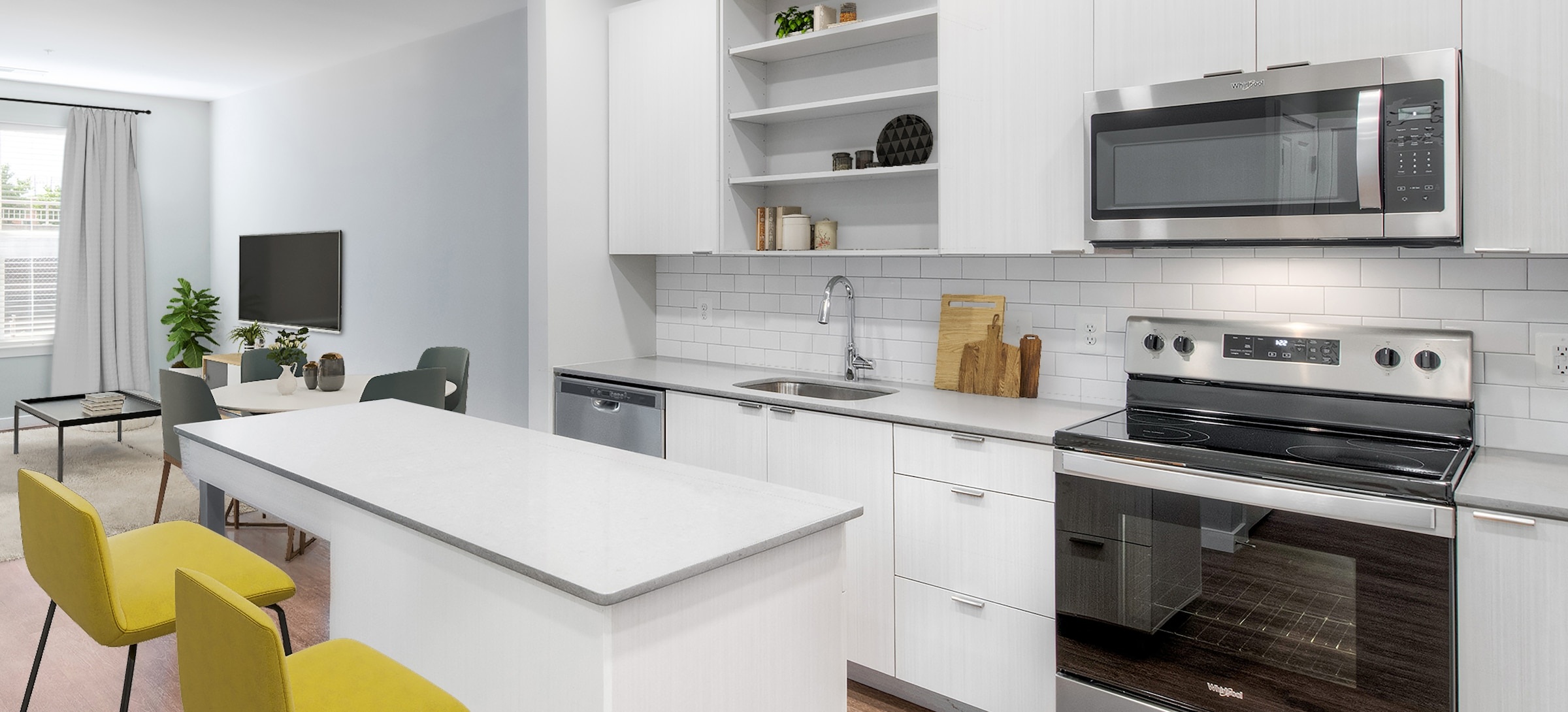
AvalonBay Communities offers an unusually concrete answer. Alongside its amenity-rich apartments, it has Kanso, a brand with limited or no shared amenities and a largely self-service model. The apartment remains modern. The communal wish list gets shorter. The interesting move is giving that choice a separate name, building specification and operating system.
The amenity that disappeared
In an April 2025 essay, AvalonBay executives David Gillespie and Kurt Conway described customer research that found renters who wanted good apartments without paying for extras they rarely used. Kanso concentrated investment inside the home. Smart access and centralized support helped reduce the need for daily staffing at each property.
“live simply without sacrifice”Kanso’s brand promise
There is a useful distinction here. Removing a pool changes construction and upkeep. Removing a daily staffed office changes how someone gets help. The second decision has to work as carefully as the first. A renter saving money on amenities will still expect a broken tap to be repaired. Efficiency is experienced at the moment something goes wrong.
Four answers to one rent cheque
Kanso makes more sense beside its siblings. Avalon emphasizes contemporary homes, amenities and service. AVA puts more weight on urban living, social spaces and apartments that can suit roommates. Eaves targets value-conscious renters, primarily in suburban settings. Kanso gives modern apartments a simpler communal footprint. The brands let one owner pursue several versions of demand within its markets.
For a prospective resident, the practical use is comparison. Search by location, inspect available homes, arrange a tour and compare the entire monthly commitment. Parking, utilities and other charges can matter alongside quoted rent. Furnished+ offers another route at selected communities: an apartment prepared for moving straight in, with flexible terms. Availability and program details vary.
The alternatives are other apartment owners, from Essex and UDR to regional landlords, plus the possibility of buying a home. AvalonBay’s differentiation sits in the combination of brands and development expertise. A polished website alone would be easy to reproduce. A team that can select land, arrange financing, build and then operate the result is harder to assemble.
That combination matters because apartments are slow products. A software team can remove a feature from the next release. A developer has already bought the land and built the room. Customer research therefore belongs near the beginning of the process. By the time a prospective resident tours the property, many of the expensive choices are permanent.
The landlord who also builds
The company itself came from a combination. Avalon Properties went public in 1993; Bay Apartment Communities followed in 1994. Their 1998 merger created AvalonBay. Richard Michaux became the combined company’s chief executive, Gilbert “Mike” Meyer its executive chairman and Charles Berman its president and chief operating officer. There was no lone founder sketching this business on a napkin.
Its regional offices developed construction and residential-service capabilities, including acting as their own general contractor. That connects the promise made in a leasing advertisement to decisions taken years earlier about a building. By 2013, the Archstone acquisition had added 60 communities and about 20,000 homes. Buying and building became complementary ways to grow.
As an equity real estate investment trust, AvalonBay earned most of its revenue from rent and related income. Cash from operations, property sales, debt and public equity helped finance investment. Its 2025 accounts recorded $3.041 billion in total revenue. Investors supplied capital; residents supplied the recurring payments that made the arrangement function.
The price of saying no
Scale has a price tag. In 2025, AvalonBay completed four wholly owned development communities containing 1,320 homes for $561 million in total capital cost. At year-end, another 24 wholly owned communities were under construction, with 8,572 expected homes and an estimated total capital cost of $3.307 billion. Those are portfolio figures, not a bill for Kanso.
Trouble can arrive before a building exists. AvalonBay expensed $10.846 million in 2025 for abandoned and unsuccessful pursuits, including development opportunities and transactions that did not happen. The number records the cost of exploring and stopping. It does not mean completed buildings lost that amount. Sometimes the spreadsheet gives way before the concrete is poured.
Nor does removing amenities remove the economics of land, approvals, construction or borrowing. A project still needs achievable rents and enough customers. Before the merger, AvalonBay described a long-term target of 80% suburban and 20% urban exposure, alongside a 75% established-market and 25% expansion-market mix. These were allocation goals, not claims that geography had ceased to matter.
For anyone copying the approach, subtraction needs an honest test. Does removing the feature actually reduce cost? Does the intended customer accept the trade? Can the remaining service keep its promise? A smaller amenity package paired with unreliable maintenance would leave the renter with two reasons to move. The building and its daily operation have to be designed together.
Bigger company. Same kitchen sink.
On August 17, 2026, AvalonBay and Equity Residential completed their merger, creating Vivmark Residential. The combined business reported more than 184,000 rental apartments and over 11,100 under construction. Those numbers belong to Vivmark. They should not be slipped into AvalonBay’s historical record.
The announced rationale included spreading technology and centralized services across more homes. Management projected $125 million in net synergies after property-tax reassessments; that was a forecast, not a delivered saving. The test remains local: whether a resident can move in easily, get help and decide the home is worth renewing.
The portable lesson is to ask which features a particular customer uses, then change both the product and its costs. It depends on the customer. Someone who swims every morning may happily pay for the pool. Someone who wants an office downstairs may dislike self-service. AvalonBay’s useful idea is allowing those renters to make different choices.
Take a closer look
Explore apartments and availability, Kanso and Vivmark news.