A paper drug chart cannot warn a prescriber about an interaction. It cannot make itself available to a pharmacist miles away. And it cannot turn a missed dose into a report that a hospital manager can interrogate across several wards. For Ashtons, those limitations have become a business opportunity: putting the prescription, the pharmacist and the medicine supply into a more connected service.
The company sells to healthcare organisations, with particular experience in independent mental health hospitals and hospices. Its proposition is unusually tangible for a software story. There are visiting pharmacists, medicine deliveries, staff courses and electronic records. The customer is buying help with the daily mechanics of care, including the awkward handoffs where information can go astray. Ashtons describes four connected service areas: clinical support, software, learning and supply.
The clearest demonstration is Priory. Its adoption of Ashtons’ e-Works prescribing system reached 53 mental health facilities in early 2024. A five-year renewal announced that July covered the wider pharmacy relationship as well. That makes the software part of a continuing operational contract, with people and products attached. The renewal also opened the door to more remote pharmacy advice.
A chemist’s shop, then a hospital customer
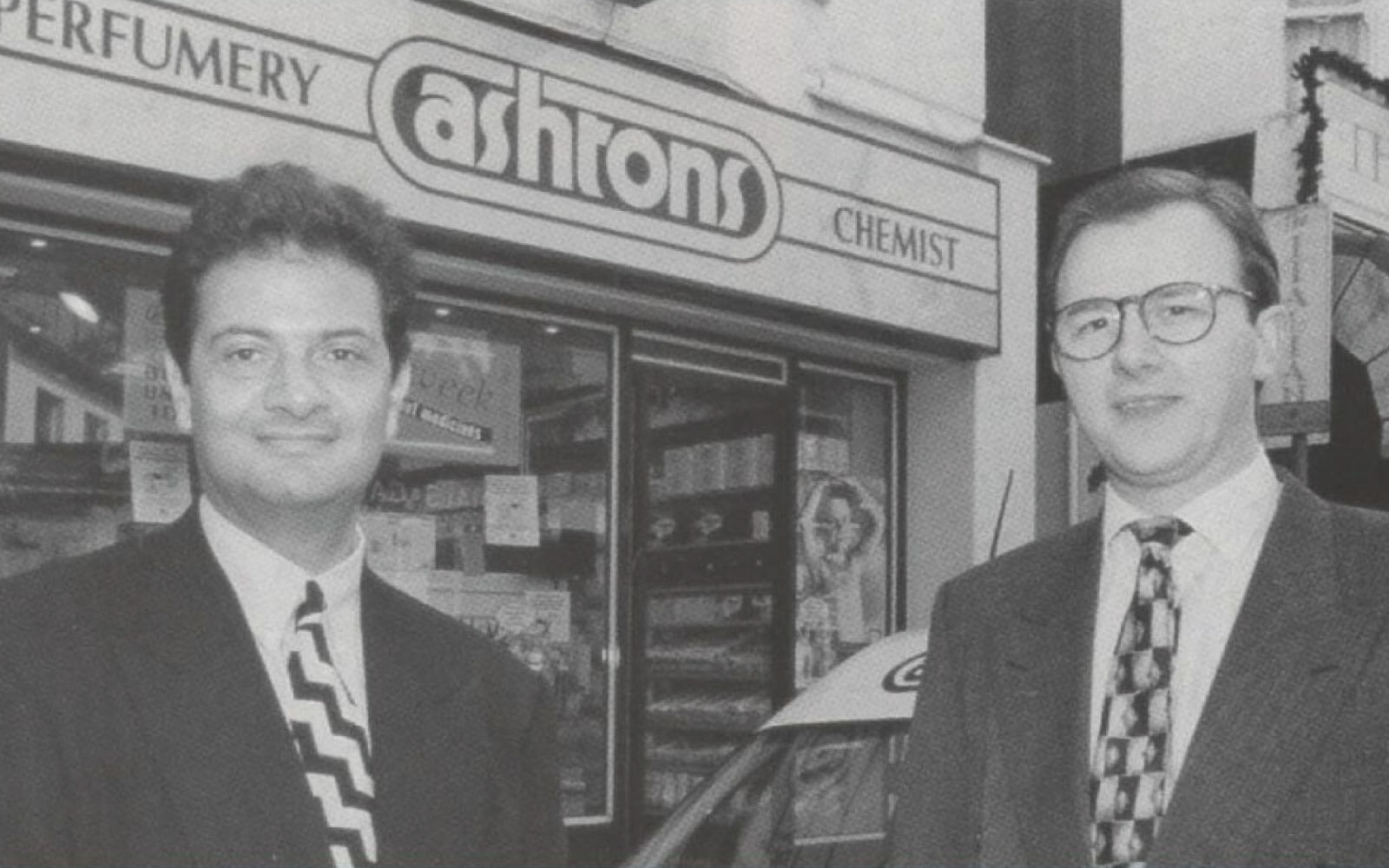
Ashtons began in 1984, when Laurence Sprey established Ashtons Late Night Pharmacy. The business expanded into care-home services in 1989. A more consequential turn came in 1997: a Priory hospital in Brighton and Hove became its first independent hospital customer, while Martlets became its first hospice client. The hospital pharmacy operation became a separate limited company in 2005.
That history explains the company’s clinical emphasis. It entered institutions through pharmacy work and gradually added technology around that work. Live View, its electronic pharmacy reporting system, launched in 2014. e-Works followed with a full launch in 2021 after more than seven years of development, testing and pilots. These are milestones in Ashtons’ own company history, which traces a long apprenticeship in the problems its software now addresses.
The continuity matters commercially. A hospital that already trusts a supplier with medicines and clinical advice has a different starting point when considering that supplier’s software. Ashtons’ long relationship with Priory made the later digital project an extension of familiar work. That is a plausible advantage in selling the system, though it does not remove the need to prove that it works.
The pharmacist is part of the product
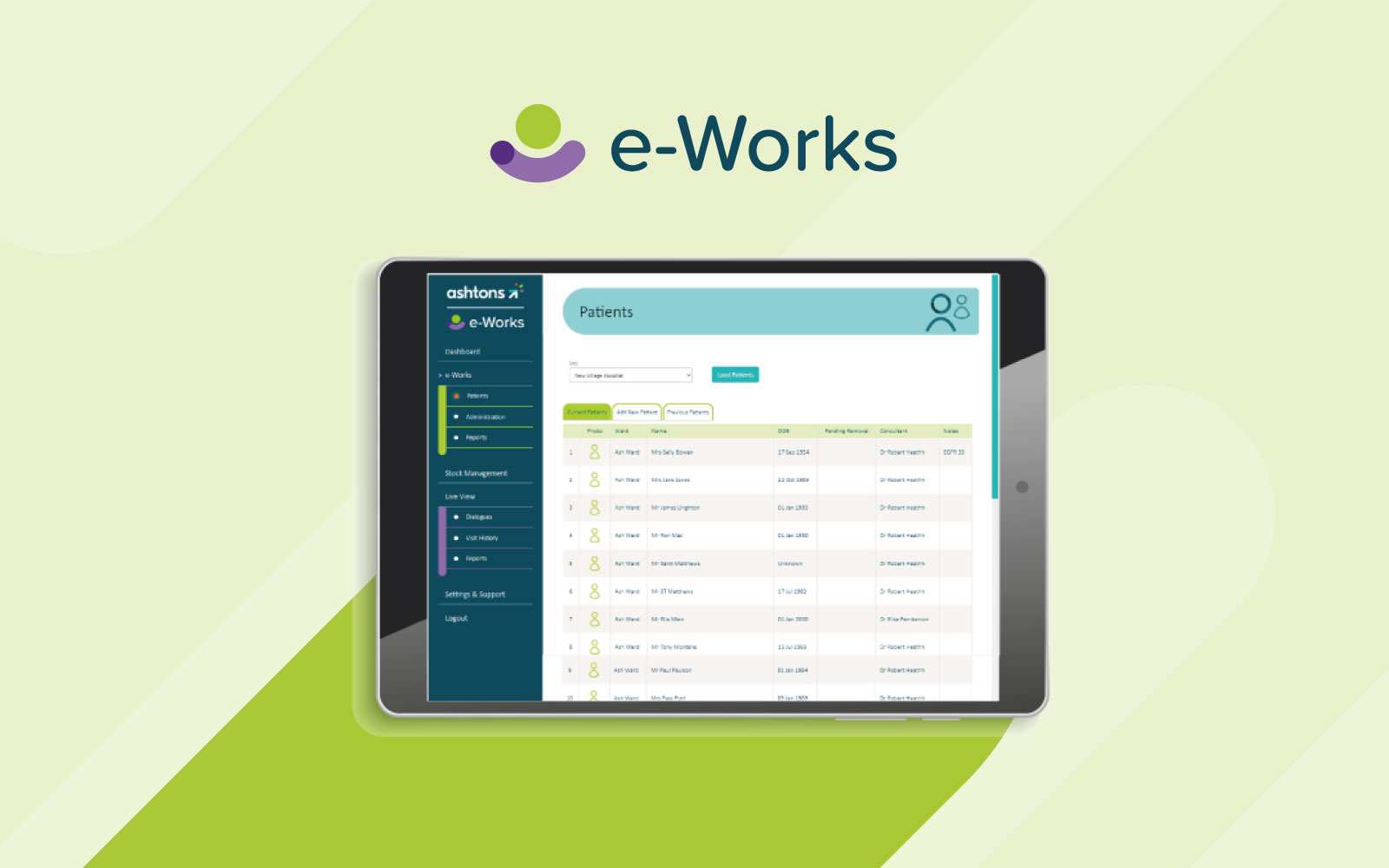
e-Works handles electronic prescribing and medicines administration, usually abbreviated to EPMA. Prescribers can work remotely; nurses can see administration schedules and record reasons a medicine was not given. Clinical decision support flags potential drug interactions, while pharmacy review tools let pharmacists respond to prescriptions. The published service specification describes a shared audit trail and a single access point for records, reports and charts.
Live View tackles another handoff: what happens after a visiting pharmacist spots a problem. Findings and actions become visible electronically, giving clinical teams and managers a way to follow up. Ashtons says customer feedback inspired its development. Its business intelligence service adds spending analysis, while its current software offering includes stock management and ordering within e-Works. Medicines as a Service is the company’s name for connecting replenishment more closely to usage.
The human service remains substantial. Ashtons advertises more than 45 visiting clinical pharmacists, prescription-chart reviews, policy advice and an on-call pharmacist until 10pm every day. Inspection support can be on site or remote. These are services for healthcare teams that need specialist input alongside their own staff, including help maintaining evidence of how medicines are managed.
That puts Ashtons at the intersection of outsourced pharmacy and healthcare software. Buyers can also consider dedicated EPMA products such as Better Meds, which emphasises prescribing, medication management and integration with other clinical systems. Ashtons’ distinction is the breadth of its own service bundle. The useful comparison is therefore the whole operating arrangement: software, clinical coverage, supply, implementation and responsibility for follow-up.
One pilot before 53 sites
Priory wanted to improve handwritten prescribing and administration records, strengthen reporting and connect with existing electronic care records. Its first e-Works trial supplied a practical reason to proceed. The case study reports reductions of 87% in patient-detail errors, 85% in prescription errors and 93% in administration errors at the trial site. Those are pilot results reported by Ashtons, rather than a universal forecast for hospitals.
The wider transition required e-learning, a phased rollout and support for early difficulties. The account acknowledges initial apprehension among staff. It describes adoption friction without establishing a single first technical failure. The lesson is less theatrical, and more useful: a successful pilot still has to survive the move into ordinary working routines. The case study dates completion to February 2024.
Priory’s new agreement then added a further change in working practice. The Ashtons 2.0 programme was designed to let pharmacists give advice more regularly from a distance, using digital information instead of travelling to inspect paper charts. The July 2024 announcement tied the software rollout to that service redesign. A digitised record changes where expertise can be delivered, as well as where the record is stored.
The licence is only one line on the bill
The public G-Cloud 14 pricing document, dated 2024, gives e-Works annual licence rates from £190 to £440 per user, depending on the user band. It lists annual support and maintenance at up to 20% of the annual fee. Implementation carries an indicative daily range of £650 to £1,950, with the scope determining the work required.
Implementation: indicative £650-£1,950 per day
A simple illustration makes the distinction concrete. At the published £440 rate, 100 users would imply £44,000 in annual licence fees. Applying the full 20% support allowance adds £8,800, for £52,800 before implementation and other charges. That is arithmetic from the rate card, not a quote or Priory’s contract price. The pricing document also lists additional services whose fees depend on requirements.
The business model extends beyond those licences. Medicine sales, clinical services and training sit alongside software, and contracts can cover several elements together. Separate marketplace listings put Live View at £38,400 per instance per year and the eXpert audit tool at £7,200-£14,400. These published rates help frame procurement questions; they do not turn a complex service arrangement into an off-the-shelf shopping basket.
The less glamorous work keeps it useful
Medicine supply is where digital ambitions meet shelves and delivery schedules. Ashtons’ ordering service lists more than 6,500 product lines. It offers stock medicines and individually dispensed medicines, with different arrangements for different settings. Its supply service also supports take-home medication and specialist products. A clearer prescribing record is valuable; having the medicine available is a separate operational job.
Training helps connect the two. Ashtons offers online modules aimed at nursing and medical staff, with progress reporting for managers and completion certificates. Pharmacist-led seminars can run face to face or online. The learning service is designed around clinical topics and staff schedules. For buyers, this makes staff preparation a component of the service they can evaluate, with attendance and completion they can monitor.
Inside the company, its careers material describes training schemes, mentoring, an intranet and staff social events. Its stated values include safety, knowledge and partnership. A more specific glimpse comes from its 2023 pharmacist conference, whose programme included medicines reconciliation in hospices and the metabolic effects of antipsychotics. Those subjects show the specialist knowledge the business has to keep renewing as it grows.
Private equity widened the brief
LDC invested in March 2020, backing the management team and marking founder Laurence Sprey’s exit. Its announcement reported £18.7 million revenue in 2019, up 70% over three years, and 90 staff at the time. The intended spending included software development and pharmaceutical warehousing and distribution. The investment thesis therefore included physical capacity as well as code.
The remit subsequently expanded. Ashtons acquired primary-care pharmacy provider Firza in December 2021. In September 2025, Agentis Health Group launched from within Ashtons and acquired remote-care technology company Living With. Ashtons continued serving more than 300 hospitals and care providers, while the wider group pursued long-term condition management. These are changes in the group’s scope, beyond the original independent-hospital niche.
On 25 August 2026, Agentis announced the acquisition of Clinical Pharmacist Solutions, adding outsourced pharmacy services, clinical support and training. Group chief executive Stephen Tuddenham described the role of digital technology as being used to “extend human expertise.” That phrase captures the logic of the latest acquisition: more technology, but also more people capable of doing the clinical work.
“extend human expertise”
Stephen Tuddenham, Agentis Health Group CEO, August 2026
Start with the handoff you want to fix
The practical idea readers can copy is the sequence: identify a specific weakness, test a change at one site, prepare staff and expand in stages. At Priory, the initial problem was the paper prescribing and administration process. The pilot helped justify wider adoption. The next step used the resulting digital information to change pharmacy support. Each stage gave the following stage something concrete to build on.
The conditions matter. A browser-based service needs reliable access, usable devices and a workable relationship with existing records. Someone must own training, review flagged issues and act on findings. A provider already well served by its pharmacy team and electronic patient record may gain less from a broad bundle. Ashtons’ software terms preserve the clinician’s professional responsibility; a screen cannot take that responsibility away.
Ashtons’ most persuasive offer is consequently quite specific: make medicines work easier to see, check and coordinate. Its history gives it experience of the job, and the Priory deployment gives buyers a substantial implementation to examine. The next test, as the wider group expands, is whether that close connection between specialist knowledge and everyday practice can travel into more settings.