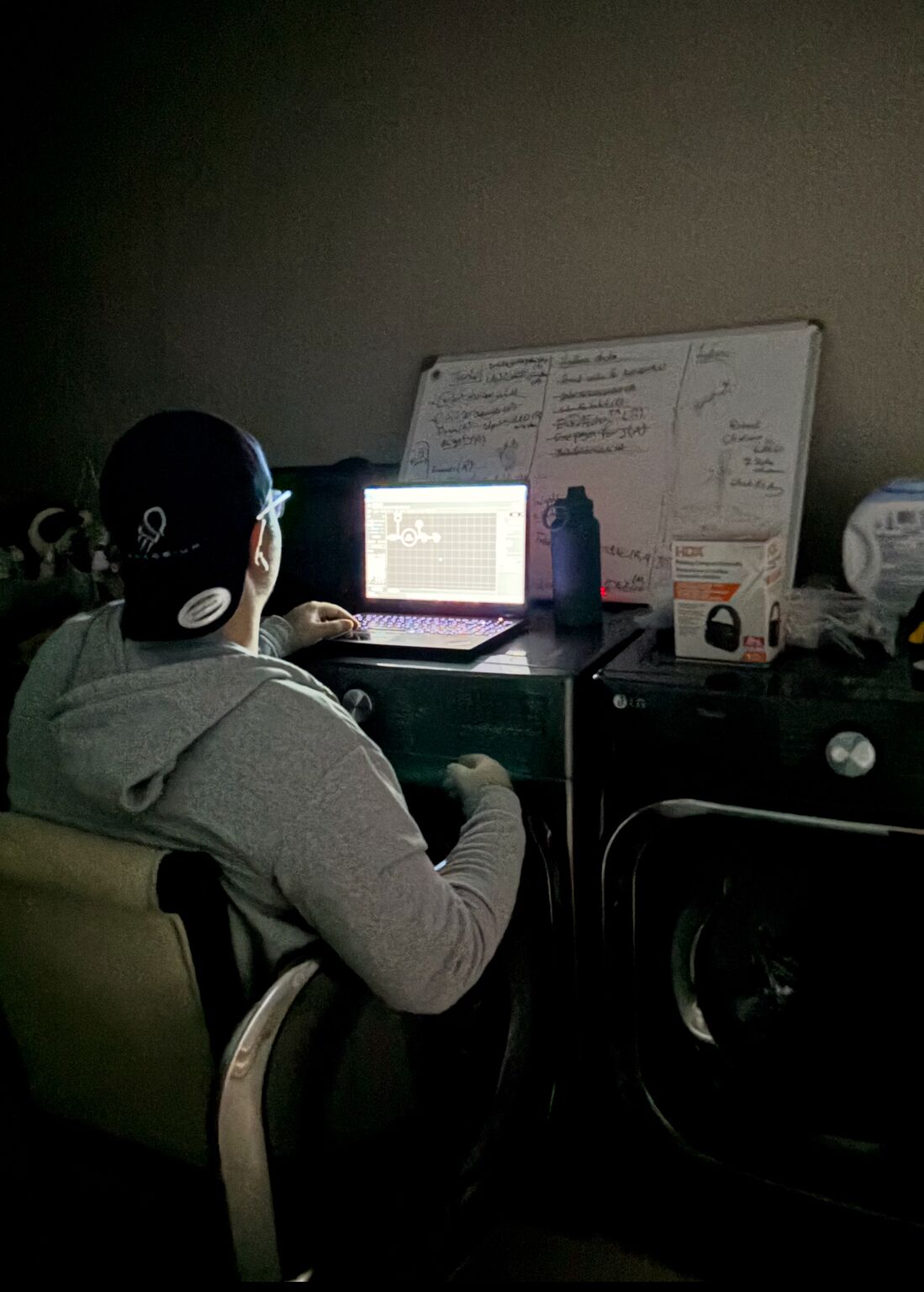
There was no mahogany desk in the first Spaceium office. There was barely a desk. Ashi Dissanayake worked from the floor of a small Ottawa apartment, balancing her computer on her dog's bed. Her co-founder, Reza Fetanat, took calls in the laundry room with his legs tucked into the dryer, partly because it was available and partly because the metal cave softened the echo. Around them sat robotic parts. Ahead of them sat a peculiar business proposition: put service stations in space.
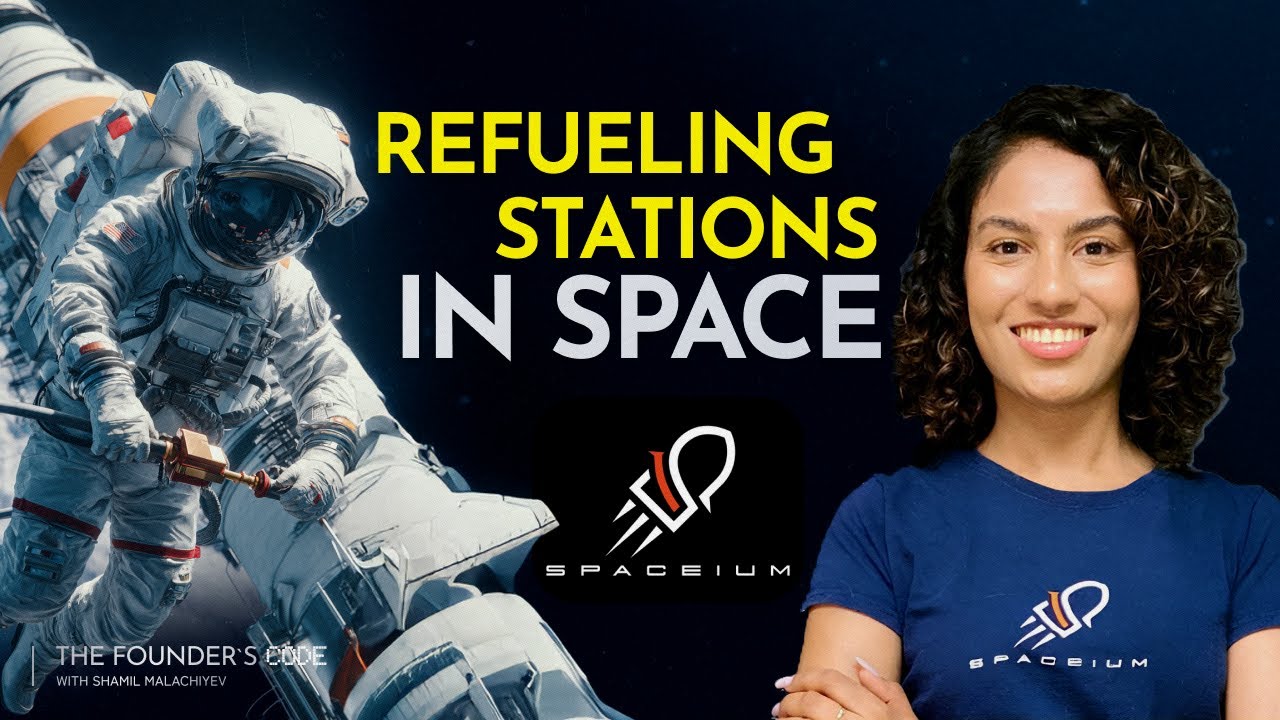
It is the kind of idea that makes an ordinary petrol station seem visionary. A spacecraft launches with all the propellant its designers believe it will need. Every extra kilogram of fuel competes with instruments, cargo or something more useful. When the tank is empty, a functioning machine may become an expensive addition to the orbital junk drawer. Dissanayake and Fetanat wanted to alter the ending. Their company would build fixed depots where spacecraft could dock, fill up and continue.
The grandness of the proposal makes its origin funny. Infrastructure for an interplanetary economy, conceived next to the Tide Pods. Yet the mismatch explains Dissanayake rather well. She speaks about wild ambition with an engineer's appetite for the next test. She has long wanted to go to space. First, she is building somewhere to stop on the way.
A childhood spent looking up
Ask Dissanayake when space first took hold and she cannot identify a tidy origin. There was no single book or television program. At five or six, she remembers staring at the sky and wondering what was out there. She liked mathematics, physics and books about space. She told people she wanted to be an astronaut. The ambition was less a decision than background radiation.
Engineering gave the obsession tools. She studied at Syracuse University and the University of Ottawa, in aerospace and mechanical engineering, specializing in orbital mechanics and rocket propulsion. Her early work included aerodynamic models related to NASA missions and real-time simulations for an uncrewed asteroid return mission. She also built rocket engines, payload structures and recovery systems. The dream acquired CAD files, equations and scorch marks.
At the University of Ottawa rocketry team, she met Fetanat. They built high-power rockets that carried scientific payloads to different altitudes, then returned those payloads and their data to Canadian laboratories. Away from formal work, they built rockets in a backyard. Backyard fires occasionally joined the research program. What mattered was that each knew how the other behaved when a test failed or dawn arrived before the work did.
“I easily get bored if it's not out of this world.”Ashi Dissanayake
The two engineers kept encountering the same constraint. Propulsion systems had to carry their whole future from the ground. More fuel meant less payload. Less fuel meant fewer maneuvers, shorter missions and a closer expiration date. Before forming a company, they called founders and technical leaders across the space industry. Some said they would never refuel. Others said they would love to, but their spacecraft were designed around the absence of stations. The founders did not yet know how to incorporate a business. They did know how to ask a useful question.
Four applications and eighty cents
In 2023, Dissanayake and Fetanat left their jobs and bet on Spaceium full-time. They saved money by working from the apartment. Neither had a business background. Terms such as SAFE notes had to be learned between engineering decisions and investor calls. They pitched hundreds of investors and repeatedly heard that nobody would buy fuel in orbit. Then prospective customers described the fuel they expected to need: ten metric tons from one, thirty from another.
The founders chose to trust the people who might buy the service. This was not blind faith. Every cold email returned evidence, including the rejections. A no could expose a design assumption. A maybe could justify another iteration. Some early skeptics later came back to ask for Spaceium's roadmap. Dissanayake's method was stubborn, but not static.
Y Combinator tested the distinction. Spaceium applied four times. The third application produced an interview and feedback, but no place. They worked on what the interviewers had identified and submitted again. Meanwhile, the money disappeared. Dissanayake later recalled that by March 2024 the founders collectively had less than two dollars. Rent was overdue. Even ramen had become ambitious.
Then came a follow-up YC call. Brad Flora told them the program wanted to fund Spaceium. Silence followed. Flora had to repeat himself. The fourth answer changed the company's trajectory: a place in the Summer 2024 batch, a network of other founders and investors, and a set of operating habits built around visible weekly targets.
During the fundraising stretch, calls could run from seven in the morning until eight at night. In the occasional half-hour gap, Dissanayake and another YC founder would buy ice cream, walk to a rusty post near the beach and touch it for luck. Rocket engineering has standards. Fundraising has rituals.
A very small turn in a very large vacuum
The financing headline arrived in January 2025: an oversubscribed $6.3 million seed round led by Initialized Capital. The money gave Spaceium room to hire and fly, but the interesting work remained physical. A service station cannot wave down a passing spacecraft. It needs to grapple, align and transfer propellant with care while vacuum, radiation and extreme temperatures try to make every component less cooperative.
Spaceium's first flight answered one narrow question. Mission Nicoló carried two robotic actuators, flight computers, motor drivers and thermal control hardware. The actuator is the precise joint intended to position a future robotic arm for fuel transfer. On Earth it is strong enough to lift the weight of an average person. In orbit, finesse mattered more.
The payload went from design through engineering, testing, qualification, integration and delivery in five months. It launched in November 2025 on SpaceX's Transporter-15, hosted by D-Orbit's ION spacecraft. In February 2026, Spaceium announced the result: verified rotational accuracy of 0.003 degrees. On a five-meter arm, the company says that translates to less than a millimeter of movement at the tip.
No propellant moved between vehicles on Mission Nicoló. The demonstration tested a core component, not a complete refueling station. That distinction is important, and it makes the milestone more interesting. Serious hardware advances arrive as a chain of smaller proofs. The actuator turned. The company gained flight heritage. The next test can ask a harder question.
“If you don't fail, you'll never learn anything.”Ashi Dissanayake
Obsession, with a nine o'clock catch-up
Dissanayake talks about failure as an engineer would: an outcome to inspect, not an identity to wear. When a test goes badly, she and Fetanat sit down, name the problem and ask for the next workable move. The same logic applies to rejection. Feel it briefly, extract what it knows, continue.
Her hiring method follows the pattern. Spaceium took roughly eight months to select its first employee. Near the end, the founders asked finalists to show projects built in their free time. The eventual hire sent pages of garage hardware. When asked about work balance, he said he was happy as long as he could do his laundry. Dissanayake heard a familiar frequency.
The culture she describes is demanding and domestic at once. The team meets at 9 a.m. every day. When the weather permits, they walk the dogs for about 45 minutes and agree not to discuss work. Food arrives for the team each week. Technical reviews and one-on-ones handle the machinery of the company; the walks protect the people from becoming components in it.
Fetanat remains central. Their goals align, Dissanayake says, because both point toward Spaceium. When they disagree, they talk until they find a conclusion. She once described the advantage of having a co-founder with four dry words: “You are lonely together, then.” It is a sharp employee-benefit statement for the aerospace age.
High-power rockets, payloads, recovery systems and a co-founder discovered through the work.
Two jobs left, one apartment occupied, and Spaceium pursued full-time.
The fourth YC application lands.
An oversubscribed $6.3 million seed round closes.
Mission Nicoló's orbital actuator test returns its 0.003-degree result.
The useful thing after launch
Spaceium plans fixed stations carrying large quantities of cryogenic and non-cryogenic propellant. The first likely users are orbital transfer vehicles, the tugs that move satellites and other spacecraft around orbit. For them, refueling can mean reuse and time saved: no waiting a year to launch a replacement simply because the current vehicle has emptied its tank. Repair services are intended to follow.
The longer route runs from low Earth orbit to geostationary orbit, then outward toward the Moon and Mars. Dissanayake calls it the space superhighway. Roads, of course, become useful because of what grows beside them: stops, repairs, supplies and predictable ways to continue. Space has plenty of departure ceremonies. She is preoccupied with the less glamorous middle.
Her personal ambition survives inside the corporate one. She still wants to travel to space. One day, she has said, she hopes to look into the dark and see Spaceium's stations from where she is. It is a charmingly circular aspiration: the child looks up, the engineer builds, the founder launches, and perhaps the astronaut eventually looks back at the infrastructure that made the trip less final.
For now, there is another piece to build and another measurement to collect. The dryer has returned to its intended profession. The hardware is in orbit. Between those two facts sits Dissanayake's real achievement: she kept converting an unreasonable destination into a sequence of testable next steps.