Imagine that the Commonwealth of Pennsylvania has decided to improve a road. On the plan, the project is beautifully abstract: lines, measurements, a replacement bridge, perhaps a turning lane. On the ground, the line may cross the edge of a lawn, a church entrance, a billboard lease or a business whose machinery cannot simply be put in a van. Somewhere, a deed has an old name on it. Somewhere else, an owner cannot be located. The engineering can be sound and the money can be approved, yet construction still cannot begin.
This is the territory of Arrow Land Solutions. Based in Altoona, the woman-owned firm performs the real-estate work that infrastructure creates: finding who owns what, valuing what a project affects, negotiating an acquisition, helping occupants relocate, closing the transaction and looking after property once it is empty. It works for public agencies and private companies, with or without eminent-domain authority. The shorthand is “right-of-way.” The actual work is a collision of law, logistics, accounting and manners.
01 / The first fragile thingA perfect plan can have the wrong owner
Arrow’s most useful idea is also its least glamorous: bring property people in early. Its preliminary-design team collects deeds, tax maps, utility easements, subdivision plans and leases. Agents attend field views and public meetings. They check where wells, septic systems and improvements actually sit. They photograph a parcel before construction and flag “larger parcel” questions that can change an appraisal.
This is where projects tend to become expensive in small, avoidable increments. A property line on a drawing disagrees with the deed. A final plan arrives before a relocation problem has been recognized. A promise made casually at a public meeting conflicts with the Uniform Relocation Act or Pennsylvania’s Eminent Domain Code. Arrow points to a PennDOT procedural change under which district right-of-way staff consult during development but no longer review final plans before acquisition begins. That change moves the useful moment for scrutiny forward. The first thing to fail is often not concrete or steel. It is information.
The parcel path - simplified
Clients can buy pieces of that sequence or hand Arrow a broader assignment. Its title group handles everything from a current-owner check to a 60-year search, along with mortgages, liens, bankruptcies, tax records, escrow and recording. Certified appraisers value residential, agricultural, commercial and industrial property. Acquisition agents present offers and negotiate claims. Relocation advisers calculate replacement-housing benefits, find comparable homes, document machinery and help businesses search for new sites. After a building is vacated, the company can shut off utilities, inspect for asbestos, arrange maintenance, board it up or coordinate demolition.
02 / Evidence in the odd detailsThe cemetery gate and the Spanish-speaking pastor
The case for a specialist appears in the exceptions. In Arrow’s published portfolio, one widening project required an acquisition from a cemetery, including a large stone gateway and a realigned entrance. Another involved Spanish-speaking claimants and a church led by a pastor who spoke only Spanish. An I-95 assignment included Section 8 tenants, non-English-speaking households and properties in foreclosure. A Clearfield County project required last-resort housing, accessible housing and Section 8 searches.
None of this resembles a clean real-estate closing. A business relocation may involve inventories, moving-cost bids, search expenses, reestablishment calculations and the disposition of equipment. A residential move must end in housing that is not merely available but decent, safe, sanitary and compliant. The work rewards a firm that knows the statute and can still explain it at a kitchen table.
Those are company-reported outcomes, but they reveal the currency of the business: clearance dates and budgets. On the Luzerne County pilot, Arrow says 26 claims tied to seven bridge replacements and three removals were acquired in less than six months, including condemnations involving owners who could not be located. The project finished under budget. On the Arcola Road bridge job, it says the work was completed nearly a year ahead of schedule after a deficient bridge closed.
03 / The quiet softwareAIM is not the product. Memory is.
Arrow is a services company, not a SaaS startup. Still, its sharpest differentiator may be software. ARROW Information Management, or AIM, is its in-house online system for parcel data, documents, milestones, finances, workloads and client reports. CEO and co-founder Brenda Wiedman helped implement its training and materials. The system was shaped by thousands of acquisition and relocation files rather than invented as a generic dashboard.
That distinction matters. The hard part is not displaying a green progress bar. It is knowing which facts deserve fields, which deadlines change the schedule and which document must be visible to an agent in Forty Fort and a manager in Altoona at the same moment. AIM turns operating memory into a repeatable method. The reader can copy the principle even without the software: document the exceptions, name the handoffs and make project truth shared rather than personal.
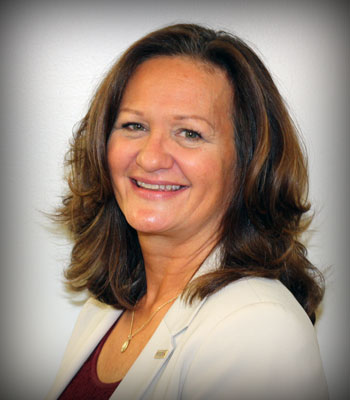
Brenda Wiedmanruns operations, staffing and project oversight as CEO and principal-in-charge. Arrow credits her with opening satellite offices and building the training around AIM. Her published biography describes more than 32 years of management and right-of-way experience.
04 / A field trailer becomes a networkGrowth without pretending the work is simple
The business began in 2000 in a field-office trailer with three employees. Its origin story sounds like the casting call for a regional comedy: a retired PennDOT assistant district engineer, a real-estate agent apprenticing as an appraiser, a factory machinist moonlighting as a financial adviser and a restaurant manager. In 2002, the operation partnered with California-based Overland Resources. After subsequent combinations, ARROW Land Solutions took its present form in 2008 by acquiring the Northeast branch shares.
Wiedman obtained Pennsylvania DBE certification in 2010. That status matters in public infrastructure procurement, where projects may carry participation goals for disadvantaged businesses. But certification gets a firm onto the field; performance keeps it there. Arrow now lists offices across Pennsylvania, serves PennDOT districts, municipalities, engineering firms, railroads and utilities, and holds additional small, diverse and women-owned business credentials in Pennsylvania and Maryland.
In November 2023, the Pennsylvania Turnpike Commission selected Arrow for an open-end, systemwide right-of-way acquisition services award. The meeting minutes called it the firm’s first opportunity as a prime for the Commission. That is a more revealing milestone than a vague growth claim. It marks the movement from specialist participant to accountable lead.
05 / What travelsThe method works where complexity repeats
Arrow’s model fits projects with many parcels, public rules, hard deadlines and consequences for getting the sequence wrong: highways, bridges, transit, pipelines and utilities. It works especially well when a client needs a specialist extension of its own team, a DBE partner with substantive capacity, or a single thread running from title research through settlement.
The method is less useful for a simple private sale, for work outside the jurisdictions where the team holds local knowledge and credentials, or when a project owner brings right-of-way expertise fully in-house. It also depends on early access. Bring a specialist in after plans are sealed and promises are made, and the best process in the world may only document an expensive surprise.
The broader lesson is wonderfully unfashionable. When a project repeatedly fails at the border between organizations, professions and ordinary lives, do not add another motivational meeting. Build a practice around the border. Learn its rules. Record its exceptions. Give one team responsibility for carrying the facts across. Arrow Land Solutions did that in a trailer, then turned the accumulated detail into a statewide business.