Founder File / Public Safety AI
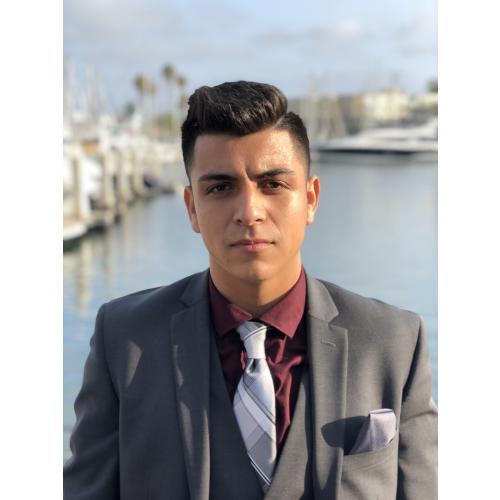
Armando Torres
He chased solar-cell efficiency records and hunted disease biomarkers. Then he found a stranger problem worth solving: the paperwork eating a police officer's shift.
He chased solar-cell efficiency records and hunted disease biomarkers. Then he found a stranger problem worth solving: the paperwork eating a police officer's shift.
Ask any patrol officer what eats their day and the answer is rarely the chase. It is the typing afterward - the narrative, the timestamps, the chain of detail that has to hold up in court. Armando Torres built a company around that hour. KARDA, the San Francisco startup he co-founded and runs as CEO, ingests body-camera footage and other media and hands back a draft report. The pitch is blunt: roughly nine minutes per report, up to three hours back per shift.
That is the headline. The interesting part is the route he took to get there. Torres is a chemical engineer by training, Stanford class of 2022, who walked in on a pre-medical track and walked out the other side of catalysis labs and clean-energy internships. Most people with that resume end up in batteries or biotech. He ended up in police stations.
KARDA describes itself as redefining police reporting by automating routine work. Under the hood that means natural language processing and machine learning trained to turn raw footage from providers like Axon, WatchGuard, and Lenslock into something an officer can review, correct, and file. The reports are built to be CJIS-compliant and admissible in court, wrapped in end-to-end encryption and able to plug into the records-management systems agencies already run.
There is a version of the AI gold rush that chases chatbots and image generators. Torres went the other direction, toward a workflow so dull and so universal that fixing it changes how a public institution spends its time. Documentation is not a feature. For law enforcement it is the job that surrounds the job - and it is where fatigue, error, and inconsistency creep in. KARDA's bet is that better paperwork is not a convenience. It is accuracy, accountability, and hours of an officer's attention returned to the street.
The company has not stayed in the lab. KARDA has worked with U.S. agencies including the Boston Police Department, sponsored chief-of-police associations, and put its founder on the road for demos and law-enforcement events. It closed a $200,000 seed round dated November 2024 and surfaced among the startups at one of Stanford's largest demo days in 2025.
The flagship product writes reports, but the company has widened the aperture. KARDA also builds a multilingual kiosk for non-emergency crime reporting - a way for a community to file an incident in its own language without tying up a dispatcher. It is the same thesis pointed at a different door: take the documentation friction out of public safety, and more of the system's capacity goes to people instead of forms.
Torres did not arrive here by accident. The throughline across solar cells, biomarkers, and body cameras is the same instinct - find the place where a process leaks time and energy, then close the gap. He just kept following the friction until it led somewhere unexpected.
“Responsible AI that enhances public safety and accountability - and gives officers back the hours the paperwork takes.
- The mission Armando Torres has set for KARDA
Graduates Paramount High School and is named a Milken Scholar - one of fifteen selected that year from Los Angeles County.
Interns at Antora Energy, contributing to a thermophotovoltaic cell system that reaches a record ~30% efficiency measurement.
Earns a B.S. in Chemical Engineering from Stanford and receives the Stanford Award of Excellence. Joins Diagnose Early as a Senior R&D Engineer working on disease biomarkers with Sutter Health.
Founds KARDA, Inc. in July to convert video and multimedia into compliant documentation with AI.
Closes a $200K seed round; KARDA works with U.S. law enforcement including the Boston Police Department.
KARDA features among startups at Stanford's largest demo day and expands its body-cam integrations.
Triple-scholarship kid - Milken, Gates, and HSF - out of Paramount, California, and a first-generation path into Stanford engineering.
His engineering range is almost suspicious: solar cells, disease biomarkers, and police paperwork, in that order.
KARDA claims its AI drafts a report in about nine minutes, aiming to save officers up to three hours per shift.
The platform reads footage from Axon, WatchGuard, and Lenslock and files into the records systems agencies already use.
Beyond reports, KARDA runs a multilingual kiosk so communities can file non-emergency crimes in their own language.
Went into Stanford pre-med, came out an entrepreneur. The detour was the destination.