Every filmmaker remembers the first time an Aputure light did something it had no business doing. You set it next to a fixture that cost ten times as much, flip both on, and wait for the cheap one to look cheap. It doesn't. That small, repeated shock - "wait, this is the affordable one?" - is the entire company, engineered on purpose and priced to move.
Aputure makes professional lighting for film, video and photography: heavy point-source LEDs, full-color panels, pixel bars, mini lights, and the app that runs them all. Its pitch is almost embarrassingly simple. Take the things that make a high-end cinema light good - color accuracy, real output, a durable body, weather sealing - and sell them for a fraction of what the incumbents charge. Do that for a decade and you end up where Aputure is now: a brand that claims more than 1.2 million users and shows up on sets ranging from a one-person YouTube channel to studio productions.
The name tells you the ambition. "Aputure" is a blend of aperture and future - a camera word welded to a promise. It is the kind of name you pick when you are a small accessory shop that intends to become something much larger.
A store that sold adapters, then decided to sell light
The origin is less glamorous than the product line. In 2005, Ian Xie started an online store selling camera-related electronics - monitors, adapters, small accessories, microphones. It was a parts business. But Xie kept moving up the value chain, from accessories into LED lighting, and traveled to Los Angeles to work directly with filmmakers on early designs. There he met Ted Sim, who had co-founded Indy Mogul, one of the most influential early indie-filmmaking channels on YouTube.
That pairing is the whole story in miniature: Xie's engineering and manufacturing out of Shenzhen, Sim's storytelling and community out of LA. The company formalized as Aputure around 2013, with Hellen Liu as the third co-founder and COO. Sim built up the US operation and, crucially, launched free education - the Four-Minute Film School - years before Aputure had a flagship product worth bragging about.
The company that wins at the end of the day is the one that puts the user first.Ted Sim, Co-Founder & President
Teach first, sell later. It is a patient flywheel: publish tutorials, build a community of shooters, then sell them lights they can actually afford, and use the margin to build better lights. Most hardware companies never get the first turn of that wheel. Aputure has been spinning it since before it had a hit.
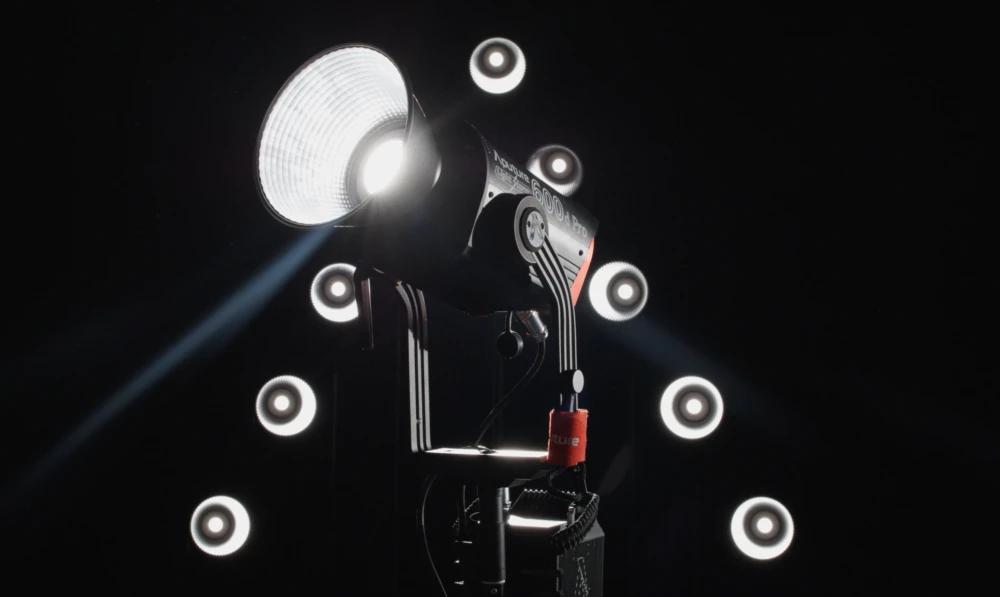
The light that changed the argument
The turning point was the LS 300d, unveiled at NAB in 2017. It won multiple "Best of Show" awards - the kind of recognition value brands are politely not supposed to get - and it reframed the entire conversation. Aputure stopped being "the cheap option" and became "the option." The 300d II followed in 2019, the 600d point source arrived in 2020 with HMI-comparable output, and the full-color 600c Pro and bi-color 600x Pro rounded out a professional line built around one deliberate choice: the Bowens mount.
That choice matters more than it sounds. By standardizing on the Bowens fitting across the LS line, Aputure quietly turned a British studio-flash mount into the default modifier standard for a whole generation of affordable cinema lights. Softboxes, domes, fresnels - a huge accessory ecosystem grew up around the decision. It is the sort of moat you only notice in hindsight.
Undercut, then out-build
The trouble with a value strategy is that it is easy to start and brutal to sustain. Undercutting only works until the incumbent shrugs; then you actually have to out-engineer them. Aputure's answer arrived as weather-sealed monsters. The Electro Storm family, announced in 2023 and shipping in 2024, includes the 1,500-watt full-color CS15 and the 2,600-watt bi-color XT26 - a fixture that approaches the brightness of a 12,000-watt tungsten Fresnel while surviving an IP65 rating. This is the moment a discount brand stopped being a discount brand.
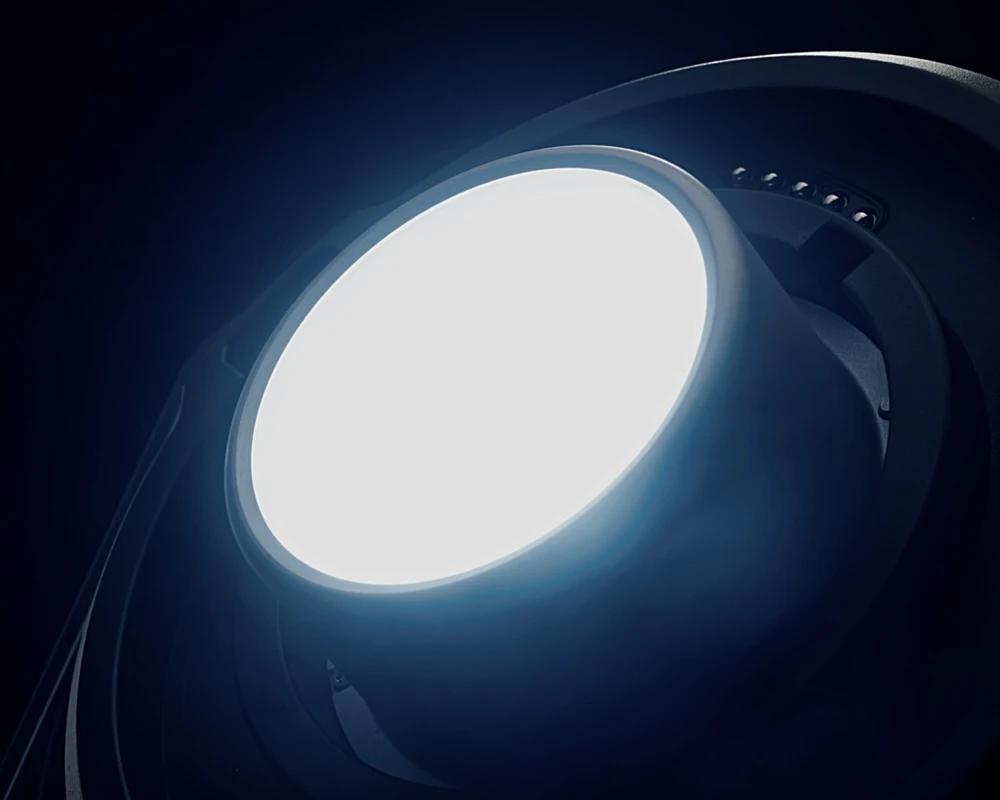
In 2025 the company reset the core again, launching proprietary BLAIR and BLAIR-CG light engines aimed at the oldest trade-off in LED lighting: brightness versus color fidelity. Around them came the STORM point-source series (CS32, 1000c, 1200x), the NOVA II panels, and NOVA 9°. The message was consistent - Aputure now competes at the top on engineering, not just on the receipt.
Software is the quiet part
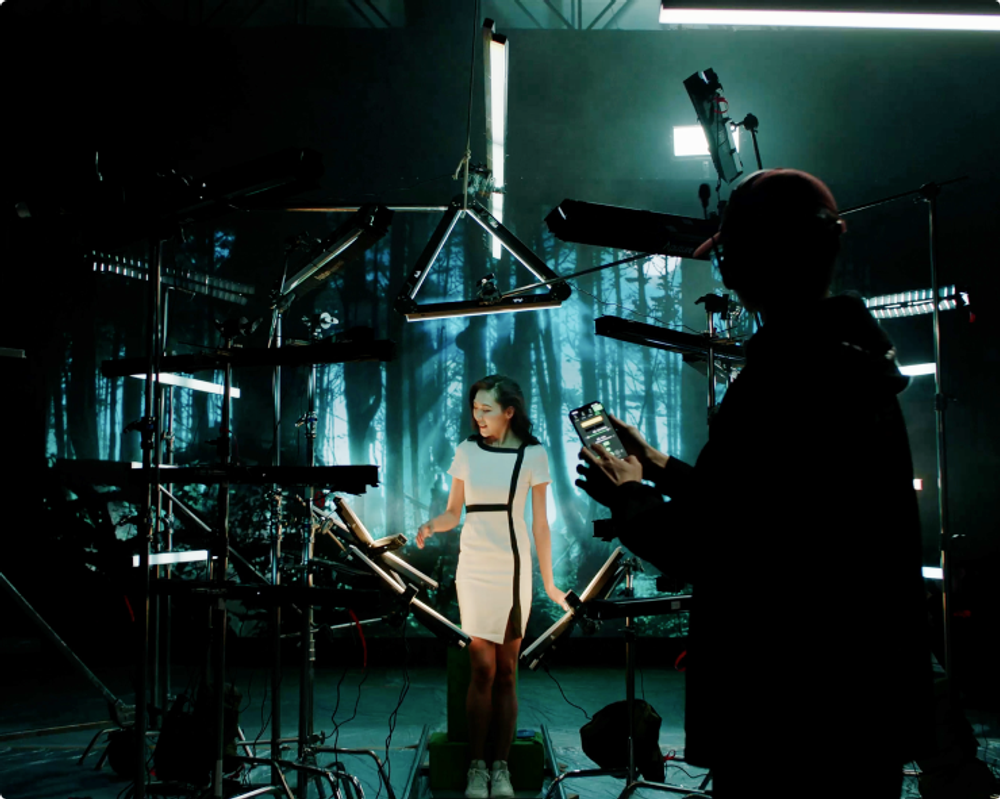
Fixtures get the attention; the control layer is where the lock-in lives. Sidus Link is Aputure's wireless Bluetooth-mesh app, letting a shooter run color, intensity and effects across an entire rig from a phone or tablet. Sidus Link Pro 2.0, launched at Cine Gear 2025, added auto-patching, diagram tools and effects programming for large setups. Once your whole kit answers to one app, switching brands gets expensive in a way that has nothing to do with the price of the next light.
Two markets, two brands
Aputure's read on its own industry is that filmmaking is splitting in two: high-end productions that need sophisticated workflows, and content creators who need something portable and intuitive. Rather than force one brand to straddle both, the company cut amaran loose. The creator-focused sub-brand - affordable, app-controlled, built for run-and-gun - spun off into an independent sister company, debuting solo at NAB 2024. Aputure keeps the pros; amaran chases the creators.
Automation and AI should eliminate busywork and enhance human creativity - not replace creatives.Ted Sim, on Aputure's 2025 direction
Who actually buys this
The customer list runs the full range: independent filmmakers, YouTubers, videographers, photographers, commercial and studio productions, and rental houses that stock Aputure by the shelf. The rental market is a stealth channel - it puts the gear in the hands of thousands of shooters who never bought it, then watches them save up for their own. Aputure's gear has reportedly been used on productions tied to Disney, Warner Media, NBCUniversal and Nike Studios. The business itself is a hybrid: direct-to-consumer through aputure.com, plus a deep dealer network (B&H, Adorama, Filmtools, Amazon) and the rental houses.
- Founded2005 (store) / ~2013 (Aputure)
- HQWest Hollywood, CA + Shenzhen
- FoundersIan Xie, Ted Sim, Hellen Liu
- Core lineLight Storm, Nova, Electro Storm
- Control appSidus Link / Pro 2.0
- Sister brandamaran (creators)
The people behind it
Ted Sim is the public face - a UCLA valedictorian who later enrolled at Harvard Business School while running the company, and whose Indy Mogul background explains why Aputure treats free education as a first-class product. Ian Xie is the engineering and manufacturing engine on the Shenzhen side, and Hellen Liu rounds out the founding trio as COO. It is a two-continent machine: LA supplies the audience and the story, Shenzhen supplies the hardware.

Where it fits
In the market map, ARRI is the premium incumbent and the color benchmark everyone measures against; Nanlux and Nanlite, Godox, Litepanels, Quasar Science and Astera fill out the middle and the edges. Aputure sits in the position it built for itself: the best all-around value, close enough to the top on capability that the price gap looks less like a compromise and more like a mistake someone else is making. Whether the STORM engines and the Sidus ecosystem let it keep climbing without losing the price advantage that got it here is the open question - and the reason the company is worth watching.