Anubhav Kaushal's career begins with a useful contradiction. He is now a chief of staff, a title that suggests calendars, decisions and the delicate choreography around a CEO. But his first professional language was code. In 2006, fresh from a BTech at the National Institute of Technology Warangal, he joined D. E. Shaw Group in a technical role. He stayed for six years, moving from Member Technical to Senior Member Technical. Long before his work sat near a chief executive's desk, it sat near the machinery.
That beginning matters. Financial services can make every inconvenience sound grand. A workflow becomes an ecosystem. A report becomes intelligence. A meeting becomes alignment. Software is less sentimental. Either the pieces work together or they do not. Kaushal carried that respect for systems into a career that would repeatedly move closer to the business without entirely leaving the technical view behind.
The route was not a straight promotion ladder. It was more like a deliberate tour through the rooms where financial decisions are made. After D. E. Shaw came an MBA at Duke University's Fuqua School of Business from 2012 to 2014. His public profile notes a 760 GMAT score. Then came strategy consulting at Booz & Company, payments consulting at Mastercard, lending strategy at Oportun, executive operations at Brigit and, since 2025, Chief of Staff to the CEO at 9fin.
The advantage of changing rooms
A specialist learns one room deeply. A useful operator learns why the doors between rooms keep jamming. Kaushal's moves reveal a growing collection of interfaces. At Booz, analysis had to become advice. At Mastercard, payments strategy had to meet networks, partners and commercial reality. At Oportun, he led business strategy and analytics first for personal loans, then for embedded finance and lending-as-a-service. Each job asked a version of the same question: how does a complicated financial product become something an organization can actually deliver?
The titles grew broader as the systems did. Senior Manager in payments consulting became Director. Personal-loan strategy expanded into embedded finance. At Brigit, the remit reached the CEO's office as Chief of Staff and VP of Strategy & Operations. When Upbound Group announced a $460 million agreement to acquire Brigit in late 2024, Kaushal wrote about pride in what the company had built and its work on the financial health of millions of Americans. He did not turn the announcement into a personal victory lap. The product and the people stayed in the foreground.
That sentence is almost a miniature job description. Headlines prefer events: a round closes, a company is acquired, a market launches. Operators inhabit the connective tissue before and after the event. They help assign the owners, reconcile the plans, surface the disagreement and keep the date from becoming decorative. By the time a number appears in public, much of the consequential work has already happened in documents, calls and decisions that will never trend.
Technical foundations and software systems
Business education and strategy consulting
Payments, personal loans and embedded finance
Strategy, operations and the CEO's office
AI-native intelligence for credit teams
A market full of PDFs
At 9fin, the system in question is the debt market. The company combines structured data, reporting, legal analysis and AI-powered workflows for teams working across leveraged finance, distressed debt, CLOs, private credit and related markets. Its origin story is built around an old absurdity: consequential credit decisions still depend on fragmented data, manual searches and documents that resist comparison.
The premise would have been legible to the engineer Kaushal was in 2006. Information exists, but access is clumsy. Relationships exist, but the structure is hidden. A professional spends time finding and formatting what should already be queryable. The product challenge is technical. The adoption challenge is human. Credit analysts, lawyers, bankers and investors do not need AI as theatre; they need a reliable way to do familiar work with less friction and better context.
9fin announced a $170 million Series C in 2026 at a $1.3 billion valuation. In his account of the round, Kaushal pointed to consecutive annual recurring revenue growth, more than 300 clients, the acquisition of Bond Radar and expansion into Latin America and Asia. He emphasized the US business, where he works from New York, as a particularly large opportunity. Then he returned to execution. “The execution here is relentless, and it compounds,” he wrote.
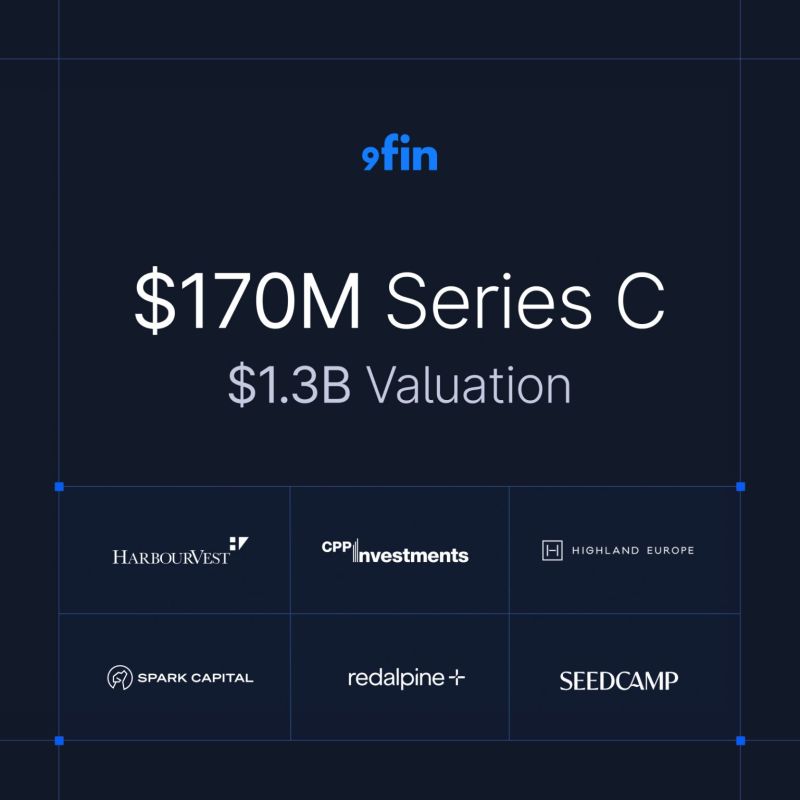
The chart is deliberately not financial analysis. It is a map of the themes Kaushal chose to surface: adoption, proprietary data, geography and a growing American business. They are the ingredients beneath a valuation, not a claim about what happens next. His language is revealing because it treats capital as fuel for a system rather than a finish line.
The chief of staff as connective tissue
Chief of staff is one of those roles that changes shape with the company. At one organization it means strategy. At another it is operations, communications, special projects or a rotating sample of all four before lunch. The constant is proximity to ambiguity. Problems arrive before they have clean owners. Priorities compete before anyone has admitted that they compete. The role is often to make the tradeoff visible and the next action unavoidable.
A former colleague, Brian Pujanauski, described Kaushal as the central hub on a large project spanning multiple teams, disciplines and geographies. The praise was specific: Kaushal could engage with analytical and execution detail while framing the strategic business implications. That pairing is the hard part. Detail without context becomes busywork. Context without detail becomes a handsome slide that nobody can implement.
One recent anecdote makes the abstract role wonderfully concrete. 9fin brought its global go-to-market organization into one room for the first time: sales, marketing, revenue operations and finance, with colleagues traveling from London, New York, Latin America and Asia. The company pulled the gathering together in under four weeks. Kaushal's reflection lingered on that compressed timetable because it showed people moving quickly and owning their pieces.
The offsite itself was not the achievement of one person, and Kaushal did not present it that way. What interested him was the behavior the deadline exposed. People who usually met through Slack or Zoom could step back, hear from investors, compare notes on commercial execution and spend time together. The gathering was both logistical and strategic, the sort of assignment that rewards someone comfortable moving between an agenda and an ambition.
AI after the demonstration
Kaushal's interest in AI and finance predates his 9fin role. In 2023, he appeared at a New York event organized with the Duke-connected Blue Venture Community on generative AI and the future of fintech, speaking from the perspective of payments, lending and embedded finance. The subject has since moved from speculative panels to daily product decisions. The useful question is no longer whether a model can produce an impressive answer. It is whether the answer belongs inside a trusted workflow.
That distinction suits his career. He has seen financial software from the technical side, advice from the consulting side, networks from the payments side, products from the lending side and corporate priorities from beside two CEOs. AI does not erase those perspectives. It makes translation among them more urgent. A system can retrieve a covenant or summarize a document, but an institution still needs confidence in the data, clarity about the decision and an owner for what follows.
There is no tidy reinvention in Kaushal's story. The engineer did not vanish when the consultant arrived. The consultant did not disappear inside the operator. Each chapter added another way of seeing the same stubborn obstacle: complexity is expensive, and organizations are full of seams where good information loses momentum.
Twenty years in, his current desk sits beside the CEO of a company trying to organize one of finance's messier information environments. It is an apt destination, though probably not a final one. Kaushal's public writing remains fixed on the work ahead: a larger US business, new markets, more capable tools and teams learning to operate at a different scale.
The transferable lesson is not that everyone should become a chief of staff. It is that range becomes valuable when it has a spine. Kaushal's spine is the movement from information to action. Learn the machinery. Learn the market. Learn how decisions travel through a company. Then, when the system sticks, know which room to enter and which question will get it moving again.