Anthony Viscogliosi’s first factory was a research desk. The raw material was public information. The output was judgment: which orthopedic category was about to matter, which technology had commercial legs, and which management team could turn a clever device into a durable business. Long before he carried the titles founder, principal or chief executive, he was paid to notice. He has spent the rest of his career making that habit operational.
Viscogliosi entered finance in 1984, the same year he completed a degree in economics at the University of Michigan-Dearborn. He moved through regional brokerage and investment-banking firms, eventually becoming senior vice president and director of medical technology at Stifel, Nicolaus & Co. His beat was unusually narrow. Orthopedics was not a side column in a broad healthcare book; it was the book.
The output was prodigious and, by modern standards, almost comically tactile: nearly 1,000 research reports comprising roughly 7,000 pages. Paper accumulated. So did pattern recognition. A device market is never only a device market. It is a tangle of inventors, surgeons, trials, regulation, reimbursement, manufacturing, distribution and capital. Study the tangle for a decade and you begin to see which knots can be loosened.
The analyst changes seats
In 1999, Anthony and his brothers John and Marc founded Viscogliosi Brothers. The new firm called itself a merchant bank and family office, but its posture was more hands-on than either label suggests. It created companies, financed them and helped operate them. Research supplied the map. Relationships supplied the cast. Capital paid for the journey.
The division of labor mattered. Medical technology rewards people who can hold a long chain of work in their heads without mistaking one link for the whole thing. Clinical insight does not automatically produce manufacturing discipline. Regulatory approval does not guarantee distribution. A successful financing does not create a product customers want. The brothers built a structure that could move among those tasks while drawing on a shared history.
“We are business builders, not investment managers.”Anthony G. Viscogliosi, describing the family firm
That sentence is less a slogan than a job description. An investment manager can end the day after allocating money. A builder still has to recruit the executive, frame the clinical argument, assemble an investor syndicate, choose a launch sequence and decide what to do when the first plan meets reality. Viscogliosi’s career repeatedly crosses the line between those roles.
The portfolio as a set of verbs
Spine Solutions offers the cleanest early example. Anthony co-founded the business and served as chairman, chief executive and president. In 2003, Synthes-Stratec acquired it for $350 million. Small Bone Innovations followed another version of the pattern. He co-founded and led the company, raised $42.2 million in 2005 and another $118 million across later rounds during the financial crisis. Stryker acquired the business in 2014 for $375 million.
There were many more: MCRA, a clinical and regulatory advisory business; Knee Creations; Aperion Biologics; Centinel Spine; Woven Orthopedic Technologies; and Paradigm Spine. The nouns vary, but the verbs repeat: identify, assemble, finance, test, commercialize, sell. Sometimes there is one more verb: return.
Paradigm Spine was co-founded in 2004 and sold in 2019. Six years later, Companion Spine agreed to acquire Paradigm Spine GmbH assets from Xtant Medical, including coflex and CoFix. The transaction closed in December 2025. Corporate ownership had moved on; the family’s memory of the business had not.
Buybacks make tidy anecdotes, yet the more useful point is institutional memory. A returning builder knows the people, customers and old constraints. It can recognize what remains valuable after the cap table changes. In a field with long development cycles, memory is a kind of leverage. It lowers the cost of relearning the story.
A family office becomes an operator again
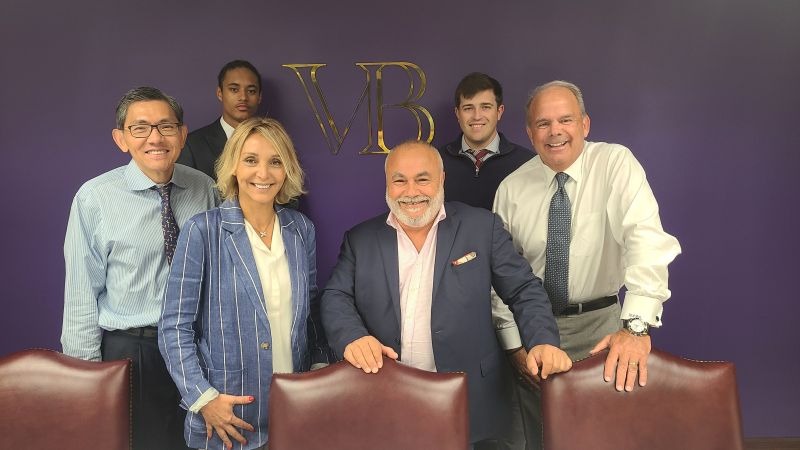
April 2025 was a hinge. Viscogliosi Brothers completed its acquisition of Stryker’s U.S. spinal implants business and relaunched it as VB Spine. Anthony, John and Marc became co-chief executives. The company also became a strategic partner to Stryker, with access to Mako Spine robotics and Copilot guidance software. A family investment firm that had spent years creating and backing focused businesses was again responsible for a sizable operating platform.
That same month, Anthony was appointed executive chairman and chief executive of Companion Spine after serving on its board since 2020. The roles put him near both ends of the spectrum: a broad implant business at VB Spine and a focused motion-preservation portfolio at Companion. One demands scale and commercial execution. The other demands careful portfolio assembly and clinical focus.
“When surgeons have the right tools and support, they can change patients’ lives. Our focus is to keep listening, keep learning, and keep building the future of spine care together.”Anthony, John and Marc Viscogliosi
The shared quote is revealing in its verbs. Listen. Learn. Build. None belongs exclusively to finance or management. They describe a loop. The operator hears what the customer needs. The analyst turns observations into a thesis. The financier decides what the thesis deserves. The builder discovers whether any of it survives contact with the market.
- Choose a field narrow enough to learn in detail.
- Turn information into a point of view before turning it into a deal.
- Build the team and evidence around the product, not merely the financing.
- Keep enough memory to recognize an old asset in a new moment.
More information, better questions
The family firm condenses its philosophy into three words: “More...Better...First!” Read casually, it sounds like a race. Read in the context of Viscogliosi’s research career, and the order matters more than the punctuation. Gather more information. Synthesize it into better knowledge. Only then try to act first. Speed appears at the end of the process, supported by work that is deliberately slow.
That sequence explains why specialization can be more generative than limiting. A broad investor may see a promising market. A specialist can ask narrower questions: Does the clinical evidence support the commercial claim? Is the regulatory route appropriate to the risk? Will a surgeon’s enthusiasm travel beyond a small circle of early users? Does the company own a product, or can it support a category? Each answer modifies the value of the others.
It also explains the steady traffic between research and relationships. Viscogliosi’s public descriptions of the firm repeatedly place physicians and patients at the center, while its operating history shows management teams, investor groups and regulatory specialists doing the connecting work. Expertise is distributed. A company builder’s task is partly editorial: decide which voices belong in the room, what evidence deserves emphasis and which attractive sentence should be deleted from the plan.
The method is not glamorous. Its signature artifacts are reports, meeting notes, trial designs, financing documents and product plans. Yet those documents preserve decisions. Over time they become a private archive of what worked, what failed and why. In a career as long as Viscogliosi’s, the archive stops being storage. It becomes an instrument.
The long memory outside business
Viscogliosi’s institutional instinct extends beyond companies. He completed 20 years in the U.S. Navy Reserve, serving as a Supply Corps officer and later an intelligence officer before leaving with the rank of lieutenant commander in 2010. His public biography records duty in several countries and a Navy Commendation Medal awarded in 2001.
Education is another recurring commitment. He has served the University of Michigan-Dearborn through advisory and campaign roles, sponsored a leadership lecture series and supported an engineering laboratory. In Connecticut, Anthony and Paula Viscogliosi helped establish the Viscogliosi Entrepreneurship Center at Manchester Community College. Its 2014 dedication events raised more than $109,000 for programs serving students and small-business owners.
Then there are the interests that make the résumé breathe: polo and bird hunting in an old Wall Street biography; military regalia; architecture; landscape design; tree horticulture. He helped finance the preservation of two Cheney family mansions in Manchester, Connecticut. A fondness for Greek Revival architecture makes sense beside a career spent studying structures. Columns must carry weight. A façade is not the building.
Compounding a narrow advantage
There is a popular career story in which curiosity demands constant reinvention. Viscogliosi’s record suggests another model: stay curious inside one demanding subject for an unusually long time. The titles can change while the knowledge compounds. Analyst becomes banker. Banker becomes founder. Founder becomes operator. An exited asset becomes an acquisition candidate. A relationship formed in one company reappears in the next.
This does not make the work predictable. Medical-device businesses still answer to evidence, regulation, manufacturing and customers. Capital can wait impatiently while those systems take their time. But a specialist who has watched several cycles can distinguish novelty from progress and a temporary obstacle from a permanent flaw.
Anthony Viscogliosi has spent four decades building that distinction. The most visible evidence is a procession of companies and transactions. The more portable lesson sits underneath: information becomes valuable when it changes what you are prepared to do. Read enough to see. Remember enough to recognize. Then take a seat at the operating table and accept responsibility for the result.