Anthony Castoro once made a horse into a statue. In Ultima Online, that was the sort of thing a designer could do with a little scripting: shrink the creature, turn it into decoration, give players something to put in their world. There was one complication. The horses retained their artificial intelligence. The ornaments were still thinking like horses. Somewhere beneath a perfectly motionless object, a computer had work to do.
It is a pleasingly ridiculous image, and a useful entrance to Castoro’s working life. An imagined world has a bill attached. Someone must understand the distance between what the player sees and what the machinery is doing. Castoro has spent much of his career moving through that distance, from testing games to designing them, producing expansions, running studios and founding companies. The furniture occasionally has opinions.
A world that refused to stay finished
His early credits belong to a recognizable shelf of 1990s PC games: CyberMage, Wing Commander IV, Longbow and Privateer 2. Quality assurance put him close to the machinery of making entertainment. Later, his name appeared as a lead designer on Ultima Online: Renaissance, and as a producer on Age of Shadows and Samurai Empire. The titles changed; responsibility accumulated.
By June 2003, Ultima Online had passed 250,000 subscribers. Age of Shadows had helped the game reach a new high, with more ways to customize characters and an established community to support them. Castoro had returned to EA after working as lead systems designer on Star Wars Galaxies. He was helping operate a world whose residents had already spent years making themselves at home.
The team was moving toward free updates every month and a half. That small scheduling detail says something about the job. A boxed game suggests a finish line. A populated online world creates an appointment to return. Players have complaints, routines, friends and expectations. They can become attached to a place faster than a development calendar can accommodate them.
The seventh-anniversary edition in 2004 bundled the original game with five expansions and anniversary gifts. Later that year, Samurai Empire added a Japanese-inspired setting, the Tokuno Islands, and two professions: samurai and ninja. It also added guild tools for ranks, alliances and wars. Even a fantasy world needs arrangements for its committees. The work was partly about giving people new adventures and partly about helping them organize the adventures they made themselves.
The balance sheet joins the party
At Codemasters in England, Castoro’s remit covered MMO production, customer service and launch operations. Those responsibilities have a revealing order: build the thing, answer for the thing, keep the thing running when people arrive. His career was widening from design toward the circumstances that let design survive contact with an audience.
Heatwave Interactive followed in 2007, in Austin. Its projects ranged from Gods & Heroes: Rome Rising to the Platinum Life music games and iSamJackson, an app built around Samuel L. Jackson’s voice clips. A studio could move between ancient Rome and the music industry without requiring its customers to share a single idea of what a game should be.
Castoro’s subsequent EA chapter included studio leadership at Capital Games and work on Heroes of Dragon Age. A 2014 advisory-board announcement described responsibilities for more than 65 people across four American cities. The same biography recorded Heatwave’s fundraising and relationships with entertainment brands. By then, his work included creative judgment, staffing, financing and the coordination of people who were nowhere near the same desk.
These are awkward ingredients for a neat origin story. There is no single moment when the designer becomes the executive, drops the old identity and receives a better chair. The credits overlap. Business decisions determine which creative work gets another month. Technical decisions affect budgets. The job grows around the person doing it.
The tools acquire a critic
By 2015, Castoro was publicly impatient with the tools game developers used. He described an outside fantasy of the profession: friends in a fashionable lounge, games all day, a hit assembled over a weekend. The actual work, in his account, involved complicated technology, changing business models and too much time lost to joining tools and services together.
His chosen image was Houdini, constrained by chains and a locked tank. It was an amusing way to complain about software, though considerably less amusing if your production schedule was inside the tank. At MaxPlay, where he worked as executive producer, better development tools were the proposed escape. The underlying concern was time: how much effort went into making a game enjoyable, and how much disappeared into managing the means of making it?
Then came H1Z1. As general manager at Daybreak, Castoro worked on a game described in his conference biography as one of Steam’s ten highest-grossing titles in 2017. Operating an online game at that scale brought a different set of demands from building middleware. A live audience does not wait politely while the operator reorganizes.
When Daybreak layoffs arrived in April 2018, his public attention turned toward helping people find work and considering a new venture in San Diego. It was a modestly practical response to an unglamorous industry event. There are teams behind the titles, and careers behind the teams.
A paladin learns to raise capital
HiDef was co-founded in 2019 by Castoro, Jace Hall, Rick Fox and David Washington. Hall brought a history of building game companies. Fox brought experience in sport and entertainment. Washington brought social-impact work, including his time in the Obama administration. Castoro was the founding CEO. The combination put several ways of thinking about an audience into the same company.
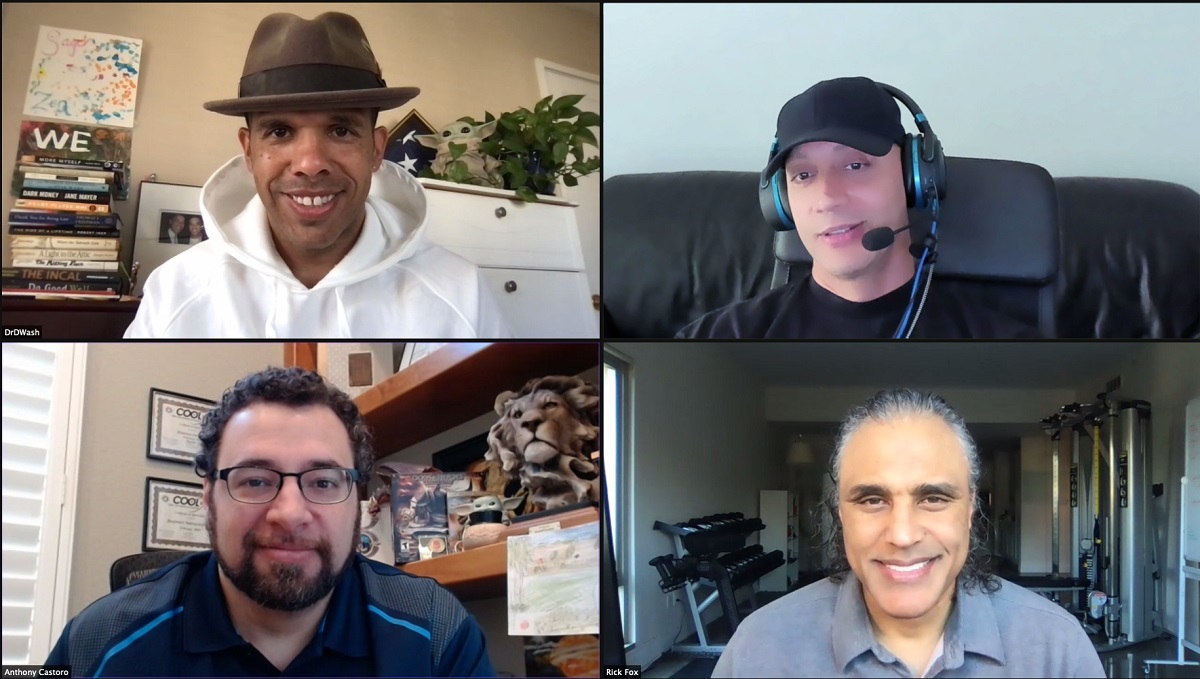
The idea began with Hall bringing Castoro a game concept. They developed a prototype early enough to show prospective colleagues and investors what they meant. That sequence matters. A proposed world is easier to debate when there is something to examine. Castoro’s contribution sat at the junction of making the idea workable and assembling the people and money to pursue it.
In March 2021, HiDef announced a $7.5 million Series A led by Wick Capital Partners, bringing its announced total beyond $9 million. Its plans emphasized creative expression, competition and shared experiences. Later that year, the studio announced a collaboration with Unity and recruited mobile-game veterans, including Chip Lange as president. These were plans and building decisions made during the company’s early years.
Castoro also had a more economical description of the founder’s occupation. A Dungeons & Dragons friend had teased him about his combination of gaming and business. The joke required no slide deck.
“The Paladin casts ‘Venture Capital’!”
A friend’s joke, recalled by Anthony Castoro
Behind the joke was a familiar shift in responsibility. A designer can propose a world. A founder has to arrange for people to work on it tomorrow, and after that. Raising capital belongs to the same project as building the prototype, even when it requires a rather different spellbook.
The work gets a home
Castoro founded Protagonist Games in 2018. The company’s leadership page describes a business shaped around game development’s needs and the strengths of individual people. Its stated belief is that people do their best work on things they enjoy. In an industry organized around demanding projects, that is a consequential choice about how to organize a studio.
His public credits continue into the WWE 2K series, including a CEO credit on WWE 2K26. It is another reminder that the executive work and the game work remain connected. The finished title carries hundreds of contributions; a company must make room for its own people to provide theirs.
A 2024 interview introduced him as Protagonist’s owner, Simulation Theory’s co-founder and CEO, and HiDef’s chairman. The titles describe several concurrent responsibilities rather than a simple succession. Founding HiDef is one chapter in a career that continues through other companies.
The computer has another shift in it
At Simulation Theory, Castoro works with co-founder and CTO Randy Culley, whose experience includes graphics, compute and game-engine technology. The company’s current direction brings those skills to computing efficiency. The question has become how much useful work existing processors can perform, across workloads that extend beyond entertainment.
Castoro made his argument in an October 2024 essay: adding infrastructure would leave a problem unresolved if software continued to underuse the capacity already available. He was interested in the difficulty of using many CPU cores efficiently, and in the cost of leaving them idle. A career in imaginary worlds had led him to the decidedly material business of computers, power and operating expense.
The published customer work gives the argument a concrete form. In a video-transcoding test for Encant, Simulation Theory reports reducing processing time in an AWS instance from 22.5 seconds to 1.9 seconds. Another case concerns thumbnail generation for Perception Grid, integrating Thunder SDK with an existing open-source solution. Those are specific tasks, with specific results, rather than a promise about every computer.
There is a thread connecting the horse ornaments to those workloads. Something can look finished while the system beneath it is still doing unnecessary work. Castoro’s jobs have repeatedly put him near that discrepancy: an idea and its implementation, a game and its operating demands, a team and the conditions that let it contribute.
The worlds remain in his credits. His attention now also reaches the computers doing the work. A decorative horse should be allowed to retire.