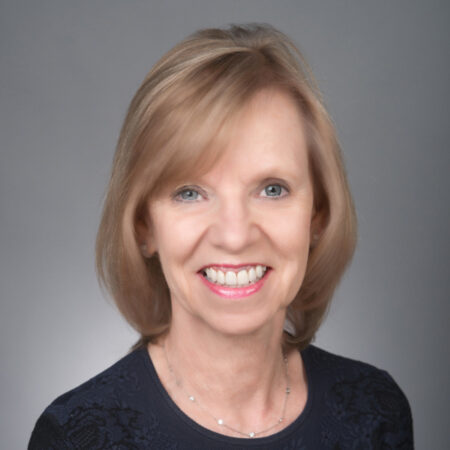
The Woman Who Bet on Software First
In 1989, the venture capital industry had a consensus: software was too risky to invest in exclusively. Hardware was real. Software was slippery. Ann Winblad looked at that consensus, called it wrong, and wrote a thesis that would shape the next three decades of American technology.
The daughter of a basketball coach and a nurse in Rushford, Minnesota, Winblad grew up as the oldest of six children in a household that prized winning, teamwork, and practicality. Her first job was picking strawberries at age 7. Her second entrepreneurial venture was sewing and selling Barbie doll clothes. When she got to college, she was the first in her family to do so - and she worked five jobs simultaneously to get through it: Cecil's Deli, Pudge's Cocktail Lounge, Cliff's Hardware (bookkeeping), door-to-door phone sales, and a pool table factory back office. None of this shows in the way she carries herself in Silicon Valley. All of it explains how she thinks.
After earning a B.A. in Mathematics and Business Administration from the College of St. Catherine and an M.A. from the University of St. Thomas - where she was the first woman to graduate with a master's in international economics - she joined the Federal Reserve Bank of Minneapolis as a systems programmer. Then, in 1976, she and three colleagues from the Fed pooled $500 and started Open Systems Inc., an accounting software firm that nobody expected to survive. It grew to 120 employees. It became the 27th-largest software company in the United States. In 1983, UCCEL bought it for $15 million in cash.
"Focusing solely on software was somewhere between too risky and downright wacky."- Ann Winblad, on founding HWVP in 1989
133 No's and One Category Change
After selling Open Systems, Winblad spent six years as an independent technology consultant - advising IBM, Microsoft, Apple, and Price Waterhouse, taking an early personal stake in Microsoft, and developing relationships that would define her next act. One of those relationships was with a tall, bookish Microsoft founder named Bill Gates. They dated from 1984 to 1987. The friendship that followed would become one of Silicon Valley's stranger and more durable public-private arrangements - but that comes later.
In 1989, Winblad teamed up with John Hummer, a former Stanford basketball player turned investment banker, to start Hummer Winblad Venture Partners. Their pitch was simple and, to most LPs, insane: they would invest exclusively in software companies. No hardware, no biotech, no hedging. Just software.
They heard "no" 133 times. The firm's first yes came from three venture legends - Pitch Johnson, Bill Edwards, and Don Valentine - who saw something in the thesis that the others missed. The first fund raised $27 million. It returned $252 million. The first investment - a $300K Series A in a productivity software company called T/Maker, whose CEO was Heidi Roizen - was made in November 1989.
Over the next three decades, HWVP backed more than 160 enterprise software companies. The portfolio reads like an annotated history of the software industry: Powersoft (acquired by Sybase for $1B), Omniture (Adobe, $1.8B), Hyperion (Oracle, $3.3B), Wind River Systems (Intel, $884M, and its software powered the Mars Land Rover), Five9, Aria Systems, Sonatype. And then there was the two-person startup that became the biggest single bet of all.
MuleSoft: The Two-Person Startup That Became a $6.5 Billion Bet
In 2006, Ann Winblad wrote the first institutional check into a company called MuleSoft. It had two employees. The thesis was integration - the unglamorous, essential plumbing that connects enterprise software systems. Winblad joined the board and stayed for twelve years. In 2017, MuleSoft went public. In 2018, Salesforce acquired it for $6.5 billion. The company that nobody wanted to be first into ended up being the deal of a generation. Winblad has described her approach simply: "Be the first institutional investor, not a follower."
"The one thing to remember is that we're the opportunists and the entrepreneurs are the visionaries. I don't run the companies. I just see patterns."- Ann Winblad, on the VC role
Auditioning the Future, Every Day
Winblad's signature line - "My job is to audition the future. Your job is to create it." - is the most honest self-description of the venture capital function in circulation. It captures both the humility and the precision of her approach. She doesn't claim credit for the companies' visions. She claims credit for recognizing them early, backing them with money and intellectual capital, and staying on boards long enough to matter.
The intellectual stamina she brings to that work is notable. She co-authored Object-Oriented Software for Addison-Wesley. She gives talks at Stanford's Technology Ventures Program. She appears at the Berkshire Hathaway Annual Meeting every year as a long-term shareholder and CNBC commentator, drawing explicit parallels between Buffett's long-game philosophy and her own approach to software investing. "We're all playing the long game," she said after the 2024 Berkshire meeting. She meant it literally.
She also had a front-row seat to the most controversial investment of HWVP's career: Napster. In 2000, while the music industry was suing the file-sharing platform into oblivion, Winblad led a $15 million funding round. It was unusual for a firm known for precision and risk-discipline. The technology worked. The legal exposure was fatal. It remains the most instructive loss in an otherwise exceptional portfolio.
By 2021, Hummer Winblad Venture Partners had quietly rebranded as Aspenwood Ventures under new managing directors Lars Leckie and Steve Kishi, with Winblad stepping back to an advisory role. The firm closed a $70 million fund under the new name. Winblad's 30-year chapter ended, as the best ones do, with the institution she built outlasting her operational tenure.
The Deals That Defined Enterprise Software
First institutional investor in a two-person startup. IPO 2017. Acquired by Salesforce for $6.5B in 2018.
HWVP-backed analytics pioneer. IPO 2006. Acquired by Adobe for $1.8B in 2008.
Enterprise BI leader. Acquired by Oracle for $3.3B in 2007.
Software that powered the Mars Land Rover. Acquired by Intel for $884M in 2009.
Acquired by Sybase for $1B in 1994. One of HWVP's earliest major exits.
Long-term board member. Company remains private and growing as of 2025.
The Beach Cottage, the Annual Visit, and the Blessing
In 1984, at an industry conference organized by analyst Ben Rosen and publisher Esther Dyson, Ann Winblad met a 28-year-old Bill Gates. She was 33, five years his senior. They dated for three years, traveling to Brazil and Africa together, and conducting what might be the most unusual long-distance date routine in tech history: watching the same movie simultaneously from different cities and calling each other to discuss it.
When the relationship ended in 1987, the friendship did not. When Gates was ready to propose to Melinda French in 1997, he called Winblad first. He asked for her blessing. She gave it. Her assessment of Melinda: "She'd be a good match for him because she had intellectual stamina."
Every spring after that, including years when he was married to Melinda, Gates spent a long weekend at Winblad's cottage in Corolla, North Carolina - a four-bedroom oceanfront property she calls "Castle Sween" - riding dune buggies, hang-gliding, walking on the beach, and discussing biotechnology and the state of the world. Melinda was reportedly aware of and comfortable with the tradition. Winblad retains the property. The tradition's status since the 2021 Gates divorce is unconfirmed.
It is, by any measure, an unusual arrangement. It is also, by any measure, a measure of the depth and seriousness of the relationship between two people who shaped the software industry from different sides of the same desk.
What She Says
"My job is to audition the future. Your job is to create the future."
"Are you fighting the trends or inventing the trends?"
"Developers today are business strategists."
"We're all playing the long game."
"True entrepreneurs view uncertainty as opportunity to innovate, not as risk."
"Women need to understand not just what are the career paths at a company, but what is the fabric. What is the culture? What is the soul?"
What She Built, What It Means
In December 2024, Winblad was inducted into the Bay Area Business Hall of Fame at the Bay Area Council's 79th Annual Dinner, alongside former Sybase CEO John Chen and the late Sandy Robertson. It was the kind of formal recognition that arrives long after the underlying work has already been done, validated, and built upon by an entire generation of software investors who inherited a category she helped define.
The endowed scholarship she established at the University of St. Thomas - named for her parents, Wilbur and Elizabeth Winblad - has supported 706 students with over $3.6 million. The first in her family to attend college now funds a pathway for hundreds of others. The arc is intentional. So is the fact that she never makes a big deal of it.
The lasting contribution is simpler than the awards and the deal list: in 1989, when software was considered too speculative to bet exclusively on, Ann Winblad bet exclusively on it. She was right about the category, right about the timing, and right about the kinds of companies that would define it. Software ate the world. She was already there when it started eating.