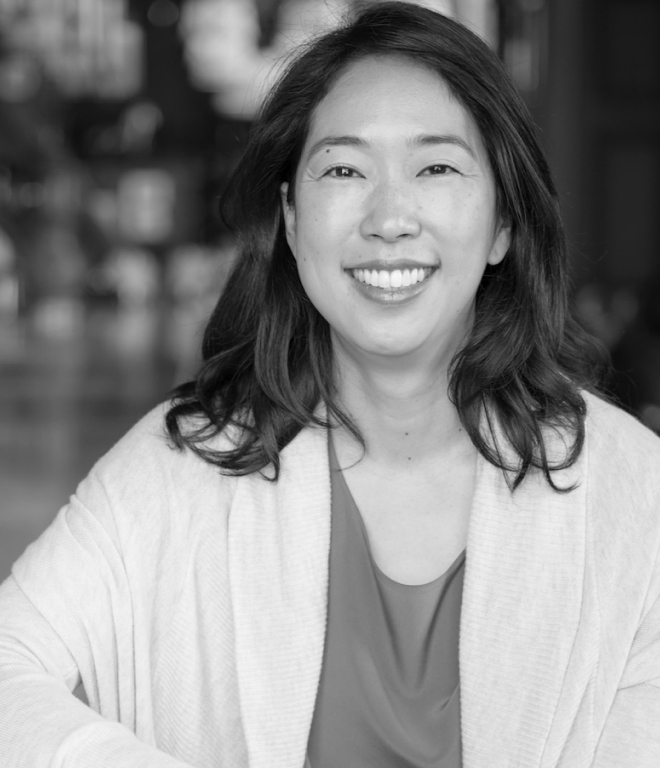
When Logan Green and John Zimmer walked into a Floodgate meeting to pitch their company Zimride - a carpooling service built on Facebook's social graph - they didn't have a finished product. What they had was a story: transportation is about to change, and social networks will drive it. Ann Miura-Ko fell in love. Not with the product. With the plot.
That instinct - to back the narrative before the numbers - has become the defining signature of Miura-Ko's investing career. Zimride became Lyft. The seed check became a 10,000x return at IPO. She sat on Lyft's board for 13 years, longer than most marriages in Silicon Valley last. But the origin of that investment wasn't analysis. It was recognition of a secret - a thing the founders believed that the market hadn't caught up to yet.
Successful seed investing is not investing in a company. It's investing in the development of a set of secrets.
Ann Miura-KoThere's a particular origin story for Ann Miura-Ko that doesn't appear in the press releases. She was two years old, living in Michigan, and she only spoke Japanese. When English speakers approached, she would mutter back at them in Japanese. Her father - a rocket scientist who'd emigrated from Japan and would go on to work at NASA - had a single phrase he repeated after watching his daughter do anything: "Is that a world-class effort?" He asked it after big projects. He asked it after photocopying. The question didn't distinguish between tasks. Everything was subject to the same standard.
She became a classical pianist at age four, the kind who practices until parents demand she stop. By junior high, she was playing Chopin in public recitals. But she couldn't announce herself. She was so profoundly shy that in eighth grade, her older brother had to walk out onstage with her, face the audience, and say: "This is Ann Miura. She will be playing a Chopin Nocturne in C sharp minor." Then she'd walk to the piano and play like it cost her nothing. The disconnect between capability and self-expression was total.
In eighth grade, Ann Miura-Ko was too shy to say her own name at a piano recital. Her brother announced her. She walked to the piano and played flawlessly. That gap - between inner capability and outer voice - became the entire arc of her life's work.
She fixed the shyness the way engineers fix problems: by targeting the root cause directly. At Yale, she joined the debate team and competed until she won the National Tournament of Champions. First place. She took the thing that terrified her most and drilled it until it became a competitive advantage. She graduated from Yale with a BS in Electrical Engineering in 1998 - not because medicine was off the table, but because mathematics was the thing that lit her up. She went to Stanford for a PhD in mathematical modeling of cybersecurity. Her dissertation was not a detour from venture capital. It became her filter for it.
Her route to Floodgate reads like a pivot that was actually a straight line. She did stints at Charles River Ventures and McKinsey. She was a teaching assistant to Steve Blank, the man who wrote the playbook for lean startup thinking. In 2008, during the financial crisis - when everyone sane was contracting - she approached Mike Maples Jr. for advice on starting a company. He was already building Floodgate. He offered her a founding partner seat instead. She took it. "Of course this is the right thing to do," she said later, describing a moment most people would call terrible timing.
The Floodgate model is deliberately radical in its narrowness. Three to five investments per year. Pre-product. Pre-market fit. Pre-everything except the founder and the idea and the secret they believe the world isn't ready to hear yet. Miura-Ko describes herself not as an investor but as a "co-conspirator" - someone who gets in before the conviction is tested, before the noise arrives, before the company has anything to prove. "We get to work with entrepreneurs before they get jaded," she says, "and before everyone else believes in them."
I think of myself as a co-conspirator, not an investor.
Ann Miura-Ko, FloodgateHer portfolio reads like a greatest-hits album of internet infrastructure: Lyft, Twitch, Twitter, Okta, TaskRabbit, Refinery29, ModCloth. She passed on Airbnb, Pinterest, and GitHub - decisions she discusses openly as instruments for sharpening judgment rather than scars to hide. The fact that she talks about the misses is itself a data point. Most investors bury them. Miura-Ko thinks they're the curriculum.
The pattern in her wins is a theory she's spent fifteen years refining. She calls it "threshold companies" - startups positioned not to improve a market but to create one from scratch. The question she's asking at a seed meeting is never "is this a good company?" It's "does this founder know something true that the world hasn't accepted yet?" The Lyft founders believed GPS and smartphones would rewire how cities move. The Twitch founders believed men would watch other men play video games live. Both ideas sounded absurd. Both were right.
Outside Floodgate, Miura-Ko co-founded AllRaise in 2018 - a nonprofit built to change the demographics of venture capital, both at the funder level and the founder level. Her Founders for Change initiative has enrolled over 1,000 venture-backed founders who have committed to improving diversity in their own organizations. The work is structural, not symbolic. She's interested in changing pipelines, not just headcounts.
She co-directs Stanford's Mayfield Fellows Program, teaches "Intelligent Growth in Startups," and has lectured on blockchain and entrepreneurship at the university for over a decade. She remains, in her own words, "naturally a little bit more grouchy" as she ages - and uses teaching as an antidote. The optimism of students is the counterweight to the cynicism that accumulates in anyone who spends years watching companies fail.
She lives in Palo Alto with her husband and three children and one dog. She still plays piano. She still takes early morning walks. She still asks, before anything else: is that a world-class effort?
Greatness is a decision. You have to wake up every morning and decide to be great.
Ann Miura-KoIn 2025, Floodgate's healthcare AI bet SmarterDX crossed $1 billion in exit value. The AI wave she saw coming at the seed stage - with early bets on Hebbia, Counsel Health, and ReadyOn - is arriving. The pattern repeats. The world catches up. The bet that looked idiotic turns out to have been early.
Ann Miura-Ko is not in the business of being obviously right. She's in the business of being right before it's obvious. That's a different game entirely, and very few people play it well.