The house was never the whole problem. The problem was everything orbiting it: the search, the underwriting, the lender, the insurance, the manager, the taxes, the accounting and the recurring question of whether the thing was performing as promised. Anish Malhotra and a group of colleagues encountered this while investing in property part-time. Their supposed side hustle kept annexing more of the week. A rental home, among the most familiar assets in the world, arrived with the administrative elegance of a box of loose cables.
Their irritation became Plotify. Founded in 2018, the New York company is Malhotra’s attempt to gather those cables into one system. An investor selects a residential property. Plotify can coordinate financing, insurance, tax and accounting support, property management and portfolio reporting. The home sits inside a single-owner company that Plotify calls a “Plot.” The investor owns the whole asset rather than a sliver of it. The company handles the choreography.
This is an unusually literal founder-market fit. Before he tried to speed up real estate, Malhotra spent years around markets that had already learned to move quickly. He joined Bloomberg and Bloomberg Tradebook in the late 1990s, when electronic trading was changing how financial instruments found buyers and sellers. By 2009, when BTIG hired him into its equity capital markets group, the firm described him as a former member of Bloomberg Tradebook’s board and the executive who had headed Cantor Fitzgerald’s India investment-banking practice.
A career in the plumbing
Malhotra’s story is less about leaping from finance into property than carrying one obsession between them: participation improves when the machinery becomes navigable. He has said he was drawn early to products that break down barriers. Extensive travel across continents when he was young, he recalls, widened his view of culture and inclusion. His education added two useful lenses - economics at SOAS University of London, then law at City, University of London.
The combination surfaces in Plotify’s design. There is a market question: which house, in which city, at what risk and expected return? There is also a legal question: what exactly does the investor own, and how does it move? Plotify’s answer is to place one property inside one entity for one investor. Title, mortgage, insurance and management agreements can remain tied to that entity. Transfer the company, and much of the apparatus moves with it.
“Perfection is the enemy of progress.”Anish Malhotra on allowing teams to iterate
It sounds tidy because the mess has been pushed behind the screen. OAK’S LAB, the product studio that worked with Plotify, says the platform coordinates more than 150 back-end processes, from bank integrations and ownership tracking to identity checks and regulated due diligence. Plotify has said a US transaction can be completed in roughly ten minutes. The comparison it uses for a conventional purchase is 52 days. Those are company claims, not a promise that every deal will obey a stopwatch, but the contrast explains the ambition: do not make the house move faster; make the paperwork stop walking.
The Plot, in four movements
Control, without the Saturday errands
Plotify’s distinction is not merely speed. It is the particular bargain Malhotra wants to offer: convenience without fractional ownership. A pooled fund can free an investor from decisions, but it also places those decisions with a sponsor. Fractional platforms lower the entry ticket, while owners share control. Plotify aims at people and family offices who want to choose a market, own a whole property and decide when to renovate, refinance or sell, but would happily retire from coordinating three vendors before lunch.
That places education beside execution. Plotify’s current membership pitch leads with coaching, a personalized plan, data-driven insights and full-service asset management. Malhotra has said the company spends substantial time educating clients so they are comfortable when it is time to invest. It is not accidental phrasing. His ideal customer does not press a bright button and forget. The customer understands the plan, makes the consequential choices and delegates the operational ones.
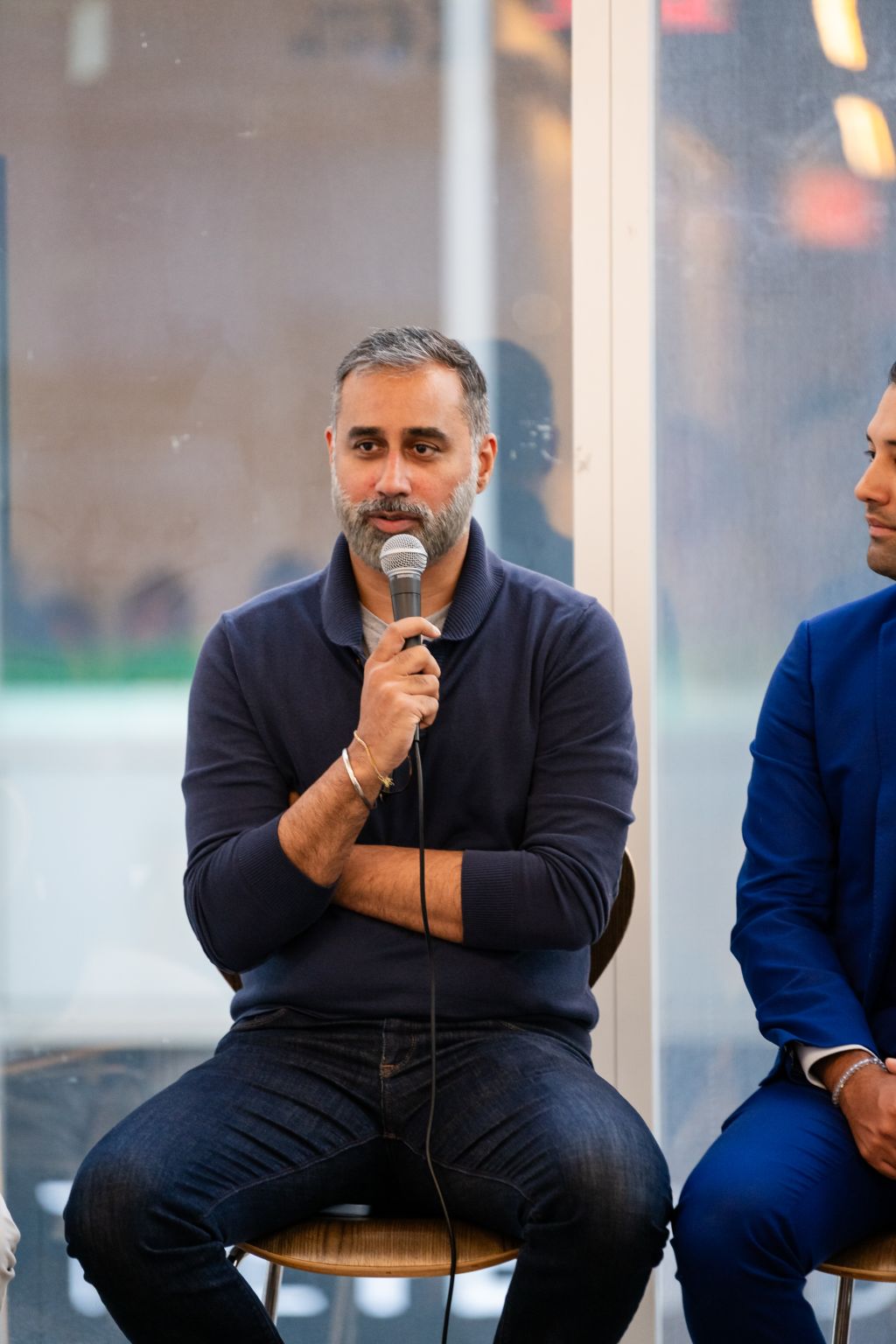
On that July afternoon, seated with specialists Justin Amos and Akanksha Raina, Malhotra fielded questions from first-time and experienced investors. The discussion wandered from fundamentals to the risks and tax uses of 1031 exchanges. It was Plotify’s product thesis performed in public: software may compress a process, but investors still need enough context to recognize a sensible decision.
“We spend a significant amount of time educating our clients so they feel comfortable when it comes time to invest.”Anish Malhotra on information and ownership
Data gets a vote. So does instinct.
Malhotra is fond of a productive contradiction. He describes himself as someone who follows data and seeks information. He also offers this advice: “Trust your instinct. It’s usually right.” Experience, in his telling, improves the instinct. Data narrows the field; pattern recognition notices what the model has not yet named. Plotify itself lives inside that tension, using macroeconomic and local market data to vet places and properties while leaving the final selection with the investor.
His management philosophy follows a similar division of labor. “The job of a good leader is to build more leaders, not followers,” he has said. The easier path is to make a decision and ask everyone else to line up behind it. His preferred path is to distribute decisions, which creates conviction, accountability and the occasional uncomfortable pause while someone else chooses differently.
This is notable because Malhotra admits to perfectionist instincts. His corrective is progress. Teams need permission to iterate rather than wait for an immaculate first attempt. In a platform joining finance, property and regulation, perfection remains a tempting destination. It is simply a terrible departure time.
Bloomberg and Bloomberg Tradebook, as electronic markets gained ground.
Senior capital-markets roles at Cantor Fitzgerald and BTIG.
Ahimsa Capital begins; Plotify is founded in New York.
Plotify announces a $12.5 million Series A financing.
Investor education panels and a long-form podcast conversation extend the Plotify thesis.
The global view, kept deliberately local
Plotify has always carried a global ambition. Its early private beta included investors across the United States, United Kingdom, Sweden, United Arab Emirates, India, Thailand and Singapore, with properties in eight US and UK cities. The company’s $12.5 million Series A in April 2023 was framed as fuel for expanding that reach and adding inventory. Yet its product unit stays stubbornly local: a particular home, on a particular street, earning a particular rent.
The financing also connected several chapters of Malhotra’s working life. The round included StageDotO, where he has been a venture partner, and Ahimsa Capital, the investment firm he founded in 2017, alongside Forum Ventures, Venture Catalysts and other backers. There is a compact lesson in that network. A career does not only accumulate expertise; it accumulates people willing to examine the next proposition. Malhotra’s path through trading, investment banking and venture building gave Plotify a vocabulary that could be understood by product designers, property operators and capital providers alike.
It also gave him respect for market cycles. A dashboard cannot repeal interest rates, local supply or the price of repairs. Plotify publishes market analysis and builds portfolios across cities because diversification remains a form of humility: no founder, investor or model gets to command a housing market. Technology can improve selection and reveal the risks more clearly. It cannot make them vanish.
Malhotra’s own career has the same shape. London universities. New York markets. An India investment-banking practice. Hospitality and venture work tied to Mumbai. A British national residing in the United States, he now serves as a director of the Fund for Global Human Rights UK. The geography is broad, but the recurring work is practical: structure a transaction, build a business, give a team room to decide.
He once named former Century 21 chief executive Rick Davidson as a mentor who helped him bridge the old and new worlds of real estate. Malhotra added a fond joke: Davidson was senior to him, looked younger and still climbed mountains. It is a revealing model for Plotify. The old world knows the terrain. The new world would like a better route up it.
The route has changed since Plotify’s early emphasis on instant acquisition. Its homepage now speaks the quieter language of membership, coaching, tailored plans and long-term portfolios. That evolution feels consistent rather than evasive. A fast transaction is useful. A coherent portfolio is the larger job. Real wealth is rarely built during the ten minutes when a purchase closes; it is built during the years when dozens of ordinary decisions follow.
Malhotra’s wager is that those years can contain less friction without containing less ownership. The investor keeps the house and the important choices. The platform takes the errands. After a career spent near the machinery of markets, he has arrived at a humane definition of financial technology: not speed for its own sake, but time returned to the person using it.