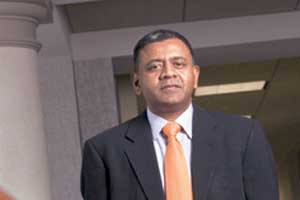
Anil Kumar’s choice of role models once put Warren Buffett and Michael Jordan on the same team. One studies businesses; the other made defenders reconsider their afternoon. What interested Kumar was their ability to commit to an idea and bring other people along. In 2008, running Quinnox, he talked about leadership in terms of conviction, ambition and the colleagues who kept choosing to work with him.
Nearly two decades later, Kumar is founder and CEO of QyrusAI. His company wants modernization, software testing and IT operations to share what they learn. The subject has changed from people following an idea to systems exchanging knowledge. There is a familiar concern underneath: how do separate efforts become useful to one another?
That question offers a way into a career spent around the less glamorous machinery of business. Kumar co-founded Fieldglass, the workforce software company acquired by SAP, and Quinnox, the technology services business. He launched Qyrus in 2021. These are businesses concerned with the work behind the work: arranging external labor, integrating applications, checking changes and keeping systems running. Nobody buys a ticket to watch a regression test. Plenty of people notice when one was needed.
A hiring interview with some resistance
Kumar’s account of leadership in December 2008 was unusually blunt. He valued ambition and honesty, and said he challenged prospective employees directly to see whether they could handle demanding work. He also pointed to colleagues who had stayed with him or rejoined him as evidence of attention to their professional and personal growth.
Those remarks give his public business persona some texture. The expectations were high; loyalty mattered; he wanted people with their own forward motion. His admiration for Buffett and Jordan centered on determination and the ability to mobilize others. He also admired Jack Welch’s management of GE. Taken together, the choices suggest a leader interested in execution and the organization needed to sustain it. That is a reading of his stated preferences, rather than a claim about life inside every team he has led.
“Great leaders have clarity in their thoughts...”
Anil Kumar, 2008
The interesting detail is the returning colleague. A founder can announce a philosophy in a sentence. Someone deciding to work with that founder again makes a more consequential choice. Kumar used that choice to describe his own responsibilities as an employer. It is a small, concrete detail in a career more often told through company descriptions.
Before the AI label, there was the plumbing
Fieldglass belongs to an earlier chapter of enterprise software. Kumar was one of its co-founders. Its business addressed the procurement and management of contingent labor and services, giving organizations software for handling a workforce that extended beyond their permanent employees. SAP announced its plan to acquire Fieldglass in March 2014 and completed the acquisition on May 2 that year.
That product category helps explain the kind of business problem attached to Kumar’s career. External workers bring contracts, suppliers and administrative processes along with their skills. Software that organizes those relationships becomes part of how a company functions. The attraction is practical: someone needs to know what has been agreed, which supplier is involved and how the work is being managed.
Fieldglass also places Kumar’s software experience well before the recent rush to attach AI to corporate products. The continuity is the enterprise customer, with its existing obligations and complicated relationships. The tools change. The need to coordinate those relationships remains a useful reason for software to exist.
The long education of Quinnox
At Quinnox, Kumar worked on the services side of the same enterprise world. By August 2008, the company was expanding its offshore development center at Mumbai’s SEEPZ. The additional facility covered 7,500 square feet. Its announcement described a global workforce of more than 1,400, with development centers in Mumbai, Pune, Bangalore and Hyderabad.
For a technology founder, an office expansion can seem an unromantic milestone. It has the advantage of being measurable. Space, delivery capacity and the ability to support clients were the terms of the announcement. Kumar connected the facility to the company’s growth plans and to serving customers more effectively. The story at that moment was an operating business making room for its work.
By 2013, Quinnox’s offering included application management, enterprise systems, testing services, mobile solutions and cloud integration. Its technology alliances included SAP, Software AG, Calypso, IBM and Oracle. Manufacturing, retail and distribution, and financial services were among its areas of focus. That portfolio put the company among the applications and interfaces that large organizations accumulate over time.
Consider what those services involve. A business application rarely has the courtesy to live alone. It exchanges information with other systems, depends on data and supports tasks that employees need to complete. Maintaining it involves understanding those relationships. Changing it introduces another question: will everything connected to it still work? Testing and application management were already adjacent concerns in Quinnox’s portfolio, years before QyrusAI placed them under a shared platform name.
A product inside the services story
Qyrus gave Kumar a software product focused on testing. Launched in 2021, it used AI and machine learning in a SaaS testing platform. The move is significant in his career because it made a recurring enterprise task the basis of a product: checking that software behaves as intended as applications and their connections change.
A customer example makes that task less abstract. In January 2025, Monument bank and Quinnox reported results from introducing Qyrus into the bank’s testing processes. The work brought mobile, web and API testing into end-to-end scenarios. Monument’s technology chief, Sudip Dasgupta, described embedding the platform and supporting processes into the bank’s agile delivery approach.
The companies reported a 213% return on investment and more than $1 million in savings within six months. They also reported a 90% reduction in QA and developer time. These are results claimed for that engagement, with its particular scope and starting point. Their usefulness here is as an example of the business outcome Kumar’s product was being asked to deliver.
The less showy detail is the combination of channels. A customer journey can cross a mobile app, a web application and the APIs connecting services. Testing those pieces together addresses a problem that a tidy list of separate checks can miss. It gives the product a job that resembles the earlier services work: understand how the parts behave in company.
Three departments, one memory
On September 8, 2026, Qyrus announced its transformation into QyrusAI, bringing its testing platform together with Qinfinite’s modernization and IT operations capabilities. The combined offering has three workspaces: Modernize, Assure and Operate. They share a knowledge graph, an operational memory called Hive and an orchestration layer called SEER.
The names describe an intended feedback loop. Discovery and dependency mapping inform changes. Tests check those changes. Resolved production incidents feed back into future checks. It is a product design aimed at preserving useful knowledge as work passes between teams. A diagram can make the intention clear; customers still have to judge the resulting behavior in their own systems.
For Kumar, this is an expansion of the task he set Qyrus. The company is asking to participate in more of the application lifecycle. Its argument depends on the value of connections between activities, including the connection between a failure encountered in production and a test that could catch it later. There is a pleasantly ordinary ambition inside the elaborate vocabulary: remember what happened.
The next test is already changing
October brought another development. On October 8, QyrusAI announced its placement as a Visionary in Gartner’s 2026 Magic Quadrant for Agentic Software Quality Assurance Platforms. The company described work on evaluating language model outputs, agent behavior and autonomous workflows alongside traditional application testing. This was recognition of the company and its platform, rather than a personal award for Kumar.
The change in scope matters. Testing a defined application function and evaluating an AI agent’s behavior pose different questions. QyrusAI is positioning its product to serve both conventional quality teams and the engineering teams responsible for AI applications. Kumar’s current business therefore sits at a meeting point between familiar release responsibilities and newer questions about software that can choose actions.
His career gives that meeting point a particular history. He has helped build a workforce software company, led a technology services business and launched a testing platform. Each chapter has involved organizations trying to coordinate work at scale. The latest chapter asks how much of that coordination can be captured in software that retains context.
There is no need to turn the progression into a story of inevitability. The dates mark decisions, products and businesses with different purposes. What makes them interesting together is the repeated attention to relationships: between a company and its suppliers, between a service team and its clients, between applications, and now between stages of software delivery.
Back in 2008, Kumar was talking about bringing people along with an idea. In 2026, he is selling a platform built around making separate activities inform one another. The business has acquired a new name and considerably more AI terminology. The human question remains recognizable: what does the next person need to know before they begin?
Follow the work
- QyrusAI website
- Watch Qyrus Unscripted: Raoul Kumar and Ameet Deshpande
- QyrusAI YouTube podcasts
- Anil Kumar on LinkedIn
- Quinnox biography
- 2008 leadership conversation
- 2008 Mumbai expansion
- 2013 Quinnox feature
- SAP: 2014 annual report
- 2026 Quinnox acquisition announcement
- QyrusAI combination announcement
- Monument testing engagement
- October 2026 QyrusAI announcement