When Anh Hatzopoulos was asked to name a favorite achievement at Dama Financial, she described a phone call. A customer would ring up, delighted and a little disbelieving, after finally finding a banking relationship that worked. Some had already been turned away by ten banks. The achievement was being able to get on with running a business.
It is an unusually modest object for an entrepreneur’s victory speech: an ordinary bank account. Yet ordinary things become valuable when you are excluded from them. Hatzopoulos has spent much of her career working around that problem, first in savings and payments, then in cannabis banking, and now in artificial intelligence. The products change. The question of who can actually use them keeps following her.
Her résumé passes through Intel, Netscape, Walmart.com and Netspend. She co-founded Dama, served as its chief executive, and later helped build NoteGoat. Today she is co-founder and CEO of PepperMill. That sequence can look like a tour of technology’s changing fashions. Look at the customers, though, and another story appears: people trying to participate in systems that ask rather a lot of them before letting them through the door.
A family of seven, with education at the center
Hatzopoulos came to the United States from Vietnam as a child in the aftermath of the Vietnam War. She has recalled the boat journey, the effort of learning English and the difficulties her parents faced in a new country. There were five children. Education shaped the choices and sacrifices of the whole household.
Her father worked multiple jobs while pursuing a PhD, without initially speaking English. Years later, when she began thinking about AI in education, that experience remained a reference point. A classroom can offer the same lecture to everyone and still present very different obstacles to each person listening.
The connection between that childhood and her work is one she makes herself. She describes empathy for immigrants and people with less money as a reason for choosing particular business problems. It gives her career a specificity that a list of employers misses. The people she wants to reach are often already doing the hard part. The system adds another task.
Before the bank account came the college fund
Her early career gave her experience inside companies operating at considerable scale. Between July 2000 and July 2005, she worked on the core team building Walmart’s online business. By July 2005, she was leading Little Grad, an online program that used shopping rebates to help families save for college.
The idea had a domestic starting point. After her second child, Hatzopoulos was thinking about college funds. Little Grad addressed a problem that could feel especially daunting to parents unfamiliar with higher education or the machinery of saving for it. A purchase could contribute to a future expense that otherwise seemed distant and intimidating.
There is something quietly practical about choosing the college fund as a place to intervene. Encouraging parents to value education would have been redundant in the household she knew. The difficult part was making resources accumulate. Little Grad tried to attach that task to something families were already doing.
After selling the company, she joined Netspend in February 2008 as an executive vice president. Its customers included people outside the traditional banking system who faced substantial costs simply to cash a paycheck. College savings and payment cards belong to different product categories. For a customer, both can determine how much of an opportunity is actually within reach.
- 2000–05Walmart.com
Building online retail - 2005–08Little Grad
Saving for college - From 2008Netspend
Consumer payments - 2017Dama launches
Business banking access - 2023NoteGoat
AI for learning and work - TodayPepperMill
AI for hospitality
The familiar problem in an unfamiliar industry
At Netspend, Hatzopoulos worked with Dan Henry and George Gresham, the payments veterans who would become her Dama co-founders. As recreational cannabis markets opened, they noticed businesses struggling to obtain dependable financial services. They initially expected someone else to solve the problem. By the time California moved toward its recreational market, the gap was still there.
Dama launched in 2017. Its approach brought technology and payments experience into relationships with banks willing to serve the industry. The distinction matters: Dama provided access through banking partners. It was a financial technology business, rather than a bank with its own deposit insurance.
For an operator, making a sale was only the beginning. The money still had to enter an account, reach a supplier, cover payroll and support the next week’s business. Building a company around those movements is less photogenic than building one around the merchandise. It is also where the awkward questions tend to collect.
By June 2021, Dama was serving customers in about thirteen states and had completed a $12.6 million Series B. Its offering had expanded from banking and merchant acquiring into other financial tools. Hatzopoulos was interested in how many services each customer used, as well as customer tenure and the dollars moving through the platform. A lasting relationship mattered alongside a growing customer list.
“The biggest obstacle is awareness.” - Anh Hatzopoulos, 2021
That observation explains the phone calls. Customers who had learned to expect rejection needed to believe a workable arrangement existed. Dama’s task involved persuading businesses as well as banks. A product could be available and still remain, in the mind of the person who needed it, practically inaccessible.
Hatzopoulos also resisted the idea that a single legislative change would settle every operational difficulty. In late 2021, she emphasized the infrastructure and careful review required to make banks comfortable with customers. Her attention stayed on the work of connecting the two sides. Waiting for a cleaner future would leave businesses dealing with the untidy present.
The company grows, and the founder moves on
In January 2022, Dama announced an agreement to acquire GrowFlow. The proposed combination joined financial services with software for inventory, sales, operations and compliance. It extended the same practical ambition: help an operator manage more of the business through connected tools, rather than assemble a working system from separate pieces.
Hatzopoulos stepped down as CEO in September 2022. Patrick O’Boyle’s appointment was announced in 2023, when she was reported to remain on the board. The distinction between founder and current executive is especially useful here, because Dama’s next corporate chapter came after her time in the chief executive’s chair.
In July 2024, LeafLink acquired the assets of Dama’s banking division. At that point, Dama had processed more than $3 billion in transactions and served more than half of the states with legal cannabis markets. The product lines outside the acquisition were to operate under the GrowFlow name. The business she helped establish had become part of a larger commerce platform.
Back to the classroom, with another kind of tool
In 2023, Hatzopoulos was speaking publicly as NoteGoat’s co-founder and CEO. Built with Aaron Wingert, it used AI to produce notes and summaries from lectures and other material. The problem was recognizable to anyone who has tried to understand an unfamiliar subject while also recording enough of it to study later.
NoteGoat’s own account of its founders places that work alongside their earlier ventures in marketplaces, education savings and financial technology. Its purpose broadened to helping professionals handle information as well as helping students learn. Time was the resource the company wanted to return to its users.
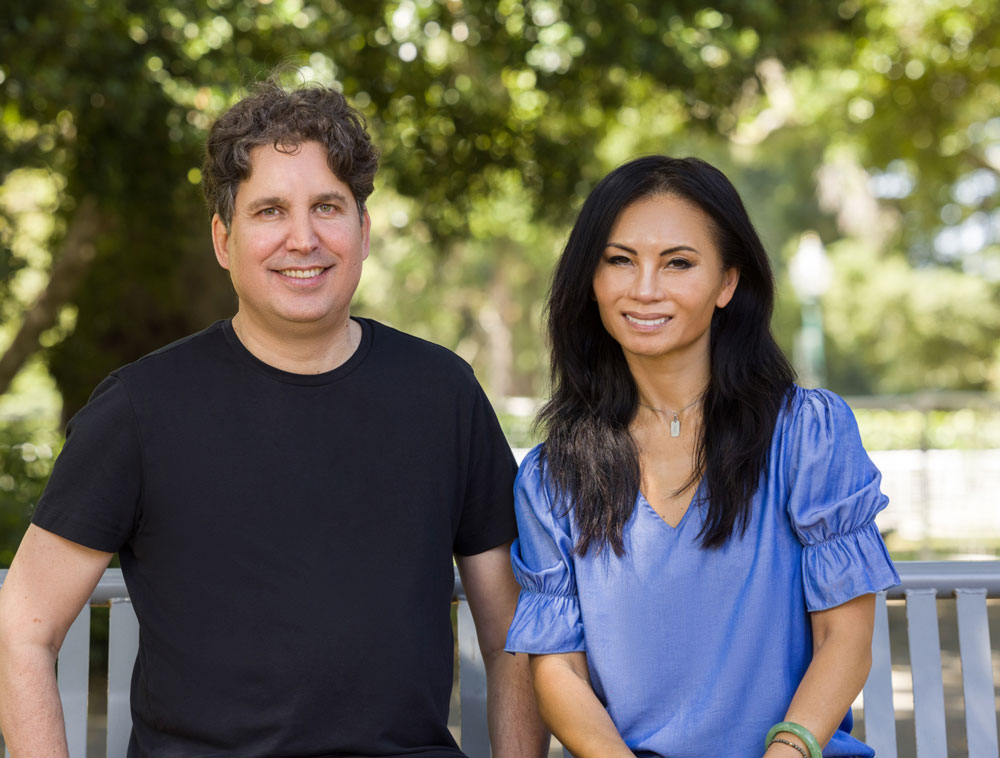
In November 2023, NoteGoat announced free accounts for students receiving financial aid. The announcement also described support for additional languages and uploaded classroom materials. Those were concrete product choices: access depended on price, language and the formats in which a student encountered information. Each could become a separate reason for a useful tool to remain out of reach.
A lesson in getting people to come along
For Hatzopoulos, making a product usable also means getting people to accept a change. She has recalled leading a Walmart.com fulfillment project that encountered resistance from the Home Office. Her first response was to push harder. A senior executive encouraged her to earn agreement. She says the project succeeded when the team listened more carefully.
It is a revealing admission from someone whose work often requires persistence. Determination can open a company; it can also make a meeting very long. Her later reflections place more weight on understanding the people expected to adopt a system. The lesson has an obvious application to AI, where a demonstration can impress everyone in a room without changing anyone’s working day.
At PepperMill, she is working on AI tools for hospitality. The company describes connecting fragmented operational and financial data so hotel businesses can understand performance and act on it. In January 2026, it opened its platform to hospitality technology providers, extending beyond tools sold directly to hotel owners and operators.
That introduces another set of customers facing an entry cost: software providers that want AI capabilities but cannot easily build the infrastructure or recruit the specialist teams. PepperMill’s proposition is to handle more of that underlying work. The old question about access has found a new budget line.
Hatzopoulos’s concern now includes the volume of material AI itself produces. More reports, messages and variations can leave a business with more to sort through. Her stated direction is toward tools that help users select useful information and decide what to do next. Producing another document is easy to celebrate. Making one less necessary may be the more welcome achievement.
There is a family resemblance between that ambition and the delighted customer on the phone at Dama. Someone has a business to run, a subject to learn or a future expense to prepare for. The technology earns its place when they can get on with it.