An invoice became a thesis
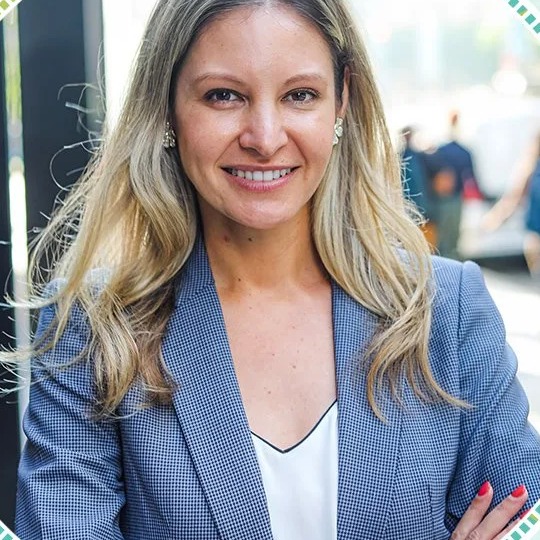
In 2016, Angela Rastegar tried to freeze her eggs. She had just started a new company, carried no fertility coverage, and walked straight into a process that was confusing, expensive, and quietly isolating. Most people would file that under bad luck and move on. She filed it under unfinished business.
Today she runs Sunfish, the Los Angeles company she co-founded in 2022 to make building a family financially survivable. The pitch is unusual for a category that has long sold hope by the cycle: Sunfish wraps loans, grants, guidance, and a money-back IVF Success Program around the people writing those enormous checks. The product she wished existed in 2016 is now the company she leads.
What makes Sunfish different is the direction it points the money. A typical IVF cycle in the United States runs roughly $15,000 to $25,000, with success rates that hover somewhere between a quarter and 40 percent. The industry, in other words, charges for attempts. Sunfish flips the frame: it uses a patient's own biodata to predict the optimal number of mature eggs and the likely cost, builds an all-inclusive bundle with partner clinics that can include unlimited embryo transfers, and refunds part of the cost if treatment fails or the prediction misses. Outcomes, not attempts.
Before she built the fix, she went to look at the problem up close. After the egg-freezing experience, Rastegar joined one of the largest fertility companies in the country. What she found there was the part most pitch decks leave out. People were draining their 401(k)s. Selling engagement rings. Going into deep debt for a maybe. That is the detail that explains everything about Sunfish - not a market-size slide, but a drawer of pawned wedding jewelry.
Sunfish, measured
The January 2025 round was led by Haymaker Ventures, with Allegis Capital, Mother Ventures, Walkabout Ventures, Hannah Grey VC, Fiat Ventures, and Coyote Ventures joining in. By Rastegar's account, the round closed in about six weeks - a sharp turn from the early seed days, when raising money meant first explaining to the venture community what IVF actually was. The money funds a membership that braids together financial tools, predictive modeling, and virtual care support.
Why a refund changes the math
The trick is not the loan. Anyone can lend money against a desperate decision. The trick is the prediction. By pricing a cycle against the biology of the person in the chair and then standing behind that estimate with a partial-refund guarantee, Sunfish takes on a slice of the risk the industry usually offloads onto patients. That is a financial product wearing a clinical coat - which is exactly the seam Rastegar was trained to work.
It also reframes what a fertility company is selling. A clinic sells a procedure. A lender sells a balance. Sunfish, in Rastegar's telling, sells a household a plan it can actually read before signing - one that bundles medications, discounts, education, and emotional support alongside the financing. The keyword cloud the company has accreted over time reads like a checklist of every place the old model left people stranded: cost transparency, fertility grants, loan repayment calculators, unlimited embryo transfers, partial refund guarantee, support for LGBTQIA+ families, surrogacy support. Each one started as someone's dead end.
Built for this, twice over
Rastegar holds a degree in human biology and global health from Stanford, with a focus on reproductive health, plus an MBA from Stanford's Graduate School of Business. One degree understands the egg. The other understands the balance sheet. Sunfish lives precisely where they overlap.
She is also a repeat founder. In 2014 she started Agora for Good, an online marketplace connecting companies and individuals to high-impact nonprofits, and ran it as CEO through 2017. She spent time at Village Capital as an investor and interim fund manager, learning the other side of the table. She served as a director at Circle Surrogacy covering the West Coast and Asia Pacific, and led Origin Finance, a family-building lender, as CEO. By the time she founded Sunfish, she had already founded and exited two companies - and worked nearly every angle of the fertility and finance worlds she was about to fuse. Earlier still came stints connected to Monitor Deloitte, PepsiCo, and Dalberg.
That quote is easy to skim past and worth slowing down for. In a stretch of American life where almost nothing draws agreement across the aisle, Rastegar found a sliver of common ground in the most personal subject there is. It is also a clue to how she sells: not as an activist, but as someone who has read the room and the spreadsheet.
Quotable
"Building a family should be a dream, not a financial burden."
"In general, there's bipartisan support for covering family building."
The egg-freezing process, in 2016: "confusing, expensive, and incredibly isolating."
On the early days: raising a seed meant "a lot of explaining to the VC community of what IVF was."
The patient in the product
Most founders build at arm's length from the pain they're solving. Rastegar did not get that luxury, or that distance. She has spoken openly about being on the patient side of fertility care during the same years she was building the company - the multiple retrievals, the surgery, the bills she was simultaneously trying to make rational for everyone else. Being the customer of your own product is a brutal form of user research, and it shows up in the details Sunfish chooses to obsess over: clarity about cost, refunds when things don't work, support for LGBTQIA+ families, surrogacy, egg and sperm donors. The company's stated aim is parenthood for all kinds of families, not a single template of one.
There is a Hawaii footnote worth keeping. Before Stanford, Rastegar attended Punahou School in Honolulu - the same prep school that produced a future U.S. president. It is the kind of small, true biographical fact that resists being turned into a lesson, which is exactly why it earns its place here.
She does not hide behind the company, either. She has taken the argument to stages - TEDx London, the Reproductive Health Innovation Summit, and lecterns at Stanford, Harvard, and Columbia - making the case that the economy and consumer affordability belong in the same sentence as fertility. The message stays consistent whether the audience is a clinic, a classroom, or a check-writer: stop charging families for the privilege of trying.
The next chapter
The roadmap Rastegar describes is less about a single feature and more about widening the door. Sunfish started by serving patients without insurance and has been expanding toward those with partial coverage. Its lending reaches close to 100 clinic locations, and its clinical partnerships, including the Ivy Fertility relationship now spanning 28 clinics, keep growing the footprint where the Success Program and bundled pricing can actually run. An AI-driven egg-freezing program with a cost guarantee, launched in 2024, points at the same north star from a different angle: make the price legible before the patient commits, then stand behind it.
The aspiration is plain and large. Take an industry built on charging for attempts and bend it toward guaranteeing outcomes - so that the question facing a hopeful parent is about biology and timing, not whether to sell the ring. Rastegar has spent a decade getting close enough to the problem to price it honestly. The interesting part now is watching whether the rest of the industry follows the money she's redirecting.
There is a timing argument underneath all of it. Fertility treatment is one of the few major health expenses people often face while they are young, uninsured for it, and racing a biological clock - a combination that turns a medical decision into a financial emergency. Sunfish's wager is that predictability defuses the emergency. If a household can see the likely cost, the likely number of eggs, and the likely refund before anyone fills a syringe, the decision stops being a leap in the dark. That is the quiet ambition behind the dashboards and the guarantee: not to make IVF cheap, which no one can promise, but to make it knowable, which until recently almost no one tried.
For a founder who began with a single confusing invoice, that is a fitting place to point a company. Rastegar did not set out to disrupt fertility medicine. She set out to make the bill make sense - and discovered that fixing the bill meant rebuilding much of the system attached to it.
The tags that follow her around
Links & sources
Sources: Sunfish (joinsunfish.com), Femtech Insider, Fierce Healthcare, PR Newswire, Crunchbase, The Org, Slice of Healthcare (#434), and founder interviews on the I Want To Put A Baby In You, Stork'd, and Fried Eggs podcasts. Facts drawn from public reporting; where details could not be confirmed, they were left out.