A spreadsheet arrived, and the future of audit took a detour through the past. An early Andera customer had trusted the young company with the sort of evidence auditors know too well: scattered email, contradictory PDFs and Excel workbooks thick with images, hidden structure and millions of rows. The proposed AI auditor first had to see what a human auditor could see. It could not. A model that wrote polished code became bewildered by an ordinary-looking workbook. The problem was less theatrical than an AI hallucination and more dangerous: information could vanish on its way into the system.
Andera's response was not another prompt. It was a file parser. The company began with OpenPyXL, patched around its limitations, then replaced more and more of it with its own engine. By its July 2026 engineering account, the effort had grown to roughly 43,000 lines of code. One Excel file that once took two hours to load, Andera says, could then load in less than a minute. That is a company-reported benchmark, but the underlying lesson travels well: an AI agent cannot reason its way around missing evidence.
- What it sellsAI software for gathering evidence, testing controls and drafting audit workpapers.
- Who it servesInternal audit and SOX teams at large companies, plus RSM through an alliance.
- Why it mattersIts engine was built around the ugly documents that make audit automation fail.
First, throw away the first idea
Andera's story began with a different company. Pear VC says it invested in Aryo Patel in April 2024, when he had no co-founder, no product and an idea called RegCheck. It would help bank compliance officers follow regulatory changes. Patel interviewed them and found a real inconvenience. He also found a worse problem for a founder: getting to someone able to buy the cure was difficult, and the pain was not sharp enough. He dropped the idea.
Then he investigated Sarbanes-Oxley control testing - the recurring work public companies do to check that financial reporting controls actually operated. Pear's account says Patel sent about 4,000 cold emails a week and reached roughly 250 substantial discovery conversations with finance leaders. The volume is startling, though the method matters more than the number. He talked to people close to the work and people close to the budget. Those are not always the same people.
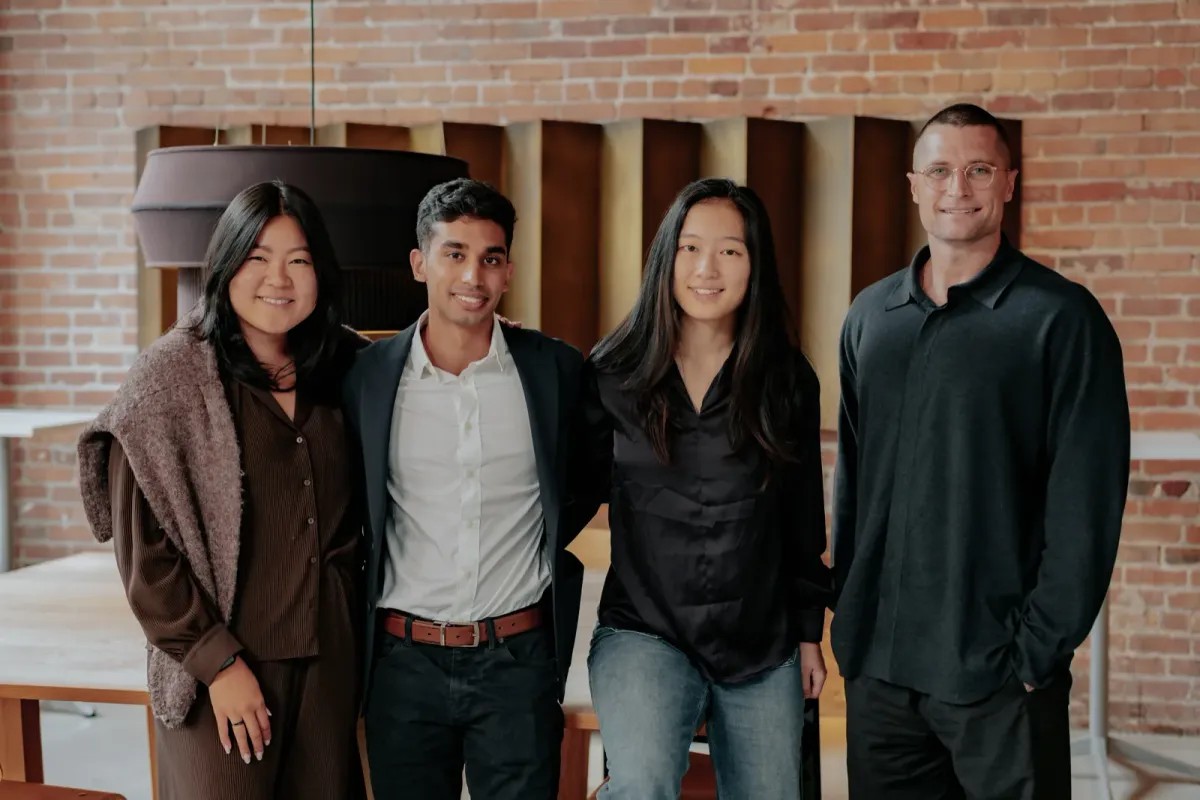
Patel teamed up with Tinah Hong, a friend from grade school and later MIT. He became CEO; Hong became CTO. Their company took the name Andera and aimed at the work an audit team repeats each cycle: request evidence, inspect it, test attributes, chase missing items, record exceptions, and assemble workpapers that another person can review. A nice answer in a chat window would be almost useless here. The deliverable has to survive the next auditor.
A workbook has a long memory
In Andera's telling, the first customer exposed the weak point immediately. OpenPyXL could read conventional cells, but Andera needed to understand embedded images, drawings, text boxes, tables, hidden rows and the links between multiple workbooks. An auditor may read a pasted screenshot as evidence of an approval. Software that quietly omits the screenshot may still produce a fluent conclusion, which is precisely the danger.
Hong's team wrote an initial 6,000-line service during an all-night stretch in Amsterdam. What followed was a year and a half of work on the small print of Excel's file format. They studied its XML relationships, worked around image rendering quirks and eventually built their own reading and writing engine. The company describes a particularly instructive performance problem: representing every cell as a separate Python object caused one workbook to balloon to as much as 70GB in transit. A leaner representation, shared strings and compression brought the worst cases down to tens of megabytes.
Figures above are Andera's own engineering account; they are not independent product benchmarks.
This is where Andera is most interesting. AI audit is often sold as a question of model intelligence. The company found that data fidelity could be the binding constraint. If the source material is assembled by many employees over many years, the machine must understand the archaeology before it can judge the control. That insight is less photogenic than an agent demo. It may be more valuable.
The product is a chain of custody
Andera now describes an AI-native GRC and testing platform. A customer can feed it evidence in existing formats; the software reads that material, performs directed tests and returns audit-ready workpapers in the team's own style. Its site also presents evidence gathering, exception management and a controls environment linking test results to risk and control records. The ambition is to reduce the tedious preparation around an auditor's judgment, including the follow-ups that consume entire afternoons.
The buyers are internal audit, SOX, finance and risk teams. Andera says multiple Fortune 500 companies have used it across SOX, operational audit, cybersecurity and financial-crime related controls. Their names and an exact customer count are not public. The company also says its team is about half auditors and half engineers. That split is a useful clue to the product: the workpaper's format and evidence trail are as much features as the model that reads a file.
Its alternative is familiar to any large audit department: people moving through spreadsheets, inboxes and a GRC system, sometimes with robotic process automation helping at the edges. Established platforms such as Workiva and AuditBoard, now Optro, organize control and audit workflows. Andera's pitch puts more emphasis on executing tests against unstructured evidence and returning the documentation for review. The distinction is a positioning claim, not a verdict on every rival product. A sensible buyer would test the same difficult controls in each system.
“The hard problem is building AI that can be trusted in a domain where trust is the product.”Andera, on its approach to audit infrastructure
The price of a shorter audit
In June 2026, Andera announced a $37 million Series A led by Lightspeed, with Bain Capital Ventures, Pear VC and A* named among its backers. That figure is the cost of the bet investors made, not the price a customer pays. Andera does not publish a product price. Nor has it published an audited, across-customer saving that would let a buyer calculate a standard return. It markets time savings, but the honest unit of comparison is a particular control, in a particular company's evidence environment.
In August it announced an alliance with RSM. Andera's technology is integrated into RSM's next-generation internal audit platform, where it can review unstructured evidence, execute directed tests and produce documentation that traces back to source material. The relationship gives Andera a path into RSM's middle-market work as well as its direct enterprise sales. It also raises the bar: an auditor using the output must be able to examine how the answer was reached.
What can another company copy? Start with the file that defeats the demo. Put the practitioners who must sign the work next to the engineers building the system. Preserve the link between every conclusion and the material that supports it. And measure the minutes saved after human review, not only the seconds an agent spends generating an answer. Andera's own history suggests a further rule: if the buyer is hard to reach and the pain is bearable, change the idea while changing it is still cheap.
The approach has limits. A control with missing or unreliable source evidence cannot be repaired by elegant parsing; ambiguous exceptions still require a person who understands the business. Deployment also depends on a team willing to define tests and review results. Andera's claim is narrower, and more defensible, than a robot replacing the auditor: it can make the repetitive parts of assurance faster while leaving the judgment visible. For a company that once stumbled over a spreadsheet, that is a fitting place to land.