The clue to Ammar Roslizar's second company sat inside his first one, chiming all day in WhatsApp. ARBA Travel sold Muslim-friendly tours, and every booking carried a small cargo of coordination: destinations, payments, customer questions, prayer times, restaurants and the practical anxieties that begin as soon as somebody commits money to a trip. Chat was where customers already were. So chat became the counter, the sales floor and a good portion of the back office.
For four years, ARBA's team built and used software around that behavior. By the time those tools became the standalone company Yezza in 2020, the founding idea had been tested in the least theoretical way possible. It had orders to process and impatient humans to serve. There was no need to imagine the user. The user had just sent another message.
This is the clean line through Roslizar's career: he notices the inconvenient details around a transaction, then organizes them. The products changed from travel packages to business software. The operator's instinct did not.
The return ticket
Roslizar returned to Malaysia in 2014 after seven years abroad. He was 25. What he saw on arrival was not a grand technology gap. It was an ordinary customer problem with cultural texture. Muslim travellers wanted packages that worked around how they actually travelled, but the supply was thin. A good itinerary needed more than photogenic stops. It needed halal restaurants, prayer schedules, prayer locations and guides who understood the customers.
He co-founded ARBA Travel & Tours with partners that year. The company's specialization was specific enough to be useful and broad enough to travel. ARBA built operations in Kuala Lumpur and Seoul, later adding licensed offices in Kota Kinabalu and Istanbul. Personalization separated the packages from the standard bus-tour script. The company researched the local favorites that conventional tours could flatten into a blur.
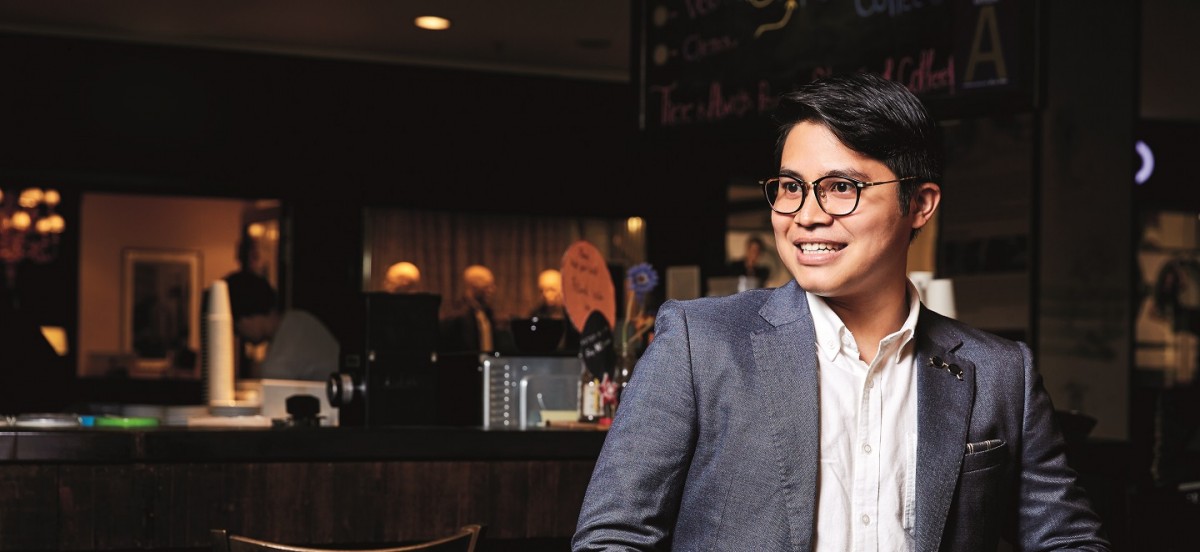
Growth followed. In 2017, ARBA was counted among Malaysia's top 50 small and medium enterprises by SME Corporation Malaysia and Deloitte. In 2018, the company reported RM35 million in revenue. Roslizar and co-founder Ammar Shahrin appeared on Forbes' 30 Under 30 Asia list in Retail & E-commerce, while Roslizar was nominated in the emerging entrepreneur category of EY Entrepreneur Of The Year Malaysia.
The medals are tidy. The operating story is messier and more instructive. Travel purchases arrive wrapped in questions, and WhatsApp was where those questions lived. ARBA sold packages there at meaningful scale. The company could either treat the conversation as noise surrounding a booking, or recognize it as the booking experience itself.
“Almost everything is on the cloud.”Ammar Roslizar, after an office break-in in 2018
That line came during a wonderfully ill-timed morning. Roslizar was late to a magazine interview because his office had been broken into. The interviewer offered to reschedule. He declined and explained that nearly everything was stored in the cloud. It is a small anecdote, but an accurate miniature of the operator: acknowledge the interruption, check the system, continue with coffee.
The company inside the company
When the pandemic closed borders, ARBA's core business had nowhere to go. Yet years of selling through chat had produced an asset that did not require a passport. The team had learned how small businesses could turn conversations into orders, invoices and payments. Yezza was spun out as a standalone business in 2020.
The early pitch was clear: help small businesses in Southeast Asia create storefronts on WhatsApp. Merchants could collect orders and payments without forcing customers through an unfamiliar marketplace. Influencers could manage brand work. Restaurants could take table reservations. Commerce remained conversational, but the machinery underneath became less improvised.
Yezza's Y Combinator profile captured the early shape of the business in unusually concrete figures: $40,000 in monthly recurring revenue, $3 million in monthly merchandise volume and 1,500 orders each day. The company said it was profitable. Those are snapshot figures rather than a permanent scoreboard, but they establish the central point. The travel-company workaround had found life beyond travel.
In early 2022, Yezza joined Y Combinator's Winter batch. As Demo Day approached, Roslizar posted that he had entered fundraising mode. His first investor meeting, held over Zoom, closed within 20 minutes. The anecdote is brisk enough to sound like founder folklore, except that he told it himself in public while inviting more conversations.
His recruiting note from that period was equally direct. He wanted people in data, finance, product, marketing and development from across ASEAN. Yezza was then building WhatsApp storefronts, he wrote, but his horizon was wider: consumers would eventually buy anything, anywhere, anytime. The ambition was not to polish a chat widget. It was to help merchants own a route to customers.
The reusable lesson: a workaround becomes interesting when it survives contact with daily operations. Four years as your own demanding customer can reveal more than four weeks of polite interviews.
The point of view beneath the product
Yezza's public product has broadened since the accelerator pitch. Its website now describes an operating system for businesses, pairing commerce tools with industry-specific management software. It advertises more than 100 features, updates every two weeks, customer databases, forms, stores, payment methods, shipping integrations and marketing automation. The storefront is now one room in a larger house.
That expansion can look like a change of direction. From another angle, it is consistent. ARBA made a complicated trip legible. Yezza makes a complicated workflow legible. Both businesses meet customers in the unglamorous middle, where somebody has to reconcile the preference, the payment and the next action.
Roslizar describes his work in plainer terms: helping entrepreneurs earn money and save time. It is a useful sentence because it rejects the decorative vocabulary that software companies often apply to administrative chores. A merchant does not wake up craving a configurable workflow. The merchant wants the order recorded correctly and the evening returned.
“I'm building Yezza, a tech startup to help entrepreneurs earn money & save time.”Ammar Roslizar
The concern with purpose also reaches outside the companies. In 2018, Roslizar and his partners established ARBA Foundation. Its stated mission is to stop the poverty cycle in one generation, using data and technology to help children in Malaysia. Roslizar remains listed among its founders and council members. In 2025, he spoke at the RISE 2.0 convention in a session titled “Build from the Ground Up,” alongside discussions about social impact and community design.
The connection is not a sentimental appendix to the founder story. It fits his stated belief that business can be a route to wider social contribution. The same preference for systems appears again: define the overlooked problem, build around the people living with it, and make the response repeatable.
What compounds
Founder biographies are often arranged as a sequence of nouns: university, company, award, accelerator. Roslizar's makes more sense as a sequence of verbs. Return. Notice. Research. Sell. Build. Spin out. The nouns are receipts.
There is also a useful distinction between spotting a trend and earning a point of view. WhatsApp commerce was visible to anyone with a phone. Roslizar's advantage was the accumulated memory of what happened after a customer typed “interested.” A sale then had to become a clean record, a confirmed payment and a promise the company could keep. Plenty of founders could see the chat window. Far fewer had spent years responsible for everything that flowed from it. Yezza's origin is compelling because the insight arrived with obligations attached.
His route also makes a quiet argument about where software ideas come from. Yezza did not begin with an abstract fascination for conversational commerce. It began because a travel business was already conducting commerce in conversation. The founders had felt every splinter in the process. They knew what customers repeated, where orders stalled and which small omission could turn into an evening of manual repair.
That kind of knowledge is difficult to rent. It accrues to operators who stay near the transaction long enough to become annoyed in precise ways. The valuable annoyance is rarely cinematic. It is the seventh time a staff member copies an address, the payment that cannot be matched to a name, the customer who sends the crucial detail in a separate message.
Roslizar's career so far has been built around taking such details seriously. At ARBA, the overlooked detail might have been a prayer stop. At Yezza, it might be the handoff between a message and an invoice. The industries differ; the courtesy is the same. Someone has paid attention to how life is actually lived.
The next chapter is still being written inside Yezza's widening collection of tools. The useful thing to watch is not simply which vertical comes next. It is whether the company can preserve the founder's original advantage as it grows: the habit of treating friction not as background noise, but as a product brief with its sleeves rolled up.