A child can outgrow a jacket between two family photographs. The photograph, annoyingly for anyone in the replenishment business, may last forever. Alison Zemny Stiefel has arrived at Janie and Jack with the useful problem hidden inside that mismatch: how does a clothing company participate in the memory without pretending the garment is the memory?
Her early answer has been to widen the frame. In June, the children's design house joined Limelight Hotels for nine weekends of lawn games, open-air films, pool afternoons, scavenger hunts and firepit s'mores. The clothes were present, especially the Americana collection, but they were not asked to carry the whole scene. In August came Paddington: more than 20 styles built around the bear's duffle coat, red hat, suitcase and talent for making kindness look adventurous.
Stiefel described the hotel partnership as a move “beyond fashion and into the moments families remember most.” It is the sentence of a marketing chief, certainly, but it also contains an operator's adjustment. When products are abundant and attention is scarce, a brand cannot merely make another item. It has to earn a place in the occasion.
The department store was the first browser
Stiefel's career began at macys.com in 2000, when putting fashion on the internet still felt like translating a language with several missing verbs. She moved from Macy's to Saks Fifth Avenue, then to Gump's in San Francisco. At Gump's, she was Vice President of eCommerce when the retailer reported a 25 percent increase in online sales during the 2011 holiday season after a website relaunch. Traffic rose 19 percent and conversion climbed 7 percent. These are old numbers now, but they show an early habit: the story and the system had to work together.
The next posts expanded the canvas. She led e-commerce at Mark + Graham, the personalized-gifts brand within Williams-Sonoma. She served as Chief Marketing Officer and head of e-commerce at Serena & Lily, where furniture and textiles are sold as an atmosphere. At Sephora, she led brand marketing across omnichannel content, campaigns and social. In 2017, discussing the beauty retailer's #NeverStop campaign, she emphasized the audience members who shared and supported one another beyond product. Community was not garnish. It was part of the offering.
What followed at ShopStyle joined nearly every strand. Stiefel arrived in marketing, took on international responsibilities and, at the start of 2020, became General Manager. The platform sat between search engine, magazine, loyalty club and storefront. People could browse fashion and home products, compare stores, save favorites, receive sale alerts and earn Cash Back, then complete most purchases on a retailer's own site. It was a business built around the difficult middle of shopping: after desire appears, before the parcel arrives.
“We're kind of like the MoMA of fashion and home, where we curate the best products and brands.”Alison Stiefel on ShopStyle, 2022
The MoMA comparison is charming because it refuses the warehouse metaphor. A museum does not distinguish itself by hanging every object it can acquire. It selects, arranges and supplies context. Stiefel did not call ShopStyle an ordinary marketplace. She called it a social-commerce platform, combining search and discovery with a point of view.
This was not curation as a decorative mood board. ShopStyle used search behavior to surface trends, worked with its creator network to build shoppable outfits and sought more relevant recommendations from explicit and implicit preferences. A jean jacket might appear with sweatpants or a dress. The point was not only to locate the jacket. It was to help a shopper see what the jacket could do.
The creator side of the business made the same logic run in reverse. ShopStyle shared catalog and search signals with influencers, then watched their programs for new trends that could improve the consumer experience. In 2019, Stiefel spoke about giving influencers greater transparency into the value of their work. The platform's “Know Your Worth” feature opened a part of the business that had often behaved like a dark box. Better information could help creators act as sharper digital marketers, while their taste could help ShopStyle become a sharper editor.
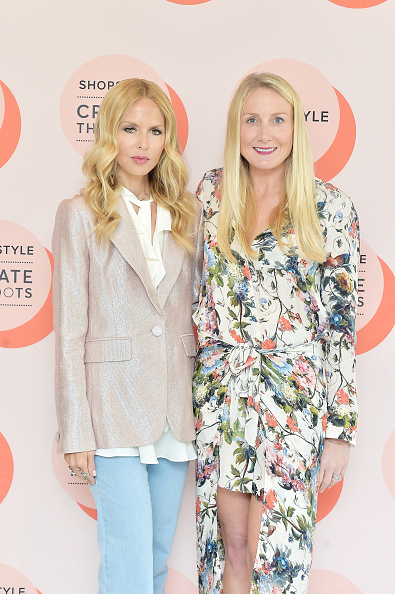
That loop matters. A search query records intention, but a person styling an outfit adds interpretation. One tells the platform what shoppers request; the other suggests what they might not yet know to request. Stiefel's version of digital commerce made room for both. It also explains the appearance of Rachel Zoe at ShopStyle's 2018 “Create The Dots” speaker series. The event put an entrepreneur with a strong personal point of view beside an executive building systems to distribute points of view at scale.
Personalization begins with an unavailable dress
Grand retail strategies often become clearer when reduced to one small annoyance. Stiefel once explained ShopStyle's personalization ambitions through the experience of finding something appealing, clicking through and discovering that it was unavailable in her size. The future she described was less theatrical than the word personalization suggests: remember the shopper's sizes, respect her brand and style preferences, and stop sending her toward dead ends.
That example offers a compact philosophy of technology. Machine learning is valuable when it turns a sprawling catalog into a plausible outfit. Search data is useful when it reveals an emerging need. An app earns loyalty when it remembers enough to spare the customer needless work. The machine should carry the complexity so the person can keep the pleasure.
ShopStyle's 2022 figures suggest that the approach found an audience: 1.6 million loyalty members and more than 60 million annual shoppers, with traffic up 11 percent year over year that April. The platform was also widening beyond luxury into contemporary and value products, an acknowledgment that personal style rarely honors a retailer's price architecture. People shop high-low. A useful service notices.
After ShopStyle came Maisonette, the children's marketplace that recruited her as Chief Marketing Officer in 2023 and publicly praised her “dynamic wit.” Everlane followed, first through contract work in e-commerce and growth strategy and then as Chief Growth Officer. In each setting, the product changed but the connective tissue did not: brand, performance, CRM, content and the experience of the customer on the other side of the screen.
A new chapter, properly edited
Stiefel announced her Janie and Jack role with a nod to the company's nearly 25-year history and three plain ambitions: deepen the storytelling, reach new audiences and grow the brand globally. CEO Parnell Eagle welcomed her ability to connect storytelling with performance. Colleagues from earlier chapters recognized the reunion. The announcement read less like a victory lap than a team assembling around a familiar table.
Janie and Jack is a particularly tidy place to test her thesis. Children's clothing lives at once in the mundane and ceremonial. It must survive breakfast, but it may also appear in the picture from the first day of school. It gets grass stains and becomes an heirloom. Parents are buying fabric, fit and durability, but sometimes they are also buying an answer to the question: what will this moment look like?
The Limelight project treated summer travel as the setting. Paddington brings a different asset: inherited affection. Parents who know the bear from their own childhood can introduce his kindness, curiosity and adventures to their children. The integrated campaign runs across stores, social channels, influencers and live experiences. The commercial machinery is visible. So is the emotional logic.
The strongest through-line in Stiefel's career is not luxury. It is context: the patient work of showing why this product, for this person, at this moment.
There is an amusing modesty to this approach. Retail spends fortunes making the product the center of the universe. Actual customers routinely demote it to a supporting role. The dress is for the dinner. The pajamas are for the photograph. The duffle coat is for a wet Tuesday when a child decides to be Paddington. Good marketing need not object. It can become an excellent supporting actor.
Stiefel's public language has stayed consistent across very different brands: individuality, inspiration, convenience, community, loyalty and meaning. These are soft words connected to hard systems. Inventory has to match. Sizes have to be there. The app has to remember. The content has to travel. A campaign that promises recognition and delivers irrelevance has merely written a charming lie.
After 26 years, her operating idea appears less like a trick than an editorial discipline. Use data to remove noise. Use story to give a choice context. Curate enough to be helpful, but leave enough room for the customer to recognize herself. At Janie and Jack, that customer is often choosing on behalf of someone who will soon outgrow the choice. The clock is built into the product.
Which may be why memory is such an intelligent place to build. Clothes become small. Photographs do not. The click is simply where the longer story begins.