Before Alex Kubicek became an insurance chief executive, he was a graduate student with an irritating scientific problem. His models of hail formation could describe what happened inside a thunderstorm, but the world beneath the cloud was strangely quiet. Radar looked across the sky. Satellites looked down from orbit. Neither could tell him, with the precision his work demanded, what a particular storm had actually done when it met a roof, a field or a parked car.
The gap was both academic and physical. Hail does its accounting at ground level. It dents the hood, fractures the panel and bruises the crop. Kubicek, who had studied physics and electrical engineering before pursuing atmospheric science at the University of Wisconsin-Madison, wanted observations that could meet the storm where the invoice arrived.
The question had personal history behind it. In 2005, while still an engineering student, he went to Louisiana to help with Hurricane Katrina cleanup. He has described the devastation as the experience that pushed him toward understanding weather, disaster safety and economic resilience. Years later, while studying cloud microphysics and hail growth, he encountered a smaller version of the same frustration: decisions were only as good as the evidence underneath them, and the evidence near the ground was thin.
“Radar only looks at the top of the storm, and to know how weather affects people we need to know what is going on at ground level.”Alex Kubicek
The missing instrument
In 2012, Kubicek and fellow UW graduate student Bryan Dow began designing what became Understory's weather station. Their approach replaced the familiar collection of cups, tipping buckets and other moving parts with a solid-state instrument. The round metal sensor could register the force and direction of rain, wind and hail while also measuring temperature, pressure and humidity. The product would become known as Dot.
The earliest commercial idea was pleasantly modest: a backyard station for makers and weather enthusiasts. Business competitions put the concept in front of potential users. People liked hyperlocal weather data, but a household-by-household product did not give them much to do with it. Insurers and enterprise customers had sharper questions. Where had the storm hit hardest? Which claims needed attention? Where should response crews go first?
the ground
the impact
property risk
loss controls
The company turned toward business customers and entered Gener8tor's first Madison accelerator cohort. Capital did not arrive with the weather. Kubicek later told a Wisconsin entrepreneurship audience that he heard no from venture investors more than 100 times. He made a map of where the rejections happened - a scientist's response to discouragement, converting refusal into a dataset.
Understory moved to the Boston area in 2013, where hardware accelerator Bolt and the climate-tech community at Greentown Labs offered a friendlier base for building. A Kansas City pilot put the stations on buildings, billboards and cell towers. The first production deployment supplied a useful warning of its own. Once installed at the top of a tower, the device was switched on and did absolutely nothing. It was dead, inconveniently close to the sky.
Kubicek called the recovery an Apollo 13 moment. The team had to diagnose a stranded instrument with what it had. There was no graceful theory to hide behind. This matched a lesson from his teenage summer as concert security, when he was expected to stop grown Jimmy Buffett fans from cutting through a fence without possessing much actual authority. His conclusion was blunt: functionality without the ability to execute does not amount to much.
A return with better weather
The move east helped Understory secure early backing, including a $1.9 million round led by True Ventures in 2014. But Madison changed while the company was away. A denser startup community emerged, local capital became more visible and the university remained a deep pool of technical talent. Following a $7.5 million financing, Understory returned its headquarters to Wisconsin in 2016.
The homecoming was practical as much as sentimental. Kubicek pointed to operating costs that could stretch the company's runway and to the attraction of hiring near UW. He was newly married and wanted what he jokingly called “tech and babies” - serious startup work without pretending that a founder's life existed in a sealed laboratory.
That groundedness appears in the habits he has shared. Family provides routine. Black coffee and scheduled meetings with his team provide momentum. Customer conversations provide ideas. His favored method begins with a real pain point, works backward through technology and analytics, then turns the answer into something operational. He recommends keeping a professional network informed because useful connections often return in unpredictable ways.
When the dataset becomes the insurer
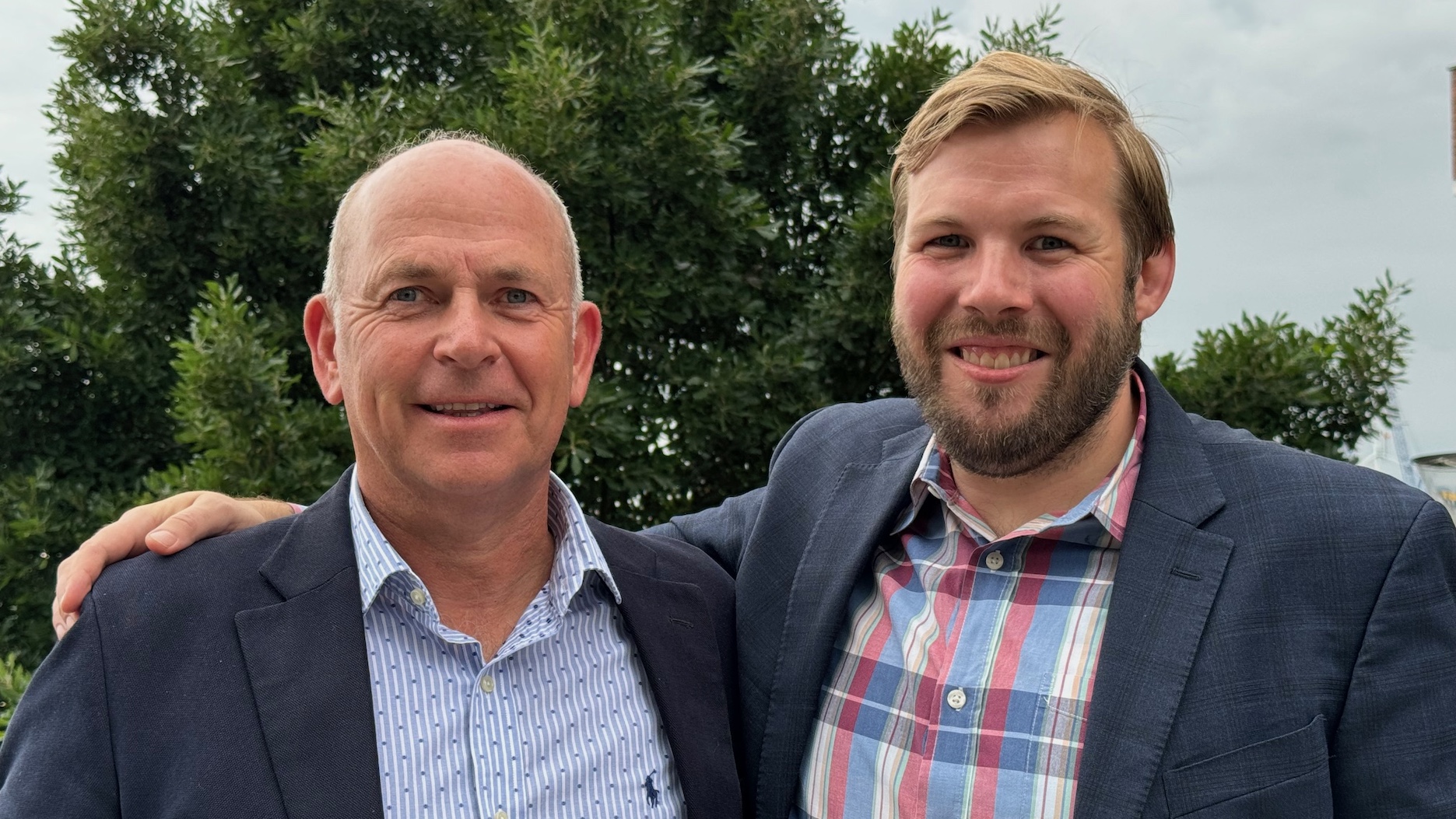
For years, Understory deployed Dots and accumulated direct observations of severe weather. That archive supported catastrophe models designed to understand risk at individual properties. The natural software business would have sold access to the models. Kubicek and Dow chose a more consequential route. After meeting insurance executive Neil Irwin, they brought him in as a co-founder and international president and began building insurance products around the system.
The distinction matters. A weather report can describe danger. An insurance product determines how risk is priced, who receives coverage and what happens when the atmosphere turns expensive. Understory's model connects those decisions with early warnings and specific loss controls. Its Dealers Open Lot program serves auto dealerships, where hundreds of vehicles can sit exposed to the same hailstorm. An accurate alert can give staff time to move inventory under cover.
The company first introduced a parametric product called Auto - Hail Safe in 2019, designed to pay when an on-site sensor recorded a qualifying event. In 2022, Understory and Skyward Specialty launched a broader captive solution in which participating dealerships could share underwriting profits while following agreed loss-control practices. Prevention and insurance began to occupy the same product.
The value of time
A client example described in 2024: hail damage before and after early-warning action.
One customer example makes the idea concrete. Early notice helped reduce hail damage from $110 million to $50 million. Those numbers do not make weather tame. They show that the interval before impact has economic value. A forecast becomes more than a message on a phone when someone has a rehearsed action to take.
Insurance usually enters the story after the damage. Kubicek is building around the minutes before it.
The solar problem in the sky
In June 2024, Understory announced a $15 million Series A co-led by True Ventures and Prelude Ventures. The company said its dealership product protected inventory at nearly 1,000 U.S. locations and that it would extend its approach into renewable energy. The target is logical and slightly cruel: solar panels need broad exposure to the sky that can also punish them.
Large solar projects are often built in sunny regions that face significant hail risk. Understory's models can, in some cases, give operators roughly 45 minutes of warning. That interval may allow a facility to stow panels or change their angle, reducing the force of impact. Kubicek offered examples in which operational changes could cut repair bills by half or more. The exact result depends on the storm and the site, but the mechanism is refreshingly physical: tilt the valuable surface before ice meets glass.
This is also the culmination of his original research problem. Ground-level measurements validate models. Models reveal property risk. Insurance prices that risk. Warnings create a chance to change the outcome. Each layer makes the previous one more useful.
A founder who follows the evidence
Kubicek's career can look like a chain of pivots: engineer to atmospheric scientist, consumer hardware to enterprise data, Boston back to Madison, analytics into insurance. Seen closer, it is one inquiry pursued through different forms. What actually happened here? What evidence is missing? What action becomes possible if the measurement improves?
The continuity helps explain his appetite for iteration. He has advised founders to fail quickly, learn and adapt. He has also warned them to examine vendors carefully instead of accepting an appealing offer at face value. These are laboratory instincts applied to company building: inspect the instrument, question the assumption, repeat the trial.
There is wit in the details - the rejection map, the useless teenage authority, the sensor marooned above the ground it was supposed to measure. But the aspiration underneath them is sober. Severe weather is growing harder for traditional insurance to absorb. Understory's answer is to join a policy to a richer picture of risk and a practical plan for reducing loss.
The company began because the sky could not explain what was happening on the surface. Kubicek kept looking down. On rooftops, dealership lots and solar fields, that is where climate risk stops being abstract. It is also where a few better measurements - arriving a few useful minutes earlier - can still change the ending.