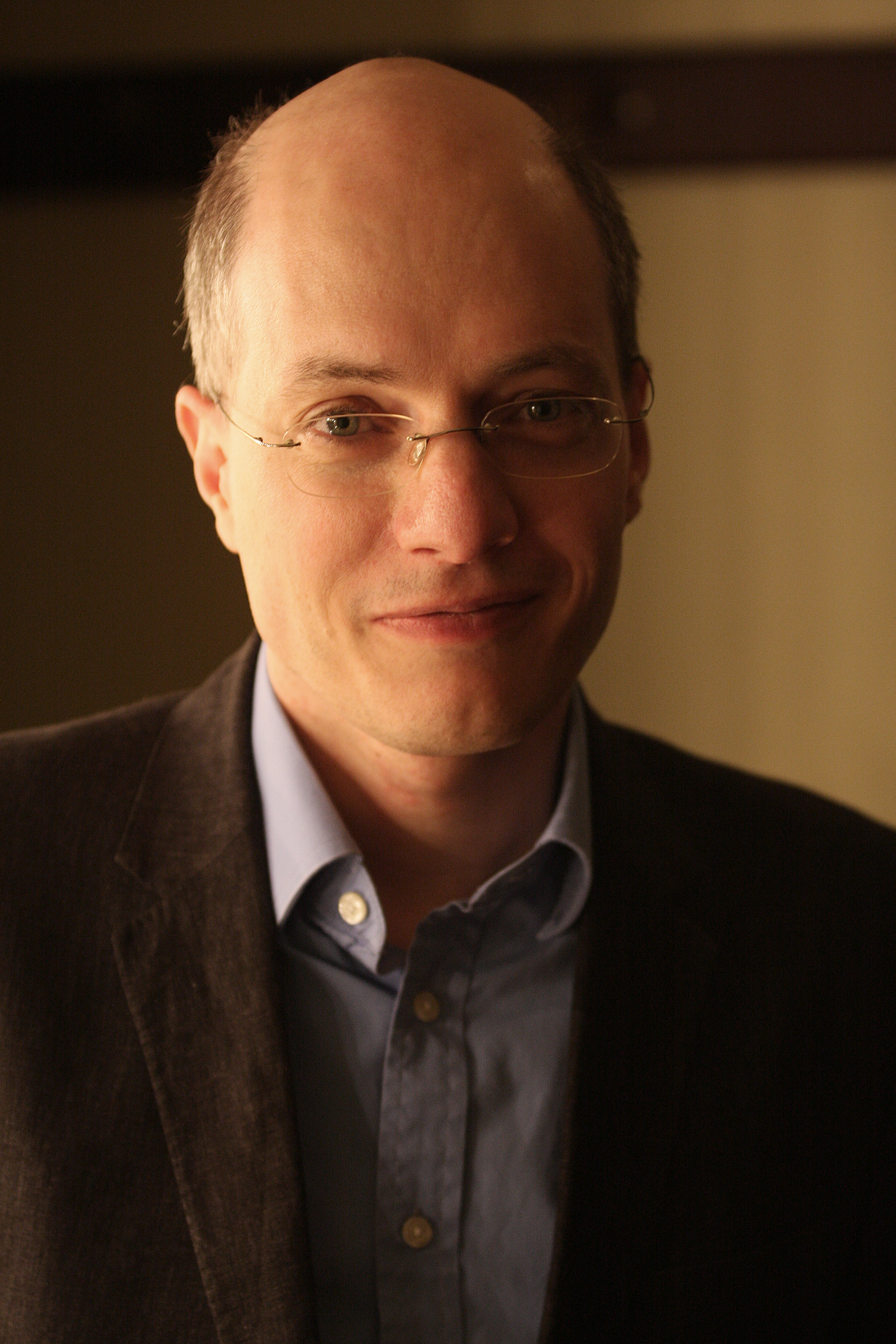
The Philosopher Who Couldn't Stop Asking "So What?"
In 1993, Alain de Botton published a slim novel about falling in love. He was 23. The book sold two million copies. His father, a titan of global finance who co-founded one of Britain's largest asset management firms, was reportedly unmoved.
That gap - between what the world decides matters and what actually helps people get through a Tuesday - is the fault line de Botton has spent three decades mining. Born in Zürich in December 1969 into a family that treated French and German as household languages and money as oxygen, he moved to England at 12, passed through Harrow and Cambridge (double starred first in History), did an MPhil in Philosophy at King's College London, started a doctorate in French philosophy at Harvard, and then - at the moment when a sensible career was fully assembled and waiting - walked away to write for everyone else instead.
The academic world calls this kind of thing "popularization," usually as an insult. De Botton treats it as the whole point. If Proust or Nietzsche or Schopenhauer can change the way you move through an ordinary day, then the job is to get them out of footnoted journals and into living rooms. He did not write about philosophy. He wrote philosophy - aimed at the person on the Tube who never took a philosophy class and wasn't planning to.
"The difference between hope and despair," he once wrote, "is a different way of telling stories from the same facts." He is, at his core, a story-teller about other people's ideas - and about the human conditions those ideas were trying, imperfectly, to address.
There is no such thing as work-life balance. Everything worth fighting for unbalances your life.- Alain de Botton
Building the School Nobody Built
In 2008, de Botton co-founded The School of Life in London. The premise was straightforward and, in the context of modern education, quietly radical: what if a school organized knowledge around what people actually needed to know - how to handle anxiety, how to stay in a relationship, how to work without losing yourself, how to age without despair?
Traditional universities had decided these questions were either too personal for academic treatment or too practical for intellectual seriousness. The School of Life disagreed. It offered classes, therapy, events, videos, books, and eventually a global network of locations. Seoul. São Paulo. Berlin. Istanbul. Tel Aviv. Melbourne. Antwerp. Amsterdam. Paris.
The YouTube channel - @theschooloflifetv - now reaches millions with animated explanations of everything from attachment theory to the philosophy of pessimism. The production is slick, the thinking is rigorous, and the joke is that it works better than most undergraduate lectures precisely because it doesn't pretend you owe it your attention.
What Emotional Education Looks Like at Scale
Therapy & Classes
Individual therapy, group seminars, and evening classes focused on relationships, work, self-knowledge, and meaning - subjects universities decided weren't academic enough.
Content & Media
Millions of YouTube views, podcasts, books, and a digital social network - all organized around the idea that wisdom should be accessible, not gatekept.
Products & Tools
Conversation cards, journals, and curated products designed to prompt real dialogue - at dinner tables, between partners, inside organizations.
The Bibliography
Fifteen books, each treating a different angle of the question he never stopped asking: what would it mean to actually use ideas to live better?
What the CV Doesn't Mention
He was a shy child. Not mildly reserved - genuinely, painfully shy. The philosopher who now speaks to conference halls of thousands spent years barely able to ask strangers for anything. His solution was systematic: he designed a multi-year project specifically to ask strangers for things he didn't need. It changed him.
He also founded Living Architecture - a not-for-profit that builds and rents holiday homes designed by Britain's most celebrated contemporary architects. The logic was simple: people encounter modernist architecture mostly through museum visits. You look, you admire, you leave. Living Architecture lets you make coffee inside it at 7am and understand it differently. The project earned him an Honorary Fellowship from the Royal Institute of British Architects in 2009.
His father Gilbert de Botton co-founded Global Asset Management. The family's wealth was valued at £234 million in 1999. When Alain sold his first bestselling novel, his father was reportedly unmoved. It reads as either tragedy or liberation - possibly both, probably both, which is the kind of sentence de Botton himself would write.
We should not feel embarrassed by our difficulties, only by our failure to grow anything beautiful from them.- Alain de Botton
What He Actually Argues
His intellectual project, spread across fifteen books and counting, can be summarized in a way that sounds obvious until you try it: use philosophy as a tool, not a trophy. Most philosophical writing, he argues, is addressed to other philosophers. De Botton writes to the person who has just been humiliated at work, or who fell in love with someone entirely wrong for them, or who can't stop scrolling the news without understanding why they feel worse afterward.
Status Anxiety (2004) named something real: the particular contemporary suffering of watching other people succeed and measuring yourself against them. The Architecture of Happiness (2006) asked why we almost never talk about how the spaces we inhabit make us feel, and what it would mean if we did. Religion for Atheists (2012) suggested that secular society had thrown out the community, ritual, and moral instruction that organized religion provided - without building replacements.
"Writer's block is a conflict between shame and honesty." - Alain de Botton, 2025. The simplest description of the condition in any medium.
None of these are simple or obviously right. Some are contested. But they're the kind of ideas that stick to ribs rather than sliding off - which is, increasingly, the standard by which de Botton measures his own work.
Quotes Worth Keeping
"Every fall into love involves the triumph of hope over self-knowledge."
"The difference between hope and despair is a different way of telling stories from the same facts."
"In their different ways, art and philosophy help us, in Schopenhauer's words, to turn pain into knowledge."
"A good half of the art of living is resilience."
The School of Life on YouTube
The channel has become one of the most-watched philosophy resources on the internet - millions of views, animated formats, and a refusal to assume the viewer already knows what "epistemology" means.