The first thing a new customer sees in a blockchain app is often the last thing its builders want to discuss: the login screen. A wallet must be made, a key protected, a network chosen, perhaps a token acquired. The visitor came to buy, play or invest. Instead, they are handed a small course in cryptography. AIKON, a San Mateo software company founded in 2017, made a business out of that awkward pause.
- AIKON's ORE ID used familiar sign-in methods to create blockchain accounts across chains.
- ORE Vault gave organizations shared wallets with multiple approvals for digital assets.
- The login product grew out of technology built for AIKON's original API marketplace.
- In September 2022, AIKON reported more than 200,000 wallets created and raised a $10 million Series A.
This is a company story with a useful twist. The product most easily explained to a customer was hiding inside the product AIKON first set out to build. Its early ambition was a decentralized market where developers could sell and buy API services. The market would run on the Open Rights Exchange, or ORE, protocol. Tokens would manage access and payment. It was a broad idea, as 2018 blockchain ideas tended to be. But to make the marketplace usable, AIKON had to solve a more ordinary problem: how would anyone sign in?
The marketplace found its own customer
Co-founder Marc Blinder called the early approach “Developer First.” In the API.market alpha, engineers could earn ORE tokens for signing in with GitHub, making an API call and answering a survey. The reward was pointedly for doing something, not merely arriving. Behind it sat an insight that has aged rather well: a developer building an app about astronomy, finance or games may have no appetite for learning smart contracts just to buy an API.
AIKON built an easy login for that marketplace. Then it released the login as a service in its own right. The first ORE ID announcement described a one-click entry for decentralized apps using Google, Facebook, GitHub and other familiar accounts. It could create a wallet as the user entered. The original marketplace was an ambitious destination; sign-in was a tollbooth every destination needed. That is the practical change in emphasis visible in AIKON's public record. It does not require a tale of a failed marketplace or a dramatic boardroom revelation.
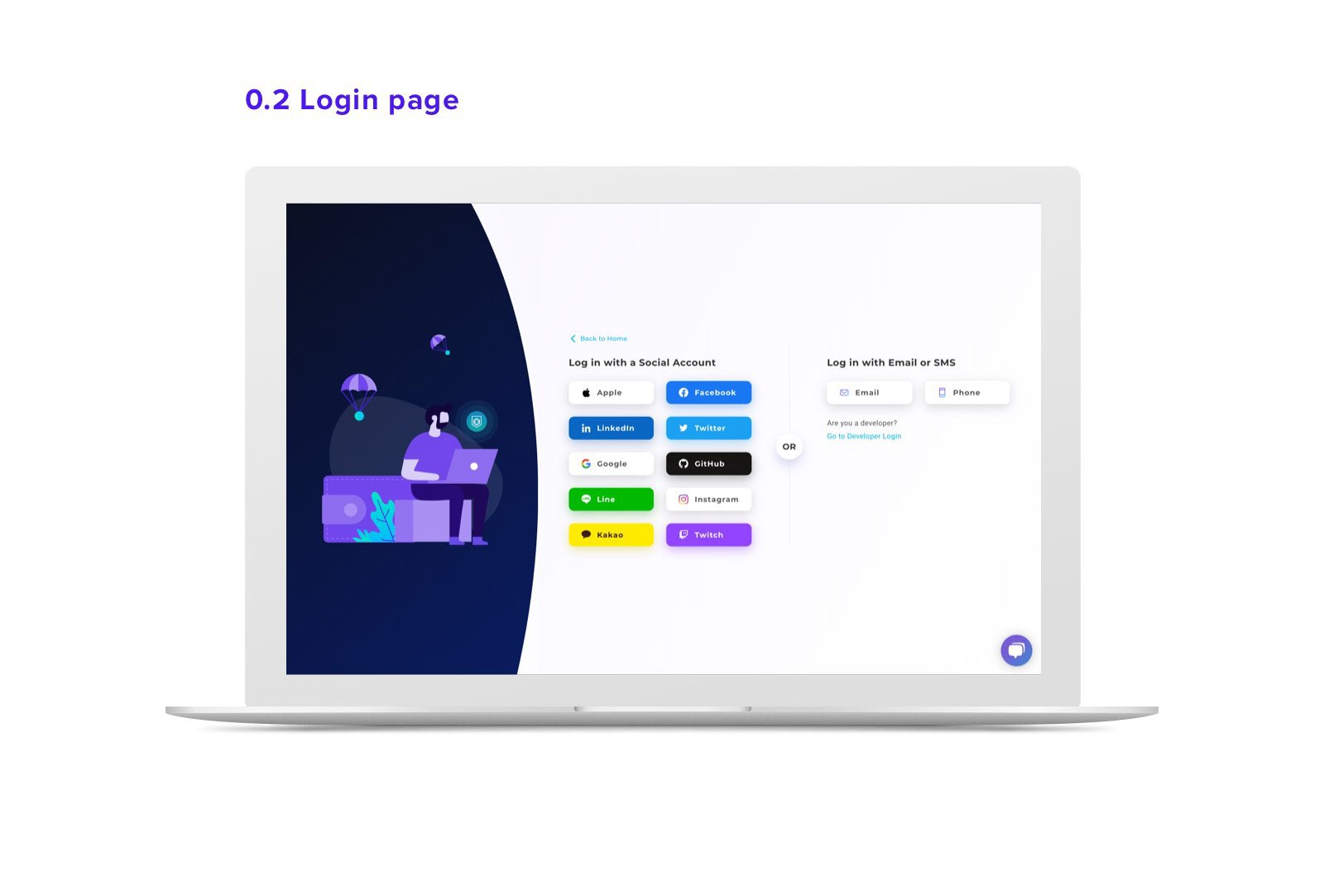
What did the company actually sell? ORE ID was a set of tools for an app maker to add authentication, account creation and signing. A customer could start with a social account or email, while the app created blockchain identities and wallets behind the scenes. The ORE Network connected those identities across chains such as Ethereum and Algorand. A 2022 description of the system said it created separate identities for separate applications, letting users limit how much of their activity was linked. That matters because a universal login is convenient until it becomes a universal tracking device.
The value is easiest to see through Republic, the investment platform. In its account of the partnership, Republic described users getting an on-chain account without leaving its app. A private key was encrypted with a password they chose. Republic Realm also planned to use ORE Vault to handle digital assets and NFTs. These are the sorts of tasks a company would otherwise stitch together from wallet software, authentication flows and custom controls. AIKON's pitch was that the customer could see the thing they came for before being asked to admire the plumbing.
The second door belongs to the finance team
If ORE ID dealt with the individual's first click, ORE Vault dealt with what happened when an organization held the assets. A company's wallet has an office problem: people change jobs, approvals are shared, and someone must know who authorized a transfer. ORE Vault offered a multi-signature wallet, with conditions and a record of actions. Blinder compared the workflow to DocuSign: the relevant people receive a request, sign, and everyone can see the decision. That is less glamorous than a new coin. For a treasury, it is considerably more useful.
“Make blockchain easy enough for my parents to use it!”Marc Blinder, 2022
The two products served different buyers at the same company. Product teams wanted fewer abandoned sign-ups; finance and operations teams wanted spending controls. A game maker might use ORE ID to let a player join quickly. An investment platform might need both a welcoming entrance and a governed vault. AIKON announced integrations or customers including AllianceBlock, RFOX, EarnFi and NFT Battle Miners. Unity listed ORE ID among 13 verified tools in a new category for decentralized games in February 2023. Four months later, RAIR Technologies chose it for NFT wallet onboarding and agreed to resell it to customers. The common thread was distribution: each partner had something to offer users, and the wallet stood between the two.
Those figures are a snapshot, not a current user count. They show enough traction to explain why Morgan Creek Digital led a $10 million Series A in September 2022. The round also brought in Avalanche ecosystem fund Blizzard, with Avalanche compatibility announced for ORE ID and the network. AIKON said it would hire blockchain specialists, take ORE Vault out of beta and add a fiat on-ramp. Public funding records put its total raised at roughly $12.6 million, including earlier seed rounds. The round was a bet on making many chains feel like one product, even while the crypto market lurched.
The bill for making it look easy
There was a price attached to the simplicity. Republic described a free basic ORE ID plan for up to 1,000 active users, with Enterprise for larger deployments. The ORE Network also required tokens when businesses created accounts; a 2022 network explanation put the stake at 10 ORE tokens per new account at the time. No public enterprise price was given. For a prospective buyer, that meant the correct comparison was not merely “free login versus paid login.” It was the full cost of user support, security work, chain integrations, token mechanics and the alternative of building the same system internally.
AIKON's distinction from a conventional wallet was the way it entered an existing app. Asking visitors to bring a wallet of their own works for an audience already fluent in crypto. ORE ID was aimed at the much larger audience that expects to press a familiar sign-in button. The trade-off is equally plain: the app now depends on a specialist integration and on the ORE account layer. For a single-chain project serving experienced wallet users, that extra layer may add little. For a product whose audience is new to blockchain, the first minute may be the whole business case.
A lesson worth stealingA founder can copy the method without copying the token. AIKON built a broad platform, noticed the obstacle it had to remove for its own users, and offered that repair as a product. It tested an alpha with actual API calls and surveys. It gave developers a small free deployment before selling larger ones. It later wrapped an administrative workflow around team wallets. Each move started with a specific point of friction. The grand theory of a decentralized economy could wait; a person at a login screen could not.
The public trail is clearest through AIKON's 2023 RAIR announcement. What endures in that trail is a modest, almost unfashionable proposition. The most successful interface for an unfamiliar system may be the one that asks people to learn the least at the start. In a field fond of inventing new doors, AIKON spent years working on the handle.