Aharon Chernin found a business idea inside a product category that sounded as though somebody had already solved the problem. The category was professional services automation. The customers were managed service providers, the firms that keep other companies’ technology running. The awkward detail was how much work people still had to do.
He had been watching those customers while building Perch Security. Around 2017 and 2018, the word “automation” began to bother him. Software could organize a job without doing it. A technician could own an impressive collection of tools and still spend the day moving information between them. The label on the box had got ahead of the contents.
For an entrepreneur, this is an appealing kind of irritation. There is already a customer, already a budget and already an expectation. The missing piece sits in the space between what everyone calls a product and what happens on a Tuesday afternoon. Chernin would eventually return to that space with Rewst.
The security years
Before the chicken jokes and workflow builders, there was security automation. In 2012, Chernin was manager of security automation at the Depository Trust & Clearing Corporation. By 2015, he was presenting as Soltra’s chief technology officer on teaching machines to speak security. His subject was already the difficult business of getting systems to exchange useful information.
The titles changed. The recurring problem was coordination. A business can possess information without having an easy way to act on it. Making the information travel in a form another system can use is a less glamorous ambition than inventing an entirely new computer. It also has the advantage of being useful before lunch.
At Perch, Chernin pursued threat detection for smaller businesses through the providers that served them. The company worked with MSPs and added capabilities they requested, including integrations and security information and event management. The direction depended on listening to operators who had customers of their own, with their own constraints and expectations.
ConnectWise announced the acquisition of Perch Security on November 10, 2020. Its announcement described four years of building the business and praised the team’s understanding of its partners. For Chernin, the transaction closed one company chapter. The operational habits he had observed among those partners supplied material for the next.
A university with feathers
Rewst’s November 2021 seed announcement put $2.5 million of outside funding behind the idea. Gary Pica, known for building and coaching MSP businesses, was part of the founding story. Chernin arrived with technical experience and years of contact with the intended customers. The task was to turn that familiarity into a product they could put to work.
Even then, he was skeptical that making software “low-code” automatically made it easy. A smaller provider could still need specialist talent to use it. A tool intended to remove work could arrive with a substantial new assignment attached. That is a rather expensive way to give somebody homework.
Rewst’s response included a Robotic Operations Center, or ROC, to help customers build automation. Its training acquired the name Cluck University. The company’s vocabulary contains enough poultry to suggest that enterprise software might survive an occasional joke. Underneath the names sits a practical recognition: buying access and knowing what to do with it are separate events.
There was another adjustment. Chernin had expected Rewst to come up with the automation ideas. By 2022, customers were showing him processes he had not anticipated. Some extended beyond routine support tickets into work that providers were barely recording in their service systems. A customer’s untidy working day was proving more inventive than a neat product checklist.
That discovery gives the customer a different role. They bring knowledge of the repeated nuisance, the awkward handoff, the exception everyone knows about but nobody has written down. The vendor supplies a way to act on it. The value comes from the meeting of those two kinds of knowledge.
Consider what it means to take a repeated process seriously. Before a machine can follow it, someone has to explain it. Which event starts the work? Which information is needed? Who can approve the next step? An informal habit can conceal all these decisions. Writing them down exposes the decisions to inspection. Even before anything runs automatically, there is something useful to discuss.
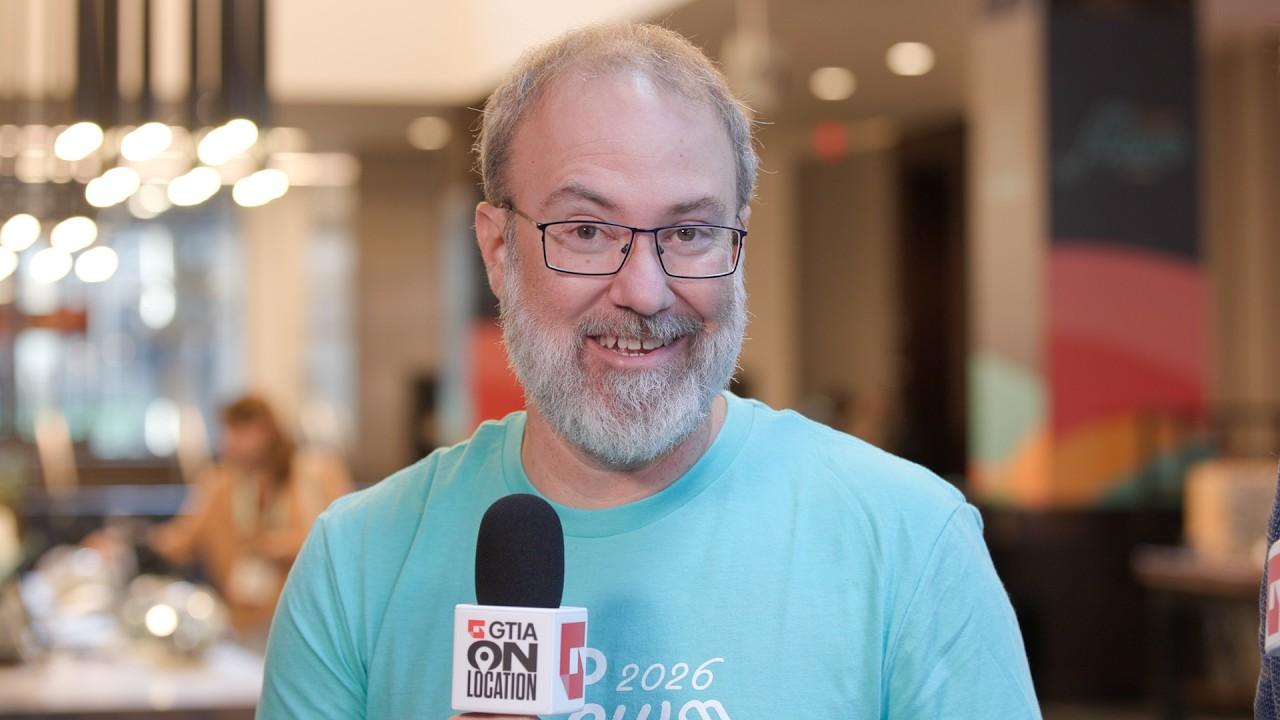
By January 2024, a $31 million Series B led by Meritech Capital was supporting expansion across product, education, customer success and the ROC. The announcement was about capacity as well as capital. A workflow can outlast the conversation in which somebody first described it. So can a misunderstanding about how it should behave. Giving customers a route back to people who understand the platform helps make that continuing relationship practical.
That list matters. It describes a business funding the machinery around adoption as well as the machinery inside the application. Training sessions and explanatory videos have a less exciting silhouette than a new feature. They can determine whether the feature gets used.
In August, Rewst announced another $45 million raise, led by Sapphire Ventures. Chernin discussed putting money into prebuilt automations, education and support alongside the core platform. He also resisted the idea that a working product meant the work was finished.
“I don't think we’re ever done when it comes to improving the platform.”Aharon Chernin, August 2024
The person who knows the process
By 2026, Chernin was spending more time explaining how AI fits into this picture. His February discussion of the subject returned to the difference between planning a workflow and executing its steps inside working systems. A useful answer needs connections, permissions and a dependable route into the tools where the job happens.
His emphasis was also shifting toward the person who understands a process. If building becomes easier, knowledge of what should happen becomes more valuable. A business process owner can describe the desired outcome, identify where work gets stuck and judge whether the result is right. Those abilities do not arrive automatically with programming skill.
There is a pleasingly ordinary consequence to this technological ambition. Better tools can require better questions. A request such as “make this easier” leaves plenty unresolved. A request that names the starting point, the intended result and the necessary approval gives everyone something firmer to work with. The conversation becomes specific enough for a colleague to challenge and a customer to recognize.
- 01 / DescribeThe outcome the business needs
- 02 / BuildThe steps across connected tools
- 03 / ReviewThe workflow and its permissions
- 04 / RunRepeatable work with human control
An editorial illustration of the approach, rather than a product interface.
This makes his argument about automation partly an argument about management. Work needs an owner. Someone has to choose which problem deserves attention and give the people solving it room to finish. Automation squeezed into the gaps between incoming tickets inherits all the disadvantages of an activity nobody has quite agreed to prioritize.
Community serves another purpose in that effort. At FLOW 2026, Chernin discussed Rewst’s growth through customers talking to customers, sharing feedback and helping one another. The attraction of that arrangement is straightforward. A vendor can describe what ought to work. Another provider can describe what happened when it tried.
Open feedback also makes a company easier to question. It brings product decisions into conversations where customers can compare experiences. Chernin’s public discussion of community places those exchanges close to the business itself. The relationships are part of how the product develops, rather than an activity reserved for the conference photograph.
A little distance from the screen
There is a less technical detail in Chernin’s public life: Ducati motorcycles. In a 2025 conversation with Joey Pinz, he described riding as a way to mentally disconnect. Even sitting by a pool had not necessarily given him the same distance from work. A change of scenery and a change of attention are evidently different purchases.
The hobby belongs in this story because the working day occupies so much of his conversation. He talks about tasks that consume attention and systems that might release it. On the motorcycle, he has found an activity that takes his attention somewhere else. It is a small, human detail beside the funding announcements and product plans.
The next request
On October 13, 2026, Rewst announced global availability of its new automation platform. Its agent can build workflows, forms, dashboards and client-facing applications from requests in plain English. The resulting work remains visible and editable on a visual canvas. A person decides what goes live, with credentials and access scoped to the relevant client.
Reported by Rewst for its new platform’s early-access group, which included more than 110 MSPs. Announced October 13, 2026.
Those are early-access figures, with a defined group and measurement period. They show activity on the new platform. The more revealing test for the underlying idea will happen inside customers’ operations: whether the requested job runs as intended, whether its exceptions are understood and whether people trust it enough to use it again.
Chernin has described himself as feeling more like a predictor of the future than a startup founder. His prediction is that AI will increasingly become the user of software, changing how people interact with the systems behind it. That remains a forecast. His present business is already making room for it.
The route here began with a more ordinary act of attention. He watched people use products whose names promised automation and noticed the work left over. Years later, after a security company, an acquisition, new investors and several generations of tools, the useful question remains remarkably plain: why does somebody still have to do this by hand?