Imagine a repair bay with a car on the lift and a mechanic holding the wrong brake part. The part may be inexpensive. The delay is not. A bay is occupied, a customer is waiting, and somebody must find the right box. This ordinary predicament is a useful way to understand Advance Auto Parts, a retailer whose recovery depends on making an enormous inventory feel conveniently small.
- One store serves two customers: professional installers and people fixing their own cars.
- Advance sold Worldpac for $1.5 billion and cut its footprint to concentrate on that model.
- Profitability is improving. Reliable growth remains the test.
01 / A business measured in waiting time
Advance sells the unglamorous essentials of keeping vehicles moving: batteries, brake parts, filters, fluids, alternators, tools and accessories. Its customers include the weekend owner changing wipers and the repair shop buying repeatedly throughout the week. Both need compatibility. Their clocks run differently. A driver can sometimes plan a Saturday project. An installer needs the part while a paying job is underway.
The company calls its shared-store approach the blended box. The same location supports consumer shopping and professional demand. That offers a practical advantage: inventory, people and premises can serve two markets. It also creates a coordination problem. A counter conversation and a shop delivery require different work, even when the products come from adjacent shelves.
AutoZone, O’Reilly and NAPA provide familiar alternatives; independent distributors, dealerships and online sellers supply others. Advance competes on local availability, speed, price and help with selecting parts. These are execution advantages that must be earned repeatedly. A recognizable sign gets a customer into the parking lot. The correct part gets the next order.
02 / First, buy three stores
The story began in 1932, when Arthur Taubman bought three Virginia stores. Advance’s own anniversary account says he sold his car for $2,500 and borrowed another $22,500. The business grew organically for decades before acquisitions accelerated its reach. Western Auto roughly doubled its size in 1998. Public ownership followed in 2001.
Then came a much larger wager. In 2013, Advance agreed to acquire General Parts International at an enterprise value of $2.04 billion. The deal, completed in January 2014, brought Carquest and Worldpac. The announcement promised purchasing and operating benefits, including $160 million in annual synergies within three years. Size had an appealing arithmetic: more customers, more purchasing power, more opportunities to share costs.
By November 2024, management’s prescription emphasized simplification. Advance announced plans to close 523 corporate stores, exit 204 independent locations and close four distribution centers. Those were announced actions, not one interchangeable count of company-owned shops. The distinction matters when a headline compresses several kinds of exits into a single dramatic number.
“The completion of the Worldpac transaction is a pivotal moment in the simplification of our business model.”Shane O’Kelly · November 2024
Worldpac went to Carlyle in a $1.5 billion transaction completed that November. This was a sale of a wholesale business, not fresh venture funding. Advance estimated approximately $1.2 billion after taxes and transaction costs at announcement of the closing. Management explicitly tied the sale to concentrating on the blended-box operation.
03 / A smaller map still has to deliver
What had stopped working? The operating review identified store productivity, assortment, sourcing, pricing and distribution as areas needing repair. That supports a diagnosis of uneven operating performance. It does not establish one dramatic moment when everything first broke. The company’s response was concrete: standardize stores, improve the parts selection and reorganize how stock reaches customers.
Getting smaller had a bill. Fiscal 2025 included $204 million in restructuring and related expenses, following $309 million in 2024. These accounting expenses are not all immediate cash payments. The 2025 shareholder letter separately reported about $70 million in operating-cost savings from footprint reductions. The figures describe different things; subtracting them into a tidy payback calculation would mislead.
Fiscal year-end counts. In 2025: 39 openings, 522 closures. Independent Carquest stores excluded.
The copyable lesson is operational: put inventory where demand can reach it, then judge the network by availability and service. Closing weak locations helps only if the remaining stores can carry the work. Longer delivery distances, poor stock selection or customers leaving for a rival could erase the benefit. A cheaper network still needs to be useful.
04 / The battery has a name
Advance also has something more tangible than a distribution plan. In December 2019, it paid $200 million in cash for DieHard. A battery is a technical purchase, but a familiar name makes it easier to discuss at a counter. Advance later recruited Bruce Willis for a DieHard advertising film, a joke that required remarkably little explanation.
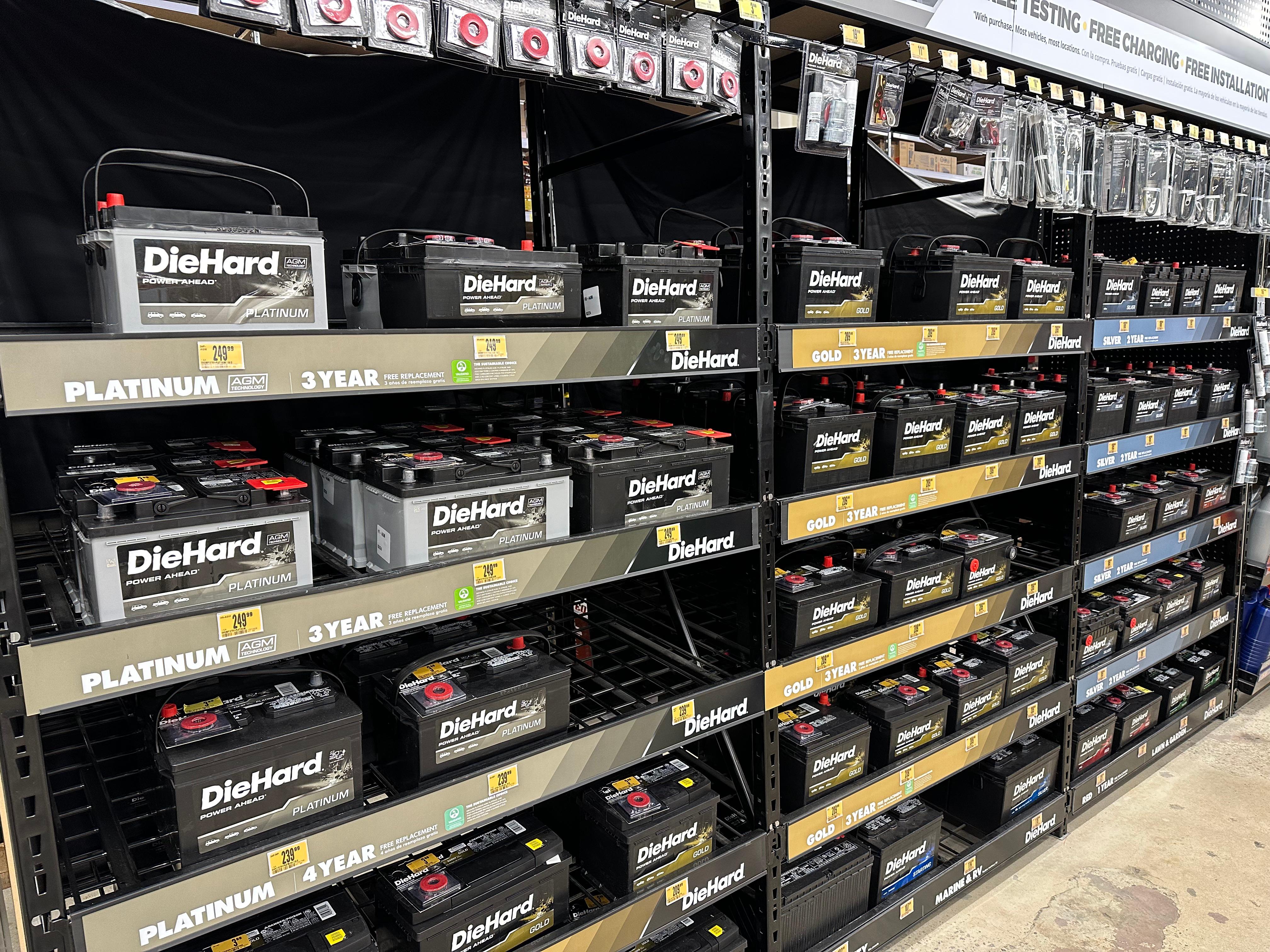
There is useful service around the product. Advance offers battery testing and eligible battery installation with purchase, subject to vehicle and location conditions. Its loaner-tool program requires a deposit and allows up to 45 days for return and refund. For an owner tackling an occasional repair, access to a specialized tool can matter as much as finding the replacement component.
For customers, the sensible starting point is specific: enter the vehicle details, check local stock and confirm the service the store can perform. A free engine-code scan can provide information, but Advance itself says further diagnosis may require a professional technician. The convenience is real without turning the parking lot into a complete repair shop. For professionals, the equivalent question is whether the supplier can repeatedly get the correct item to the job. An occasional bargain and a dependable supply relationship solve different problems.
05 / The comeback gets two grades
The latest reported quarter, ended July 18, 2026, offers encouragement with qualifications. Adjusted operating margin reached 5.6%, compared with 3.0% a year earlier. Comparable sales declined 0.5%. Tariff refunds contributed about $0.31 to adjusted diluted earnings per share. Better earnings therefore deserve scrutiny alongside the demand picture and that refund benefit.
May’s Good Parts campaign, featuring real motorists and English- and Spanish-language advertising, brings the argument back to everyday journeys. Advance can advertise the destination. The operating system must supply the means. For the person beside a stranded car, and the mechanic beside an occupied lift, the verdict will arrive in a box.
Shop parts · Find a store · Store services · Company news · Car-care articles
LinkedIn · X · Instagram · Facebook · YouTube: videos & how-tos