A plane ticket is a peculiar purchase. Buy a chair and, barring catastrophe, you have a chair. Buy a flight and you have a sequence of promises: a departure, a connection, a hotel arrival, perhaps a reimbursement. One cancellation can rearrange the lot. ADTRAV Travel Management has built its business in the space between the reservation and the traveler actually getting somewhere.
- Software for the booking. People for the complications.
- Corporate, government, and nonprofit travel under one roof.
- Hotel negotiations, policy checks, and unused tickets count, too.
Founded in Birmingham in 1977, ADTRAV sells organizations a managed travel program: agents, technology, advice, and a way to see where the money went. Vacation planning sits alongside that business. But its 2026 industry profile puts business and government at 95% of sales. The center of gravity is the working traveler.
The useful part happens after “confirm”
Consider an unused airline ticket. To a hurried employee, it can become a forgotten email. To a finance team, it is money already spent. RezDesk, ADTRAV’s travel portal, lists unused tickets and their usable value, removing them once exchanged. It also brings together itineraries, approval status, policy information, and access to online booking.
RezIntel tackles a different nuisance: travel information scattered across systems and countries. It consolidates travel and expense data for analysis. A manager can examine spending and test scenarios instead of assembling another spreadsheet by hand. These tools belong to a broader proprietary technology portfolio, RezSuite.
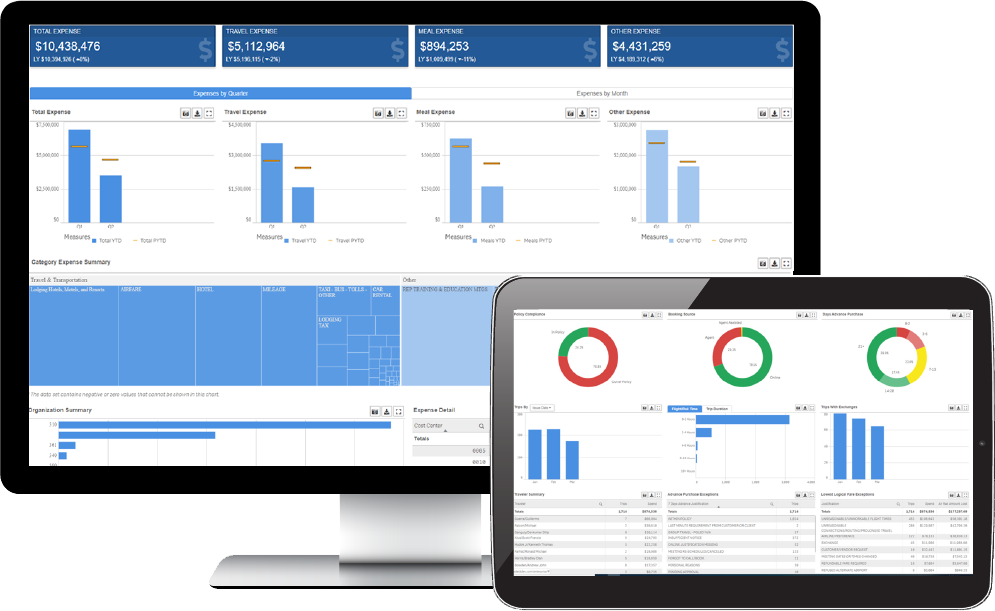
The software has company. ADTRAV assigns clients to specific agent teams and staffs after-hours support with its own trained agents. That arrangement matters when the problem requires someone who understands the account. Technical specialists also help people use the booking tools. Buying the system and getting people comfortable with it are separate jobs.
A hotel room with a rulebook
Government travel adds another layer. A reservation can be convenient and still fail a reimbursement requirement. ADTRAV dates its government work to 1985 and describes systems that monitor requirements involving air carriers, per diem, and travel reporting. Its expertise includes the administrative trail around the journey.
That experience helped it win the five-year assignment to manage FedRooms, with a February 2025 start, plus DoD Preferred lodging management. The job includes hotel sourcing, negotiations, data management, and reporting. Travelers continue using authorized government booking channels; managing the program does not mean personally booking every room.
FedRooms properties in more than 3,000 markets worldwide in 2026, according to GSA. Program reach, not ADTRAV-owned hotels.
Public case studies name FINRA, Chemonics, and Sparton. These organizations help explain ADTRAV’s position in the market: a travel management company for buyers who need reporting and operational help alongside reservations. BCD Travel, American Express Global Business Travel, and Corporate Travel Management occupy overlapping territory. ADTRAV emphasizes its owned technology and service teams; global partners extend its coverage.
When the departures disappeared
There is a limit to what useful software can do when customers stop traveling. Travel Weekly’s pandemic profile records a 71-75% fall in ADTRAV’s 2020 gross sales. The company reduced staff, participated in the Paycheck Protection Program, secured a credit line, and found outsourced call-center work. It maintained technology investment.
By 2021 it was rebuilding agent teams. Reported travel sales reached $300 million that year, then $700 million in 2023 and $750 million in 2024. The recovery was substantial. It was also vulnerable to the spending decisions of its customers.
The 2026 Power List reports $700 million in 2025 travel sales and 285 full-time employees, while noting the effect of federal travel reductions. A government specialty can win complicated work. It also leaves a business exposed when government demand contracts.

The price of having someone handle it
ADTRAV’s business combines travel transactions with contracted services, consulting, lodging management, and technology. Its public May 2025 government schedule offers a concrete glimpse: $8.31 for a specified self-service Transaction A and $31.60 for a full-service domestic air or rail transaction. After-hours reservations appear separately at $15.41 per call.
Those are government schedule items, not an all-inclusive quote for every customer. Still, they reveal the buying decision. An organization pays for work around the trip. Whether that pays back depends on travel volume, staff time, complexity, and actual use. A few straightforward trips may justify a simpler arrangement. Fragmented booking habits can also weaken the reporting a managed program promises.
Fix the rental car before buying the future
ADTRAV’s July 2026 Treasury case is instructively ordinary. VIP travel planning encountered rental-car booking outside the standard system, multiple billing methods, and unclear workflows. ADTRAV describes standardizing booking and escalation procedures, examining direct and centralized billing, and coordinating suppliers. Reported results concern clearer processes and readiness before launch.
The lesson a reader can borrow: establish who books, who approves, who pays, and who reconciles. Then check whether people use the process. There is little glamour in this sequence, which may be why it deserves attention.
“Our Mission is Helping People Get Where They Want to Be”ADTRAV · About Us
The company’s own culture statements connect that service model to staff development and profit sharing. Its Community Impact Foundation, established in 2016, lets associates propose charitable grants. These details describe how ADTRAV wants the organization to operate; the traveler ultimately experiences the person answering the request.
Its September 2026 AI update describes live coaching, improved call routing, and automation of repetitive work while retaining human service. The sensible test is practical: can an agent spend less time finding the policy and more time resolving the trip? ADTRAV’s promise gets tested when a traveler needs the answer.