She once billed her life in six-minute increments. Now she builds the thing she never had: coach-led peer groups that keep working parents and caregivers from quietly burning out and walking away.
Most founders pitch you a product. Adrienne Prentice pitches you a feeling - the one you get when you discover the colleague three desks over is fighting the exact same invisible battle you are. At Keep Company, that feeling is the product. She gathers employees into small, coached groups and lets the relief of "oh, it's not just me" do the rest.
Keep Company is a group-learning platform based in Bethesda, Maryland. The premise is almost stubbornly simple: gather people who share an experience - new parenthood, caregiving, the slow grind of burnout - put a professional coach in the room, and watch isolation lose its grip. Prentice and co-founder Claudia Naim-Burt describe human connection as "the most underestimated competitive advantage for organizations." The whole company is an argument that they're right.
They started with parents and caregivers because that's where the ache was loudest, and because the math is brutal: more than seven of every ten employees carry some caregiving load. Then they noticed the loneliness didn't stop at the parents. It ran up and down the org chart, from interns to the corner office. So the groups widened - peer pods, mentoring programs, cohort-based coaching - all aimed at the same quiet problem.
The framing she returns to is the idea of a "third space" - not home, not the grind of the workday, but a deliberate place in between where people can drop the performance and just be honest with each other. It's the kind of language you'd expect from a coach, not a lawyer. Then again, the whole arc of her career is the story of those two instincts learning to share an office.
The proof she likes to cite isn't a vanity metric. It's that 87% of Keep Company's groups keep meeting after the formal program ends. People don't keep showing up for a feature. They keep showing up for each other.
It's a counterintuitive thing to sell. Most workplace tools promise to do something to employees - track them, train them, optimize them. Keep Company promises to do something for them, and then mostly stays out of the way. The coach sets the table. The cadence keeps the rhythm. But the actual value gets made in the moment one person says the thing they were sure no one else felt, and someone across the screen nods. Prentice has spent a career learning that this is rarer, and more load-bearing, than any org chart admits.
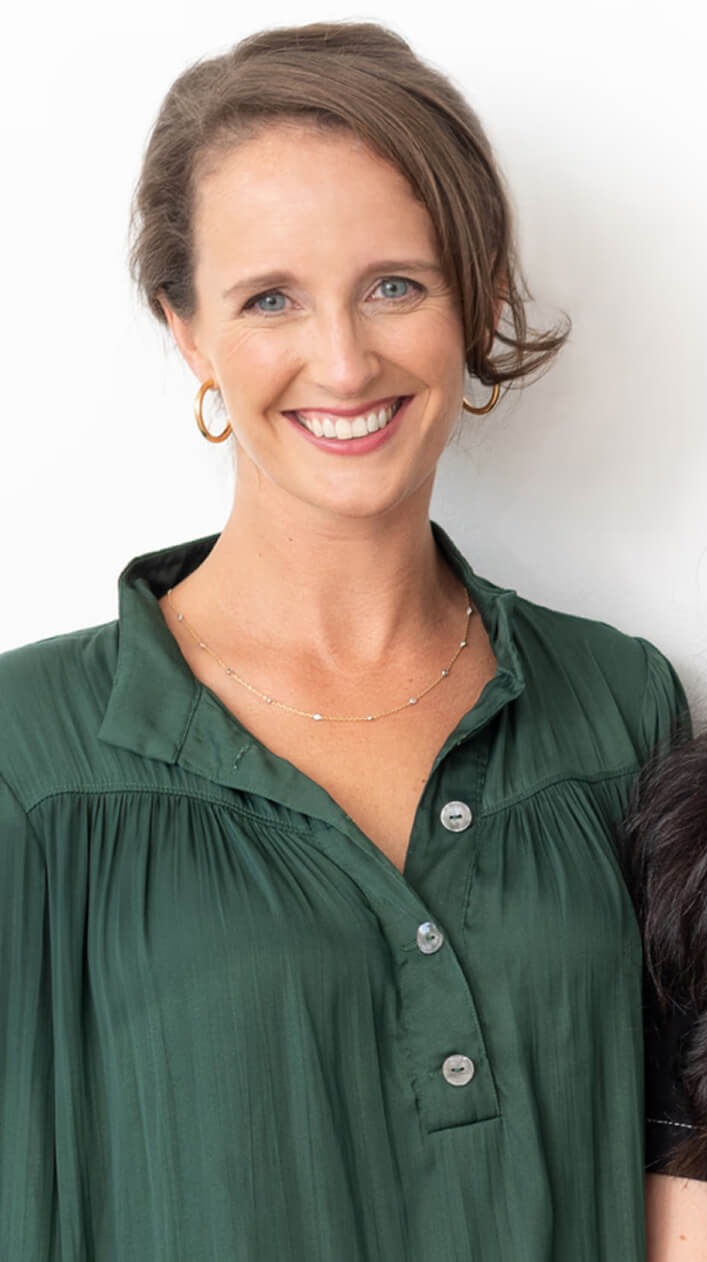
Human connection is the most underestimated competitive advantage for organizations.
Start with the resume, because it explains what she walked away from. A B.S. from Cornell's School of Industrial and Labor Relations. A J.D. from American University's Washington College of Law. A career as a technology attorney at firms where the clock is the boss and a day gets sliced into ten billable pieces an hour.
Then Hewlett Packard Enterprise came calling. They handed her a team of roughly 35 attorneys spread across North and South America and told her to lead. She did. By most measures, she'd arrived.
But the higher she climbed, the clearer the pattern got. Smart, capable people - especially parents and caregivers - taking late-night calls with one hand and managing a household with the other, and almost all of them convinced they were the only ones drowning. She'd been there herself.
So she made the move Law.com would later put in a headline: a "personal and professional crossroads" that took her from attorney to founder. A detour through talent management at Hogan Lovells. A stretch as a leadership coach for the very people she kept watching struggle. And finally, with Claudia Naim-Burt, a company built to make sure no one had to white-knuckle it alone.
The genius of Keep Company is that it doesn't try to fix the people. It fixes the loneliness around them. Prentice took the most human thing imaginable - two people realizing they're not alone - and gave it structure, a coach, a cadence, and a metric. Belonging, with an operating manual.
It earned attention fast. Techstars and Pivotal Ventures, Melinda French Gates' firm, named Keep Company one of the top ten companies innovating in the care economy.
There's a tidy irony in the path. Prentice spent years inside the institutions that are famously hard on the people Keep Company now serves. Big Law doesn't just demand hours; it demands them in fragments, billed and accounted for, with a culture that treats the personal as a private problem to be solved off the clock. She learned that machine from the inside, all the way up to running legal for a multinational. Few founders in the care economy can say they've actually sat in the chair that creates the burnout they're trying to undo.
That credibility matters when she walks into a boardroom. Keep Company sells to employers, not to individuals, which means Prentice spends her days translating a soft idea - people feel alone - into the hard language executives respond to: retention, engagement, the cost of replacing someone who quietly checked out and then quit. The Care Census is the clearest example. It hands an employer a number where there used to be a shrug: here is how many of your people are carrying a caregiving load, and here is how many are close to the edge.
The thesis underneath all of it is unfashionably optimistic. In an era when so much workplace software is built to monitor, measure, and optimize individuals, Prentice bet on the opposite instinct - that the most valuable thing a company can do is put its people in a room together and get out of the way. Not a Slack channel. Not a wellness app you open alone at midnight. A real group, a real coach, a real cadence, and the slow accumulation of trust that turns strangers into the colleagues you'd actually call.
She and Naim-Burt split the work the way good co-founders do. Prentice, the lawyer-turned-coach, carries the CEO seat and the conviction. Naim-Burt, a brand executive who came up through venture-backed startups, runs as president. Together they've raised somewhere around two million dollars from a roster that reads like a who's-who of mission-aligned capital: TEDCO, Idea Fund Partners, VEST Her Ventures, Pixel Perfect Ventures and others who bought the same idea she did.
Small, peer-matched cohorts led by professional coaches - the core of the platform, built so people keep showing up for each other.
Lets employers anonymously quantify how many staff are parents or caregivers - and how many are quietly at risk of burning out.
Mentoring programs, peer pods and cohort-based coaching that scale connection across an entire organization.
She describes herself, on her own company's site, as a bookworm and a kitchen dance party DJ. The job title is CEO; the home title is more fun.
She lives in Bethesda, Maryland with her husband, two children, and a silver labrador - the household that inspired the company.
She trained in industrial relations and law, then built a company around emotional skills, peer matching and belonging. The credentials say analyst; the work says human.
She once led attorneys across two continents. Now she builds small rooms designed to feel like a third space - and measures success by who comes back.
Keep Company's investors include TEDCO, Idea Fund Partners and VEST Her Ventures - and a top-ten nod from Techstars and Melinda French Gates' Pivotal Ventures.
Her wager: connection isn't a perk, it's infrastructure - and the companies that measure it will keep the people everyone else loses.
She left a world that counted minutes to build one that counts on people. The clock got fired. The company kept it human.