Every Wednesday, Adrianna Hosford's marketing and communications team at Artera gathers around a question that would have sounded peculiar in a corporate communications meeting not long ago: “What did you build this week?” Not what did you commission, request or add to the software budget. What did you build? The people answering work in product marketing, demand generation, events, customer marketing and corporate communications. Their tools now include a terminal and Claude Code. Their job descriptions are beginning to include verbs once reserved for technical teams.
Hosford, Artera's Chief Communications Officer and Head of Marketing, does not present this as a costume change in which marketers put on engineer hats and become different people. Her point is that the people who understand a workflow should be able to shape it. The specialist model, where one “AI marketing engineer” receives a queue of requests from everyone else, concentrates fluency in the wrong place. She expects each discipline to combine its own judgment with the ability to prototype, test and automate.
It is a builder's argument delivered by someone whose career was built on words, reputation and rooms full of stakeholders. That tension makes it useful. Hosford is not treating AI as a license to flood the internet. She has spent enough time protecting brands to know that speed without judgment is merely a faster route to an apology.
“AI can help you get to great faster than ever before.”Adrianna Hosford on the purpose of AI in marketing
Before the terminal, the lectern
The route to this experiment began at Chapman University. Hosford studied communications with an emphasis in speech communications, added a minor in creative writing and graduated cum laude. She also co-founded the university's speech and debate team, which became nationally ranked. It is a neat first chapter for a career devoted to deciding which argument belongs in which room.
There was a service chapter, too. Hosford served with AmeriCorps VISTA, the domestic national-service program focused on communities experiencing poverty. Then she entered agency life at a boutique communications shop in Irvine, California. By 2006 she was at Ketchum. She would stay for more than thirteen years, rising through the corporate practice and eventually leading the firm's Corporate & Reputation Practice on the West Coast.
The awards accumulated: five PRSA Silver Anvils, two SABREs, two MM&M awards and two PRWeek awards. Four consecutive Silver Anvils recognized Chase Sapphire campaigns from 2009 through 2012. Another MM&M honor involved an Alexa skill called Elle the Jellyfish. The names are polished; the apprenticeship underneath them was less glamorous - media tours, pitches, decks, rewrites and dinners ordered because the deadline refused to move.
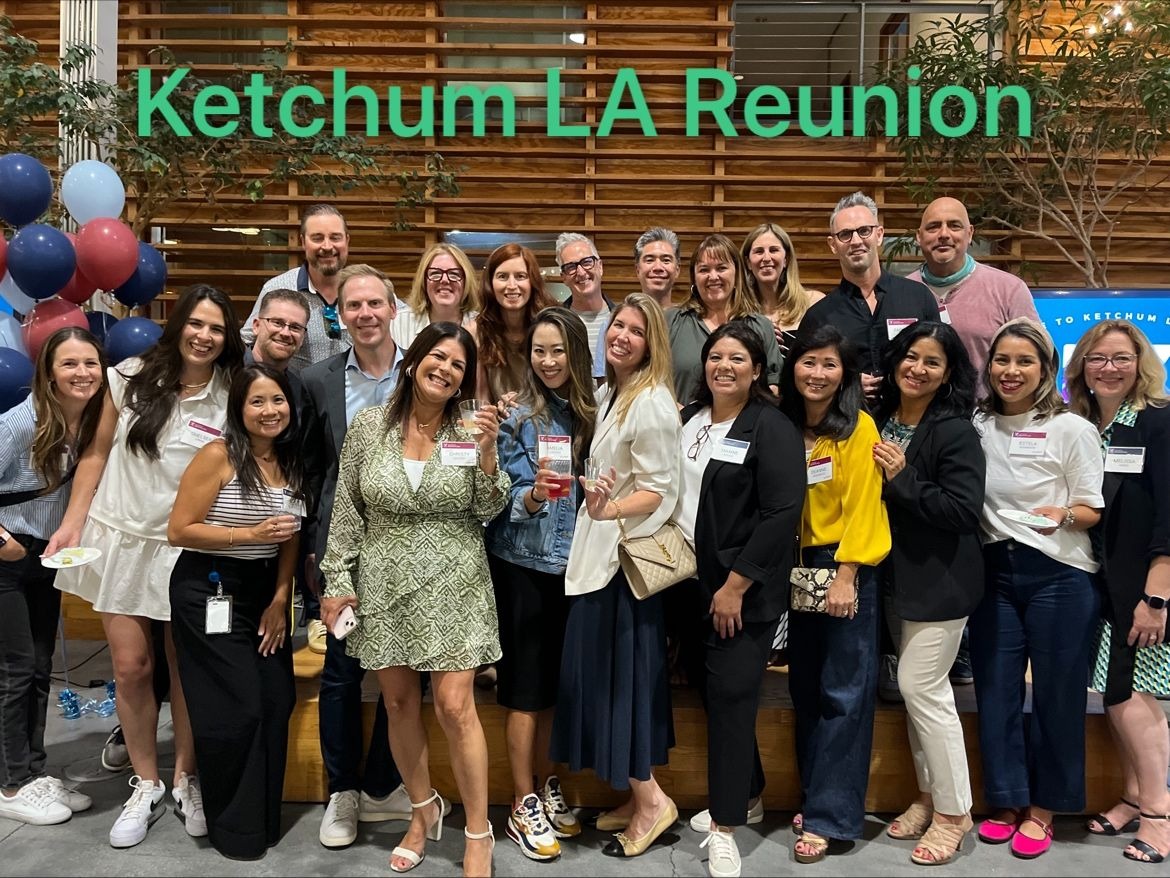
When former Ketchum LA colleagues reunited in 2024, Hosford borrowed that word - magic - for the friendships made during those long days. Her memory is revealing. The point was not nostalgia for overwork. It was that difficult work became bearable, even fun, because it was shared. In an era fascinated by removing friction, she keeps returning to the human bonds that no workflow can generate on command.
The operator arrives inside the story
After Ketchum came a year as Managing Director of the Los Angeles office at W2O, now Real Chemistry. In 2020, Hosford joined the company then called WELL Health as Vice President of Communications. It was a patient-communications software business with roughly 80 employees. Her mandate spread from internal and external communications into analyst relations, social media, brand, demand, product marketing, events, customer education and customer loyalty.
In November 2024, Artera promoted her to Chief Communications Officer and Head of Marketing. The title formalized what the operating map already showed: this was not simply a communications function sitting beside growth. Hosford's group owned the narrative and much of the system carrying that narrative into the market.
Artera ARR during Hosford's tenure
Company figures. Artera describes the change as 400% ARR growth alongside fourfold headcount growth.
Artera says annual recurring revenue moved from $15 million to more than $100 million during her tenure, while headcount grew fourfold. No marketing executive creates that outcome alone. The more interesting detail is how her remit expanded with the company. Each new function added another place where the promise made by the brand had to agree with the experience delivered by the business.
One workflow, then the next
Hosford's current AI advice is bracingly uncinematic. Separate a task from a workflow. Pick one workflow with reliable data and a clear customer pain point. Automate it. Fix what breaks. Then choose the next one. There is no dramatic reveal, only a sequence that can survive contact with a calendar.
Her team has turned that sequence into a social operating rhythm. Everyone has access to building tools. The weekly meeting creates light accountability. A “Claudathon” gives marketers permission to spend focused time making agents and automations for their own problems. The tool matters less than the shift from being a software consumer to being an active designer of the work.
This is where Hosford's reputation background becomes more than biography. Marketing automation touches customer data, product claims, security and legal risk. She describes the work as an alliance across Sales, Product, InfoSec and Legal. A prototype may begin with one person at a terminal, but adoption depends on people who can test the technical reality, the commercial need and the risk at the same table.
Give domain experts permission to prototype. Pair the freedom with a narrow problem, known data, an accountable reviewer and a weekly moment to show the work.
That balance also answers the obvious anxiety: if the machine can produce the first draft, what is left for the marketer? Quite a lot. Choosing the problem. Supplying context. Recognizing an empty claim. Protecting a relationship. Knowing when a sentence is legally safe and spiritually dead. Asking a customer to tell the story in a voice a buyer will trust.
Trust does not come from the logo
Hosford has become especially pointed about thought leadership in healthtech. Too much of it, she argues, is interchangeable. Replace one logo with another and the copy survives untouched. Risk-averse review cultures already push ideas toward the middle; generative AI can now manufacture that middle at industrial speed.
Her answer is not to make the company louder. It is to become more specific and to place credible people at the center. Buyers evaluating similar products often want to hear from practitioners facing the same constraints, not from the vendor repeating its own position. In a 2026 conversation, she put it plainly: “They wanna hear it from someone who's like them.”
This is a reputation strategist's view of content. Authority is borrowed carefully. A customer story works because another human has something at stake. A distinctive observation works because it may provoke a raised eyebrow. A useful brand builds the conditions for those voices to be heard instead of forcing every insight through corporate diction.
“AI isn't a lane. It's the road.”Hosford on why fluency cannot remain a specialist function
The part that stays human
The playful irony is that Hosford's AI-native future keeps circling back to old-fashioned contact. In her podcast appearances, she has emphasized community, customer testimony and in-person cues. The more synthetic material people encounter, the more meaningful a recommendation from a trusted peer becomes. The easier it is to produce a tidy paragraph, the more readers look for evidence that someone meant it.
Her career offers a coherent answer to that contradiction. Speech and debate taught her to structure a case. Creative writing taught her that structure alone is not a voice. AmeriCorps placed communication in the context of service. Agency life trained her to make decisions under pressure and to live with reputational consequences. Operating inside Artera added the discipline of connecting narrative to product, revenue and customer experience.
Now the terminal shortens the distance between an idea and a working system. Hosford's ambition is not to preserve the old marketing department in amber. She wants people early and late in their careers to become fluent enough to build. Yet her test for the work remains recognizably human: does it solve a real problem, can the right people trust it, and did it get us closer to great?
There is no romance in automating a broken workflow. There is no virtue in publishing twice as much forgettable copy. The attractive part of Hosford's model is its refusal to confuse movement with progress. Build one thing. Show your colleagues. Improve it. Keep a person answerable for the result. Then come back next Wednesday with something worth talking about.