BREAKINGATHENS-HF first-in-human enrollment complete - 10 patients, 100% procedural success
+++$33.5M Series C closed July 2024 - Cormorant & TCP Health Ventures lead
+++Delphi System results presented at TCT 2025 by Gregg W. Stone, MD
+++ATLANTIS international feasibility study now underway
BREAKINGATHENS-HF first-in-human enrollment complete - 10 patients, 100% procedural success
+++$33.5M Series C closed July 2024 - Cormorant & TCP Health Ventures lead
+++Delphi System results presented at TCT 2025 by Gregg W. Stone, MD
+++ATLANTIS international feasibility study now underway
Dispatch - The Cath Lab
A doctor turns a dial. A heart obeys.
It is an unusual scene in a catheterization lab. A patient lies flat. The shunt that was implanted in their atrial septum some months ago is still there - still doing its job of relieving the elevated pressure that drowns heart failure patients in their own fluid. But today nobody is cutting. Nobody is threading a guidewire toward the heart. The cardiologist holds a catheter against the patient's chest, switches on a current, and waits roughly the length of a coffee order. The shunt, made of a shape memory alloy that has a temperature it would prefer to be, warms up, remembers a different geometry, and quietly resizes.
The patient goes home that afternoon. The flow through the new opening is bigger - or smaller - than it was that morning. The dose has been changed without anyone re-entering the heart.
That is the picture Adona Medical has been chasing since 2019. The Los Gatos company, incubated inside Amr Salahieh's Shifamed innovation hub, has spent six years on a single, slightly heretical question: what if a structural heart implant was not a permanent decision, but a knob you could turn?
Adona is developing one of the world's first combined therapeutic and diagnostic cardiovascular implants.
Shifamed portfolio note
The Device
Three tricks, stacked.
The Delphi System is not one invention - it is three, deliberately welded together. Each one is interesting. Together they are an argument about what heart failure therapy should look like.
What the Delphi System does
Procedural success
10 / 10
Daily pressure reads
No patient input
Re-adjustability
Larger & smaller
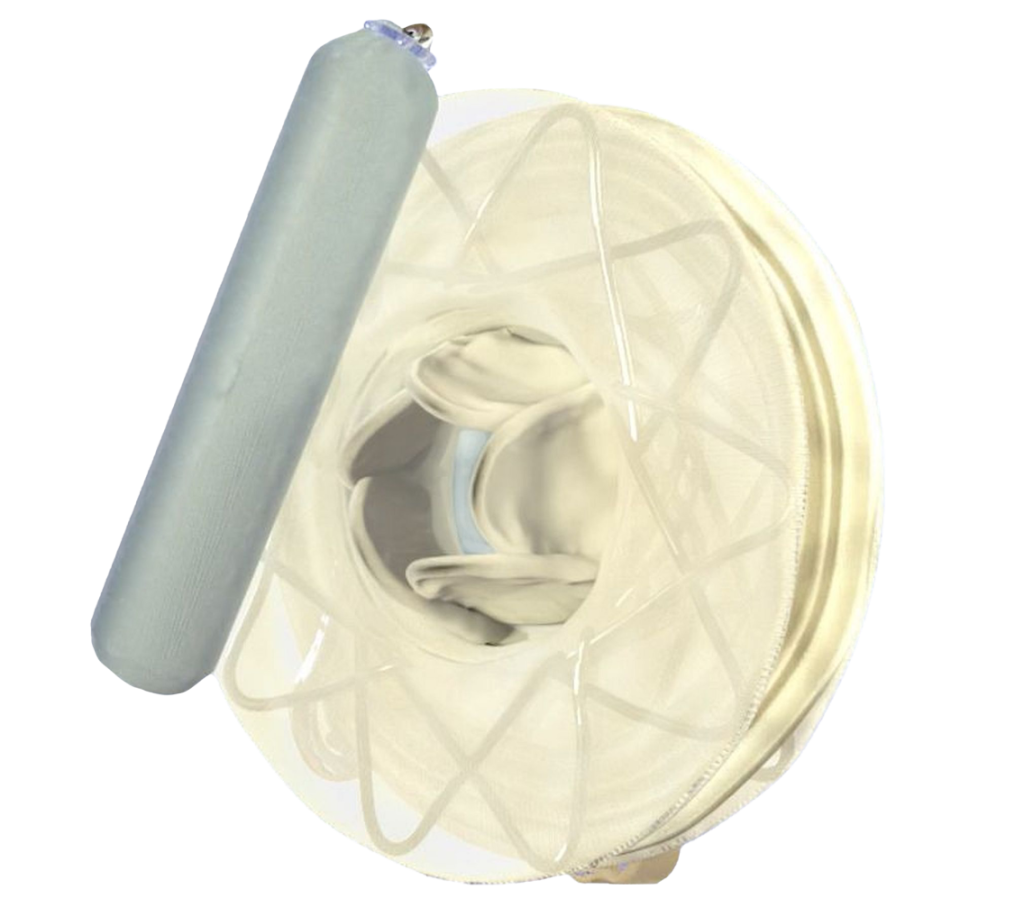
One. A shunt made of shape memory nitinol, with a biocompatible insulation layer, threaded through the wall between the left and right atria. The opening lets blood escape from the overloaded left side, easing the congestion that makes heart failure patients breathless on a flight of stairs.
Two. Two pressure sensors - one on each side of that wall - that transmit daily readings via inductive energy transfer. The patient does nothing. The data simply arrives. For clinicians used to chasing patients down for symptom diaries, that is a small revolution in workflow.
Three. An external induction catheter that, applied weeks or months after implantation, heats the nitinol to a target temperature. The metal remembers a slightly different shape and the lumen changes size. The flow rate changes with it. The dose has been re-prescribed without surgery.
Why install a shunt once when you can tune it for life?
The Adona thesis, paraphrased
The House Style
Engineering quiet, not loud.
Adona does not behave like a consumer startup. There is no Series C launch party hashtag. The team is small - about 33 people - and operates within Shifamed, which acts as a kind of medtech ateliers' loft: shared expertise on regulatory paths, materials, electrophysiology, and animal-model work. The company's public communications are press releases, peer-reviewed venues, and TCT podium time. The audience is interventional cardiologists, not Twitter.
That style is not a fashion choice. Implantable devices live or die on data and trust. A startup that ships a shunt has to convince a hospital purchasing committee, an FDA reviewer, a payer, and a surgeon - in that order. Bravado does not move any of those rooms.
Forget set-and-forget. The implant is a dial.
YesPress
Back to the Cath Lab
A doctor turns a dial. A heart obeys. Again.
Return to the room from the top of this profile. Same patient, same shunt, three months later. Their atrial pressure has been climbing slowly - not an emergency, but the kind of drift that, in any other patient, would mean a hospital stay. The bi-atrial sensors caught it weeks ago. The cardiologist holds the induction catheter against the patient's chest. The shunt warms. The lumen opens by another millimeter. The pressure curve, displayed on a tablet across the room, starts to bend back down.
Nothing about that scene was possible in 2018. A patient with this disease would have been managed by drug titration, fluid restriction, and the strained attention of a cardiology clinic that could not see inside their heart without putting them on a table. Adona's bet, six years and ninety-five million dollars in, is that this picture - the dial, the curve, the patient walking out the same day - becomes ordinary.
The ATHENS-HF cohort is small. The work remaining is large. Regulatory clearance, larger trials, payer conversations, real-world data: all still ahead. But the Delphi System has already done the most important thing a device can do for the first time. It worked. And it adjusted.