A job interview is a poor place to begin rehearsing a language. The other person has questions. The clock has opinions. A perfectly respectable vocabulary can suddenly seem to have left the building. Adam Turaev’s work at Praktika starts with the possibility of having that conversation earlier, somewhere the next attempt is always available.
Turaev and his fellow founders grew up adapting to new countries after their families moved. They could read and write English, yet speaking confidently in daily life and at work remained harder. For him, language carried practical consequences. “It opened doors to international work and career growth.” The product that followed gives learners AI conversation partners and space to practice.
That ambition has an unusually long prehistory. There is a school friendship, an unsuccessful broadcasting idea, corporate marketing work and an enterprise AI business. The resulting career makes more sense as a series of rehearsals than as a sudden encounter with a fashionable technology. Turaev had been trying things with other people for years before an avatar became the person on the other side of the screen.
A friendship with a long runway
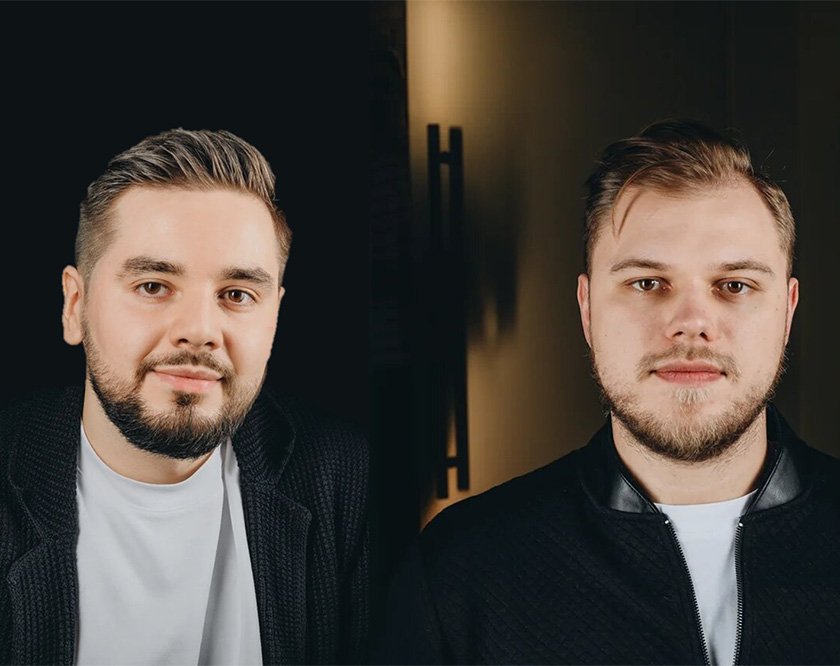
Turaev and Ilya Chernyakov became friends in seventh grade. They later worked at Bosch and Sanofi and tried projects together. In 2017, they began Cleverbots, consulting on AI and building business chatbots. Turaev’s language-practice idea emerged during that work. Praktika took shape in 2022, with Anton Marin joining as co-founder. The team initially pursued Latin America and attended 500 Global between November 2022 and January 2023. Those are the bones of the early partnership.
The friendship gives the career a useful sense of proportion. Startup introductions tend to begin when the company becomes visible. A school friendship begins before there is a company to introduce. It contains a much longer stretch of learning how another person thinks, reacts and gets things done. That history cannot guarantee a good business. It does make this particular founding team more interesting than a list of titles.
The useful embarrassment of an early idea
In his own account of Cleverbots’ beginnings, Turaev recalled trying to launch a live-video broadcasting app in 2012. Hosting and streaming were too costly for the idea to work. The team later joked about having passed close to a billion-dollar opportunity. It is a pleasingly familiar entrepreneurial consolation: even the project that never launched may acquire an impressive imaginary valuation.
The practical turn came at M.Video’s M.Smart hackathon in September 2017. Turaev wrote that neither he nor Chernyakov could code then. Working with developers, they produced a way to analyze customer reviews and identify which product characteristics mattered to buyers. He emphasized their ability to organize a team and present something a customer could understand.
The detail matters because it puts the customer before the founder’s technical credentials. Someone buying a television has preferences about its screen or sound. A tool has to make those preferences useful. A demonstration has to make the tool legible. These are ordinary commercial questions, and they survive every change in the technology underneath them.
Turaev’s background included digital and multichannel marketing at Reckitt Benckiser and Sanofi. Seen from that direction, his move into AI was a move toward another way of understanding and serving an audience. The hackathon story also leaves room for an unfashionable virtue: knowing which work requires someone else’s skills. A capable collaborator is a rather better asset than a founder pretending to know everything.
A robot for the job interview
By September 2019, Turaev was writing about taking Cleverbots to AI Everything in Dubai with fellow founder Pyotr Tolochkov. The purpose was concrete: learn what prospective customers needed, meet them and understand their budgets. He described roughly 30 extended meetings and substantial conversations with about 150 visitors over two days. Before the consumer app, there was considerable work talking to businesses.
Praktika redirected the conversation toward a person practicing a language. In September 2022, Turaev described preparing for job interviews by role-playing with virtual characters. He was thinking about communication as well as vocabulary, and about people seeking opportunities with international employers. The metaverse language of that period was expansive. The proposed activity was refreshingly recognizable: run through the conversation before the interview happens.
A rehearsal has a particular advantage as a product idea. It has a destination outside the product. The user wants to manage a meeting, answer a question or hold an exchange with another person. That supplies a useful editorial test for all the technology around it. Does the next feature help someone get closer to doing the thing they came to do?
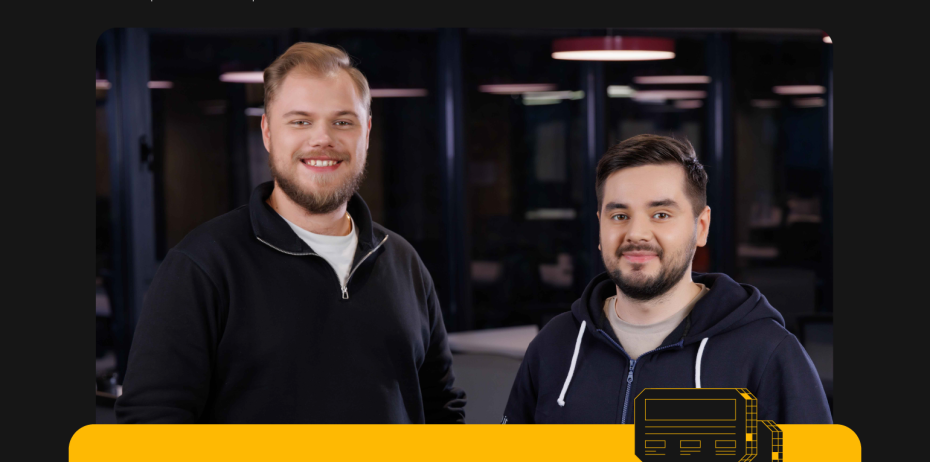
At 500 Georgia Demo Day, Turaev presented Praktika as an iOS and Android app for affordable spoken practice. He said the business was beginning to generate revenue while exploring consumer demand and conversations with schools, universities and corporate learning departments. It was an early company considering several routes to the same learner.
Ten users get a vote
His 2022 interview contains a more revealing detail than any description of an avatar. Turaev said the team had learned to check its ideas with users and data, rather than depend on its own confidence. He set the threshold at “at least ten users and analytical data.” He also described weekly feature prioritization and a development board that could change substantially from one week to the next.
Ten is a small enough number to imagine as people. They can disagree with you. They can find the clever feature confusing. They can ask for something less exciting and more useful. The rule turns customer feedback into a challenge to the team’s judgment, which is precisely why it has value. Confidence is easy to generate inside a room full of people who want the same idea to work.
“When something happens, we need to know in a matter of hours, not days.”
Adam Turaev, on responding to user feedback
The changing board also tells us something about his stated working method. A roadmap can be a helpful commitment. It can become an expensive way to preserve yesterday’s assumptions. Revising it demands both attention and restraint: hearing the user, then deciding what that information actually warrants. The discipline is more demanding than simply announcing that the company listens.
A larger audience, a shorter listening loop
In May 2024, Praktika announced a $35.5 million Series A led by Blossom Capital. At that milestone, it reported 1.2 million monthly active users across 100 countries and almost $20 million in revenue over the preceding twelve months. Those figures describe the company at a particular moment. They also establish how far the audience had spread beyond an early experiment.
May 2024 snapshot. Company figures recorded in TMT Investments’ annual report.
The investor circle included people with very different public careers. Carles Reina of ElevenLabs publicly described his participation in the earlier round and the subsequent Series A. A voice-technology connection fits the product neatly. Turaev has also linked the choice of ElevenLabs to the realism and emotional range of its voices. For a conversation tutor, delivery belongs alongside the words.
A growing audience brought a less picturesque problem: a growing pile of feedback. Praktika’s early approach combined an internal AI tool with manual sorting. As volume rose, the process took too long. The company adopted Unwrap to identify themes and send information to the right teams. In the account of that change, chief of staff Beatrice Aliprandi described a combined saving of at least 30 hours a week across two employees.
That is the backstage version of Turaev’s user-validation rule. Hearing ten people and hearing a large customer base require different machinery. The intention may remain steady while the method becomes inadequate. A company can be sincere about listening and still need to replace the system through which it listens. Here, the operational choice followed the scale of the problem.
The tutor learns to wait
By January 2026, Praktika described a system with separate responsibilities for conversation, progress and planning. Shared memory recorded learner goals and mistakes. Context was retrieved after the learner spoke, allowing the tutor to respond to the latest sentence. The company reported supporting nine languages at that time.
The sequence is a small design choice with a familiar social meaning. Reply too soon and you answer the sentence you expected. Wait for someone to finish and you can answer the one they actually said. That is especially useful when the speaker is trying, hesitating or changing course. A language tutor has to make room for unfinished competence.
- 01SpeakThe learner finishes a turn.
- 02RecallRelevant context is retrieved.
- 03RespondThe tutor addresses that turn.
A simplified view of the approach described in January 2026.
After the funding photograph
In an August 12, 2026 update, Turaev said Praktika had become profitable following two months of changes. He credited a native iOS app, more responsive avatars, an in-house pronunciation model, additional languages and corporate customers. He also described colleagues outside development building internal tools with AI, and previewed a product that would let others build with the company’s avatar and agent technology.
It was a founder’s account of progress, with the emphasis on accumulated work. Faster software, a cost saved, another customer and a better interaction all occupy the same business. The interesting part of this chapter is the continuity with his earlier projects: find a practical use, bring together the people who can make it work, then keep checking the result against the audience.
A learner has a simpler test. Close the app. Meet the other person. Begin the sentence. That is where Turaev’s proposed rehearsal has to earn its place.
Keep the conversation going
- Praktika - the app
- Adam Turaev on LinkedIn
- Adam Turaev on X
- The 2022 founder interview
- His account of Cleverbots’ beginnings (Russian)
- The 2023 Forbes nominee profile (Russian)
- Praktika’s January 2026 tutoring case study
- The customer-feedback case study
- His August 2026 operating update
- Listen: Podcast 10K, June 2022