For six months, Adam Smith and his Xobni colleagues worked on a perfectly reasonable answer to the wrong question. They had email data. They could turn it into graphs and tables. So they did. The resulting product, Xobni Analytics, offered people a new way to examine their inboxes. What it failed to offer was enough reason to keep coming back.
In March 2007, Smith put the mistake in writing. The team had started with the most obvious use of its technology instead of first asking why anyone would want the result. A young company had spent half a year discovering that a chart can be interesting without becoming a habit. There are less expensive ways to acquire a wall decoration.
The underlying software survived. Much of the work had gone into a platform that could support a different product. Xobni would become an Outlook sidebar for finding people, conversations and attachments. Smith, meanwhile, was developing another habit: keeping a public account of what he had misunderstood. The company history is useful. The running corrections are more revealing.
“What big mistakes are we making now that we don’t know about?”
Adam Smith, March 2007
The customer arrived before the diploma
Smith was born in Dallas and began writing and selling software online at thirteen. His business was called Vira Tech Development; its products included Windows software for timing tasks and sending email. The early web supplied something more immediate than a hypothetical career plan. A teenager could make a program, put it online and find out whether somebody would pay for it.
At MIT, he studied electrical engineering and computer science and graduated in five semesters. He was also lead author of “Tracking Moving Devices with the Cricket Location System,” a 2004 research paper on indoor positioning. He later began a master’s program, then left it to build Xobni. The undergraduate degree was already finished. The familiar dropout shorthand misses that rather efficient detail.
Before Xobni, there was Swift Ride Technologies. In 2005, Smith and fellow student Greg Duffy tried to tackle road traffic with navigation devices, cellular connections and shared data. Looking back in 2006, Smith described a venture burdened by hardware, a need for many users and cofounders living far apart. He had prepared financial models and read business books while the code received too little attention.
That episode supplied an early correction to the idea that looking like a company amounts to building one. Smith could count advisers, vendors and presentations. He could also explain why the project had failed. His account is unusually specific about the seductive pleasures of preparation. A spreadsheet is excellent company when the product is avoiding you.
An address book hiding in the inbox
In 2006, Smith and Matt Brezina founded Xobni and joined Y Combinator’s summer batch. The name was “inbox” backwards, a small act of rebellion against both email and easy pronunciation. The company began in Cambridge and moved to San Francisco later that year. Smith was its founding CEO; Jeff Bonforte took over that position in 2008, and Smith moved into technical leadership.
The useful insight was that an email archive contains a record of relationships. Who sends you files? Which conversations belong together? Where is the attachment that arrived from a particular person? Xobni gathered that scattered context beside the message you were reading. It let people navigate correspondence through the people involved, rather than relying entirely on a subject line they might remember incorrectly.
Bill Gates demonstrated the software at a Microsoft conference in 2008. That year, Smith was named to MIT Technology Review’s Innovators Under 35 list. Public recognition made a tidy headline. His writing about the company remained untidy in a productive way. He recorded missed recruiting opportunities, investor hesitations and the engineering work required after a convincing demonstration.
One early hiring mistake concerned Gabor Cselle. Smith and Brezina wanted him to join but offered too little equity after taking advice from friends. They corrected the offer; the delay had cost about seven months. They also passed up three introductions to a venture firm because it backed another email company, then accepted the fourth. Smith’s lesson was practical: suspicion could become its own obstacle.
A million dollars, no new buttons
In April 2009, Xobni released an update with no new visible features. Smith put its investment at about a million dollars. The money had gone into performance and stability. For a company whose appeal depended on improving Outlook, the details of living inside Outlook had become an expensive education.
He described trying different programming interfaces to perform the apparently modest task of opening a reply. One approach failed to update the original message’s replied-to icon. Another saved a draft into the inbox. Another changed the font. A fourth finally behaved as intended. The user wanted to answer an email. The engineer had acquired a small anthology of ways to disappoint them.
His account also gave credit to the reusable data store from the failed analytics product. It could support the sidebar and other features; adapters could connect it to different mail systems. A discarded product had left behind useful machinery. The distinction mattered: changing direction did not require pretending that everything built along the way had been worthless.
Smith had written about deleting unused code, too. He compared the attachment to old code with an attachment to old love letters. Version control made removal easier because the old work remained recoverable. The joke carries a serious engineering preference. Keeping something merely because you worked hard on it is a reliable way to make the next task harder.
The demo broke. The introductions worked.
When Smith wrote advice for graduating Y Combinator companies in 2007, he began with a reassuringly awkward memory. Xobni’s demo had broken. He fixed the code before the mingling and tried to show investors that it now worked. They were less interested in the repair than he was. The demonstration had ended; his debugging session had not.
He then mapped how Xobni met investors. Of 28 investors the company spoke with, 23 sat downstream of Y Combinator introductions. Angels supplied 24 introductions; venture capitalists supplied four. Smith drew the network as a tree. Fundraising, in this telling, became something a programmer could inspect: paths, branches and the people who connected them.
His experience also travelled through friendship. Drew Houston, a friend from MIT, later recalled watching Smith build Xobni and go through Y Combinator before moving west. Houston would start Dropbox; Smith became a seed investor. The connection was personal before it became a portfolio entry. Watching a friend attempt the thing made the possibility easier to picture.
By October 2009, Smith was warning technically trained founders against trying to master every small decision. Early companies needed generalists who could move among several problems in a day. Buying a slightly cheaper computer or becoming an amateur authority on financing documents could consume attention better spent elsewhere. He knew the attraction of optimizing a small, well-defined problem. He had studied at a place that rewarded it.
What happens after the ending?
Smith left Xobni’s day-to-day work in 2010. Yahoo acquired the company in 2013. He founded Kite in 2014, turning his attention to software that could help programmers write code. The recurring interest was recognizable: take information already available around a person’s work and make it useful at the moment of need.
Between companies, he gave his period of thinking a suitably unserious institutional name: the Ferris Bueller Institute. Explaining an occupation devoted to thinking could be awkward at parties. The title at least improved the paperwork. Kite eventually offered code suggestions, completion and examples alongside a developer’s editor, bringing the assistant into an existing working routine.
In a 2017 essay, Smith challenged the idea that selling a startup provides a permanent happy ending. He laid out the decisions that follow an exit: work inside a larger company, invest, start again. He wanted to build something that could last and grow, with challenges that changed over time. Repeating the journey from one person to twenty held less appeal than developing an organization over years.
Kite did not become that lasting independent company. Smith’s current biography says the team was acquihired by Affirm in 2021, where he served as a vice president of engineering for a couple of years. He now describes Kite as an AI-assisted software engineering venture that arrived eight years too early. The timing judgment is his own retrospective assessment. It sits beside the outcome, without erasing it.
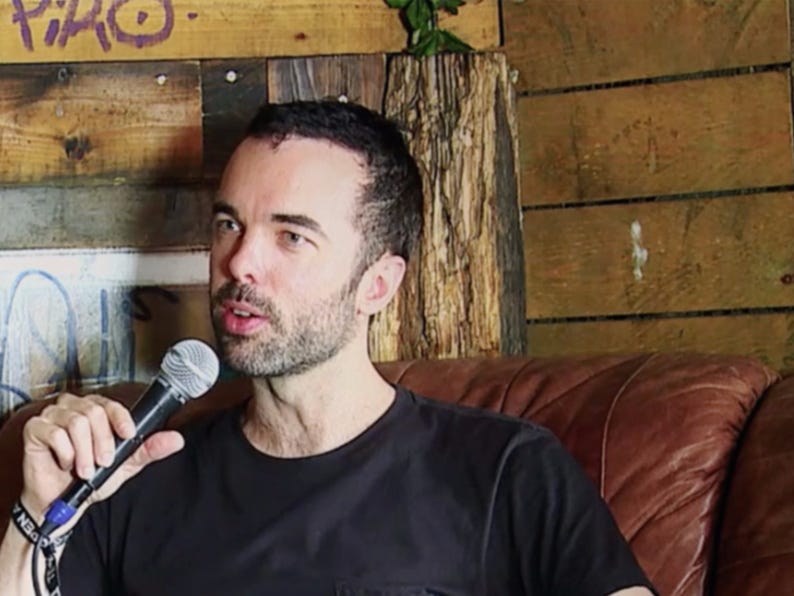
The opinion that earns its volume
The smaller entries in Smith’s writing make the technical temperament easier to see. At the San Francisco Symphony, he enjoyed watching the violinists move together, then considered the delay between sight and sound from his inexpensive seat. A night out had acquired a latency question. His delight in the music survived the calculation.
He also kept an uncarved Halloween pumpkin until it expired, recording its roughly four-month run in March 2007. At seventeen, he and a friend had installed a program to interrupt a retiring lecturer’s final class with a tribute video. They initially kept quiet when asked who was responsible, waiting to decide whether the lecturer was pleased. Even the prank required feedback before its authors claimed credit.
His August 2025 essay turned to confidence in teams. Smith distinguished people who express certainty regardless of evidence from those who can communicate how likely they are to be right. He admitted that, when younger, he could defend a position by finding technical weaknesses in the opposing argument. Winning the exchange had been easier than improving the answer.
The resulting advice asks leaders to leave room for disagreement and make changing a view ordinary. Read beside his early Xobni accounts, it feels like a question he has kept revisiting. A product can need another direction. A recruiting offer can need another number. An argument can need another hearing. Smith has spent years building software, then describing the corrections that made the next attempt possible.
More from Smith’s world
- Personal site & essays
- X / @asmith
- GitHub projects
- Wellfound
- Medium
- MIT Startup Bootcamp · Watch on YouTube
- Xobni’s first-year mistakes
- Performance, stability & a million dollars
- The investor introduction tree
- Before Xobni: Swift Ride
- A career beyond the exit
- Confidence on teams · August 2025
- MIT’s 2008 recognition
- Kite’s 2016 launch · Business Insider
- Drew Houston’s Stanford talk
- Xobni’s history