The face of a man who has shipped through five eras of software and is reaching for a sixth.
He keeps trading the comfortable seat for the harder roadmap. Ads, then video, then security, now the plumbing of private capital.
Adam Hyder is the Chief Development Officer and EVP of Engineering at Juniper Square, the company building the operating system for private markets - fund administration, investor relations, the unglamorous machinery that moves more than a trillion dollars of capital and almost never makes the news.
His mandate is plain and large at the same time: take a sprawling product roadmap and turn it into shipped software, across engineering, the full product portfolio, and a global expansion. When he arrived in April 2024, he did not talk about disruption. He talked about a backlog of things the industry already needed. "There is an enormous opportunity here to extend market leadership while launching new, innovative products that the private markets desperately need," he said. The word that does the work in that sentence is "desperately."
It is a telling choice of employer. Hyder could have taken another seat in a hot, crowded category. Instead he picked one of the least glamorous corners of finance - the back office of funds - and treated it as the frontier. That is consistent with how he has always operated. The reward he chases is not novelty; it is leverage. A small improvement to infrastructure that thousands of people depend on beats a flashy feature that nobody needs.
Juniper Square is a venture-backed company in San Francisco with roughly 950 employees, a Series D behind it, and customers who manage other people's money for a living. That is a demanding audience. Investors want their capital calls clean, their K-1s on time, their data rooms locked. The software that serves them cannot be charming and broken. It has to be quiet and correct.
Hyder has spent a career on quiet and correct. He is the kind of executive who is famous inside engineering orgs and invisible outside them - which is exactly the point of the job.
The private markets desperately need new products. I came to build them.- Adam Hyder, on joining Juniper Square
Before the resume of grown-up titles, there was a young engineer at Sun Microsystems working on Java in its earliest days - JavaSoft and SunLabs, the rooms where the language was still being argued into existence. Most people who touched Java early like to mention it. Few did the unglamorous staff-engineer and architect work that turns a clever idea into something a billion devices can run.
That is the tell. Hyder has always preferred the foundations to the facade. When he left to co-found OneBuild, a B2B marketplace, he did it as CTO and CEO - building the thing and selling it - long before "B2B SaaS" was a phrase venture capitalists could say with a straight face.
Then came TradeBeam, the venture-funded company where he ran engineering for software that untangled global trade - customs, compliance, the paperwork that decides whether a shipment crosses a border. Then Yahoo, where he led HotJobs as CTO and Director of Engineering for three years, roughly doubling its revenue, and later ran engineering for AMP!, Yahoo's multi-billion-dollar advertising platform. Ad-tech is one of the genuinely hard problems in computing - real-time, enormous scale, money riding on every request. He stayed for the hard part.
By the time Jobvite named him CTO and Head of R&D in 2012, its CEO Dan Finnigan described him simply as "a results-oriented technology visionary and entrepreneur," citing his depth in advertising platforms, search-and-matching technology, and B2B SaaS. The pattern was already set: walk into a category, learn its physics, ship. Then do it again somewhere harder. BlueJeans, the video-conferencing company, came next, where he served as Executive Vice President of Engineering - collaboration software years before the world was forced to care about it.
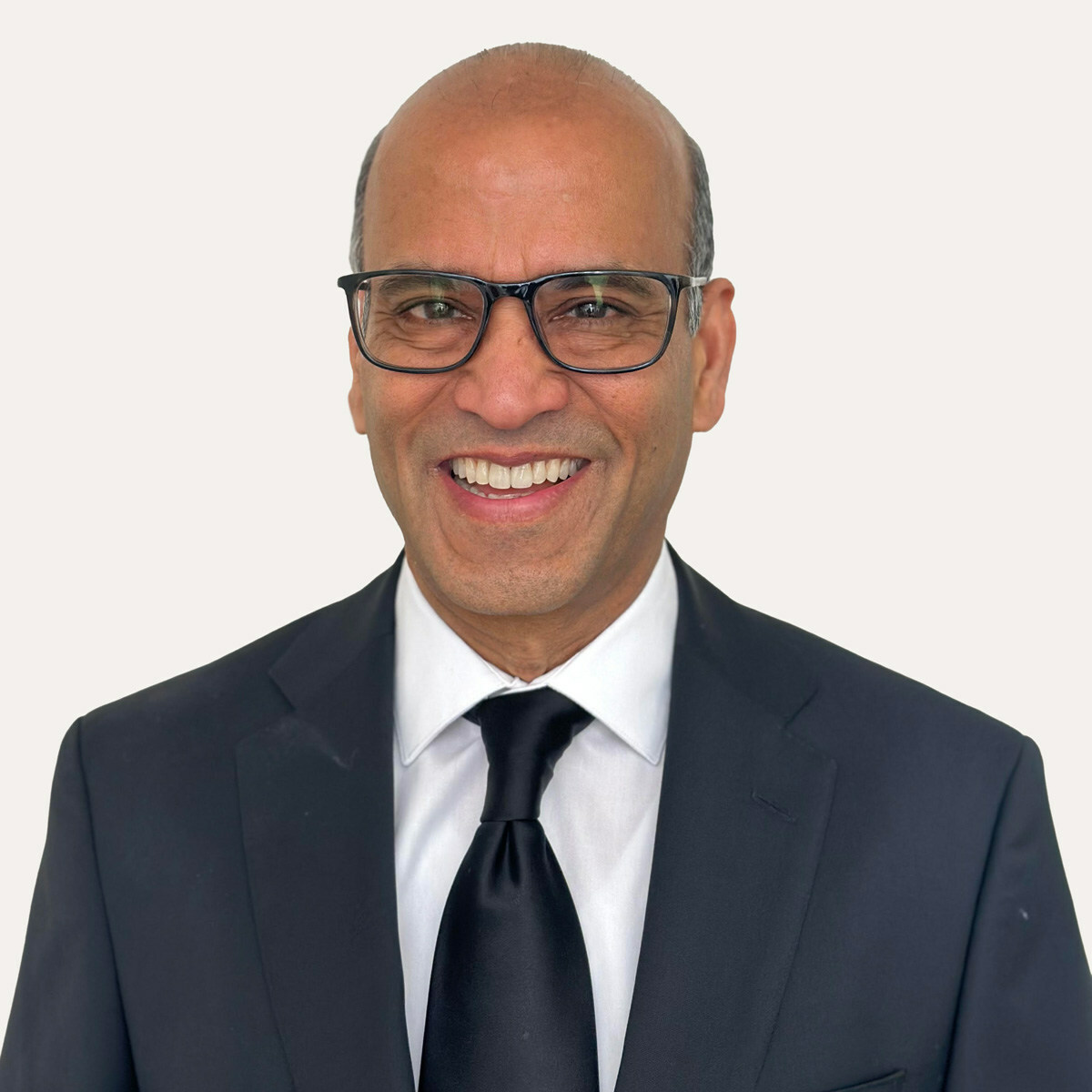
At Yahoo he ran HotJobs and then the AMP! advertising platform - the kind of system where a slow millisecond is a lost dollar, multiplied by billions. He learned scale where it bites.
At Malwarebytes he helped ship Nebula and OneView, the cloud tooling that lets partners defend thousands of machines. "Cybersecurity is the backbone we need to build tomorrow's technology responsibly," he said.
At Juniper Square the audience is people who manage money. The software has to be right before it can be liked. It is the most unforgiving customer he has had, and that may be the appeal.
"I am excited to partner with the leadership team at Juniper Square to accelerate the multitude of business opportunities that exist within our product roadmap today."
"In an increasingly digitized world, cybersecurity is the backbone we need to build tomorrow's technology responsibly."
Look at the arc and a temptation appears: call him restless. That misses it. Ads, recruiting, video, security, private capital - the surface keeps changing, but the job is always the same one. Find an industry drowning in manual work and brittle tools, then build the platform that makes the work disappear.
Private markets are an almost perfect target for that instinct. The industry still runs on spreadsheets, PDFs, and email threads that decide where billions go. Fund administration is a backlog with a balance sheet. It is exactly the kind of unglamorous, high-stakes plumbing Hyder has spent twenty-five years rebuilding.
His stated aim at Juniper Square folds AI into that mission - not as a slogan, but as the next layer of automation for investor reporting, fund operations, and the data rooms where deals live or die. The bet is consistent with everything before it: technology should remove friction quietly, at scale, for people who will never thank the software by name.
That is the unfashionable kind of ambition. No keynote fireworks. Just the steady conviction that the most valuable software is the kind you stop noticing because it finally works. It is the same conviction that sent a young engineer into the Java rooms at Sun, and the same one that now has him pointing a 950-person company at the back office of private capital.
If there is a lesson in the arc, it is this: the categories that look boring from the outside are often the ones with the most room to build. Hyder has made a career of walking into rooms other people found dull and discovering they were full of unsolved problems. Private markets are simply the latest room. Given the track record, it would be unwise to bet against him finishing what is on the whiteboard.
Read the way colleagues describe him and one phrase keeps surfacing: scaling global teams. It is easy to glide past as boilerplate. It is not. Across Yahoo, Jobvite, BlueJeans, and Malwarebytes, the common thread is not a single famous feature - it is the org behind it. Distributed engineering groups, spread across time zones, kept pointed at the same roadmap. Anyone can hire engineers. Getting a few hundred of them to agree on what to build next, and then actually build it, is the rare trick.
That is the discipline he was hired into at Juniper Square: engineering, product, and global expansion, reporting up as Chief Development Officer. The title itself is a tell. Not "Chief Technology Officer," with its connotation of architecture diagrams, but "Chief Development Officer" - the person responsible for the act of developing things and getting them out the door. Strategy is cheap. Shipping is the job.
His Malwarebytes years are the clearest proof. He joined in 2020 as SVP of Engineering and rose to CTO, and the headline achievements were not abstractions. Nebula, the company's cloud platform, and OneView, a console built for the managed-service partners who defend other companies' machines - both shipped on his watch. Consumer security is a domain where a bad release does not just annoy users, it leaves them exposed. He shipped anyway, on schedule, at scale.
The University of Michigan MBA hiding in his background explains some of this. Most lifelong engineers never bother with the business degree. Hyder did, and it shows in the way he frames technology - as "business opportunities" inside a "product roadmap," not as elegant code for its own sake. He is bilingual: fluent in the language of the engineers who report to him and the executives he reports to.