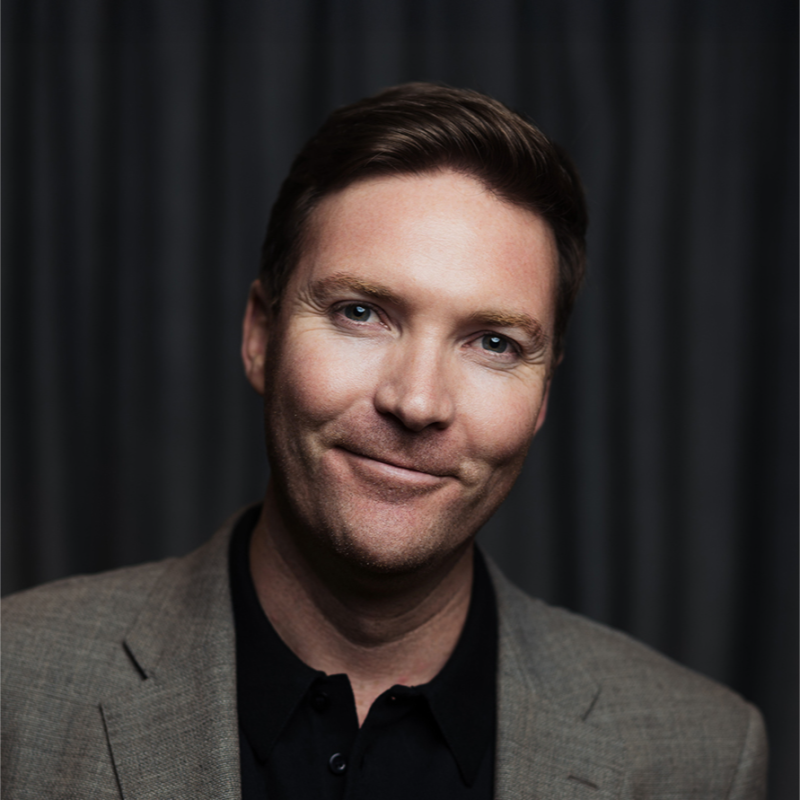
Mark Hurley runs a company that most people who use it never think about. Caruso is fund administration software - the machinery that private-market funds use to onboard investors, run compliance checks, issue capital calls, pay distributions and keep a register of who owns what. It is the paperwork behind the money. Hurley's pitch is that the paperwork should disappear. "We are removing the admin from fund administration," he says, which is the kind of line you can only earn by having actually done it.
As of its April 2026 Series A, Caruso administers roughly $80 billion in assets across more than 900 funds for over 80 fund managers, including the ASX-listed Centuria Capital Group. Those numbers are new. A year earlier the figure was closer to $8 billion. Assets under administration grew about tenfold in twelve months and revenue rose 400%, which is the sort of curve that gets a Sydney-headquartered, Dallas-and-Auckland-run startup a $9.3 million round at an $80 million valuation, led by Icehouse Ventures and GD1 with participation from the private-credit firm Balmain - which is also, usefully, a paying customer.
The tool that ate the company
The origin story is unusually literal. Caruso's technology was not conceived as a startup. It began as an internal tool inside a fund management business - the kind of thing you build because the off-the-shelf options are fragmented, the manual processes are error-prone, and someone on the team is spending their week reconciling bank deposits by hand. The tool worked well enough that in early 2023 Hurley and his co-founder, chief technology officer Oliver Shaw, pulled it out and made it its own company.
This is a familiar pattern in software - the best internal tools are often the ones built by people who felt the pain directly - but it is rare to see a founder go through the full loop of feeling the pain, building the fix, and then deciding the fix was the real business. Hurley had spent years on the customer side of exactly this problem. Caruso is what he wished he'd had.
"For the first time, our customers have a single source of truth for their investor and fund data - across CRM, registry, compliance, capital raising, and the investor portal."
- Mark Hurley, CEO of CarusoThe current framing leans on artificial intelligence, and unlike a lot of 2026 startup positioning, the use case is concrete. Hurley describes two layers: a "system of record," the single database of truth, and a "system of action" sitting on top of it. "People and AI agents working together to do the work faster and more accurately than ever before," he says. In practice that means agents drafting capital-call notices, running know-your-customer and anti-money-laundering checks, screening watchlists, and reconciling bank deposits - the repetitive, rules-heavy tasks that used to eat junior analysts' weeks - while humans handle judgment. It is AI aimed squarely at the boring middle, which is where private markets keep most of their operational cost.
Before this, twice
Hurley is a New Zealander, and Caruso is his third company. In 2014 he founded Little Giant, a product and innovation agency in Auckland that partnered with New Zealand technology startups. Three years later he sold it to Dentsu Aegis Network, the global advertising group, and in that same year - 2017 - he was named a finalist for EY Entrepreneur of the Year. He was in his early thirties.
The next move was into an asset class notorious for being hard to enter. In 2019 he co-founded Jasper, a commercial real estate firm built on the idea that ordinary investors should be able to buy fractional ownership of institutional-quality buildings through a fully digitised onboarding, accreditation and subscription flow. Jasper is where the fund-administration problem became personal - running a property fund means running exactly the investor-onboarding, compliance and capital-raising machinery that Caruso now sells. The thread across all three companies is consistent: Hurley builds the infrastructure his customers cannot build for themselves, then stays out of the way.
"Integrated with that system of record, we give them a system of action: people and AI agents working together to do the work faster and more accurately than ever before."
- Mark HurleyThree cities, one cap table
Caruso is headquartered in Sydney, but the company's centre of gravity is deliberately spread out. Hurley splits his working life between Auckland, where he learned to build, and Dallas, where a lot of the capital he wants to serve actually lives. The company has said it plans to grow past 80 employees across Australia, New Zealand and the United States, with the Australian office expected to roughly double and account for around half of headcount.
Landing in Dallas as a Kiwi founder selling fund software to Americans who have never heard of you is not an obvious growth strategy. It works, to the extent it works, because the product removes a cost that every fund manager recognises. The go-to-market is the demo. The moat is that once a manager's investor register, compliance history and capital-call workflow all live in one place, moving out is genuinely painful - which is the polite way of saying that the boring layer is the deep one.
The other job: writing cheques
Alongside Caruso, Hurley keeps an active early-stage investment portfolio that reads like a tour of the Australasian startup scene: brand-tracking company Tracksuit, investment app Sharesies, compliance firm First AML, fleet-management company Whip Around, employee-engagement platform Joyous, and Narrative. He served as an independent director on the board of The Icehouse, a New Zealand startup incubator - a relationship that came full circle when Icehouse Ventures went on to lead Caruso's funding rounds. Caruso's seed round also drew in Chris Heaslip, the founder of the church-payments company Pushpay, one of New Zealand's rare tech unicorns.
There is a tidy symmetry to a founder whose companies keep circling the same idea - that money moving through private markets is bottlenecked less by capital than by administration - and whose personal bets keep landing on the tools that fix specific, unglamorous frictions. Hurley does not seem especially interested in inventing the future. He is interested in removing the admin, and he has now found a very large number of people willing to pay for that.