A church can remember your wedding, your children’s names and the casserole you brought last winter. Its computers may have a harder time agreeing on your address. Membership lives in one place, donations in another, volunteer schedules somewhere else. ACS Technologies has spent decades working on that gap between knowing people and keeping their records straight.
- What it does: connects church records, giving, accounting and participation.
- Two main routes: Realm for connected daily operations; MinistryPlatform for extensive customization.
- The next chapter: Vanco ownership, closer payment integration and permission-controlled AI.
Founded in 1978 by Harris Rogers, ACS grew around the unglamorous details of religious life. A restricted donation needs proper accounting. A volunteer needs a schedule. A pastor needs to remember a conversation. These are ordinary administrative problems with unusually personal consequences. The company’s opportunity is to make the paperwork useful to the person doing the caring.
01 / The trouble arrived in January
In GraphOn’s account of ACS’s cloud transition, the strain appeared around year-end accounting. Customers running desktop software faced installations, backups and office-bound access. January support waits could reach 45 minutes. Meanwhile, cloud competitors offered access from anywhere. The support queue had become a product problem.
ACS chose two tracks: deliver existing applications remotely through GO-Global, and build a cloud-native alternative over time. A rewrite was expected to take at least five years. Its hosted OnDemand range bought breathing room. The lesson travels beyond church software: preserve the workflows customers depend on while changing how they reach them.
02 / A person has more than one record
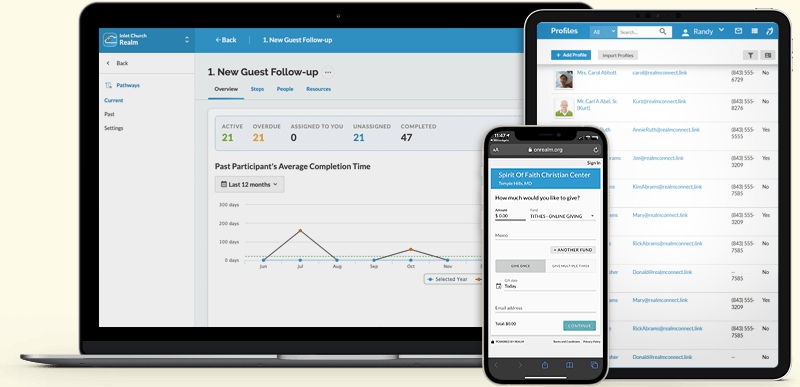
Realm turns that idea into a cloud-based church management service. Staff can work with member profiles, contributions, groups, events and reports. Congregants can update information, find groups and give through the Connect app. Shepherd gives pastoral staff mobile access to care-related information. Optional accounting adds fund tracking, budgeting, disbursements and payroll.
There is a deliberate ladder. Inform serves staff administration. Connect adds congregational participation. Multiply adds multi-campus administration. Selling these layers makes commercial sense: a church can expand its use as more people become involved. It also makes adoption a management decision. Buying an app does little if the congregation never opens it.
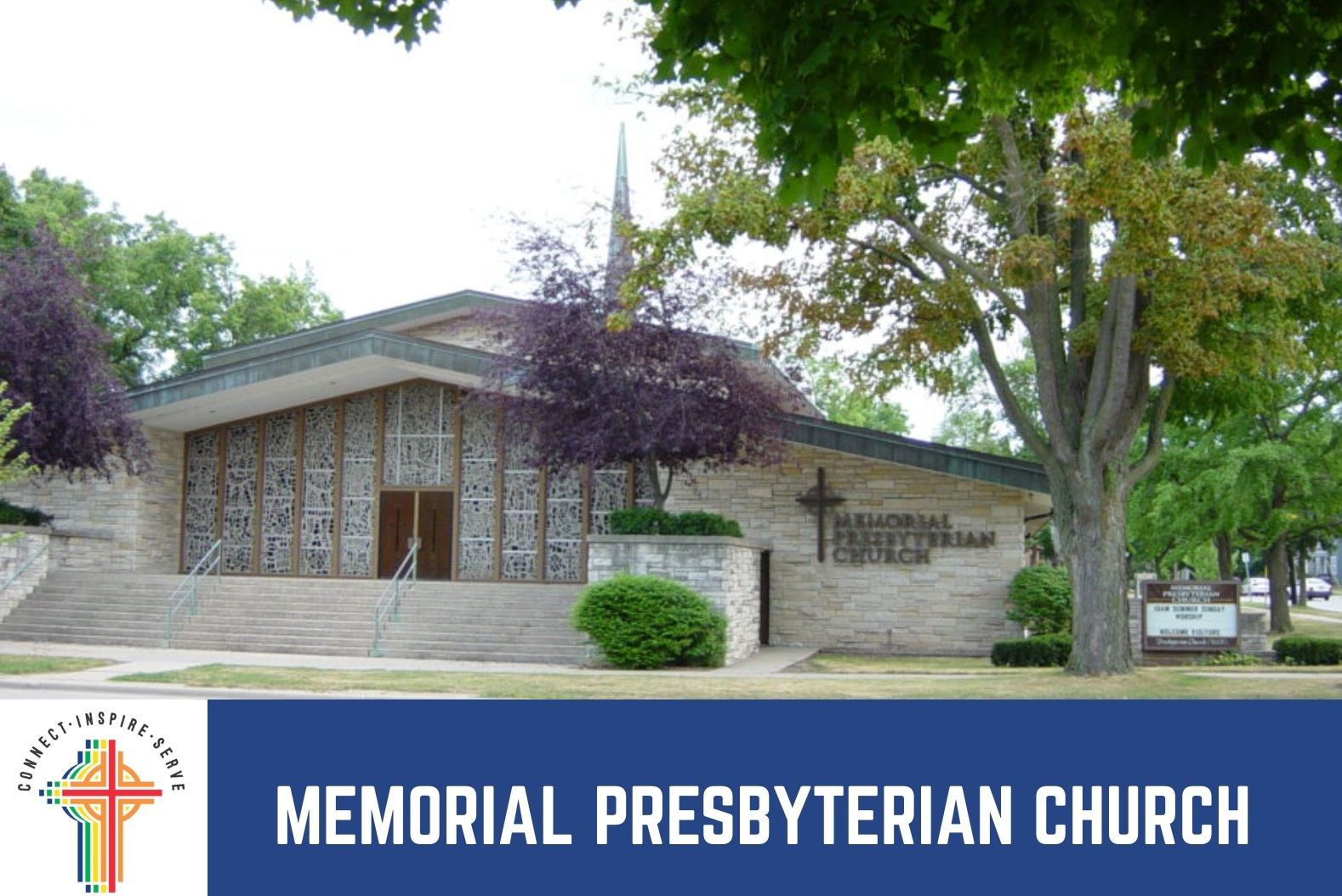
At Memorial Presbyterian Church in Appleton, Wisconsin, roughly 100 people attend weekly. In ACS’s customer account, pastor Mike Goodwin describes using Shepherd to record visits and distinguish private notes from information shared with deacons. The church also uses Realm for communication, volunteers and finances. That is a more revealing use case than another dashboard: deciding who should know what after a pastoral visit.
“I really appreciate the evolving nature of Realm.”
Mike Goodwin, Memorial Presbyterian Church
In an ACS customer story
03 / Some churches need a different machine
MinistryPlatform occupies the more configurable end of the portfolio. ACS brought its maker, Think Ministry, together with managed IT provider Higher Ground in 2021. Large churches, multi-site ministries and Catholic dioceses have structures that resist a simple member list. MinistryPlatform offers custom data structures, APIs and integrations around a shared database.
& eventsGiving
& accountingCare
& follow-up
The surrounding services matter. Higher Ground handles IT infrastructure and support. PocketPlatform supplies branded congregational apps. MissionInsite adds demographic and geographic analysis of the surrounding community. Together, these products address three different questions: who belongs, how the organization operates and who lives nearby.
Alternatives include Planning Center, Pushpay and Rock RMS. Planning Center also connects church activities, records and giving. ACS’s case therefore rests on its particular combination of fund accounting, configurable diocesan systems, community intelligence and human implementation help. Buyers should compare their actual workflows; a long feature list can conceal a poor fit.
04 / The software comes with homework
ACS sells software access alongside services, training and payment-related capabilities. Subscription cost is only one buying question. What data must move? Which accounting functions are needed? Who will maintain permissions? What will payment processing and staff training add? Those decisions determine whether a connected system saves work or merely relocates it.
Published price for one day of on-site Realm training. Continental US travel is included; other locations are quoted separately. Software and payment costs are separate considerations.
The service catalog gets wonderfully specific: MinistryPlatform’s Catholic advanced services lists giving integration setup at $400 and payments integration setup at $800. These are consulting packages, not subscription prices. They reveal where the hard work sits: testing transactions, configuring the system and teaching staff. A connected database still needs somebody responsible for its contents.
For a useful demo, bring a real task: a new family joining a group, a gift assigned to a restricted fund, or a volunteer changing shifts. Ask staff to complete the whole sequence, including the report someone will need afterward. Then decide who will keep each record current. That exercise tests the connections a church will actually rely on.
ACS presents its culture through explicit Christian commitments to serving churches, creating solutions and encouraging colleagues. Its expertise includes teaching people how to use what it builds. Some ministry consultants are former church staff. For a buyer with a small office and rotating volunteers, that familiarity can matter as much as another integration.
05 / First the payment. Then the question.
In December 2025, ACS and Vanco announced their combination after more than a decade of partnership. Vanco’s faith business would operate under the ACS name, with Joe Koehling leading it. The stated aim was fewer handoffs between church management and payments. September 2026 partnership expansions with the ELCA and United Methodist GCFA put Realm into that broader offer.
The mission also has a separate outlet. In July 2025, ACS announced Fulfill, an independent charity intended to support under-resourced churches with software, coaching and guidance. Its target is 100,000 additional churches and ministries by 2050. That remains a goal. It recognizes a practical constraint in this market: organizations can need better administration while lacking the money and staff to adopt it.
The next interface is a question. ACS introduced MinistryPlatform AI in May 2026 and announced MP-MCP in July after a 64-church Pioneer Program. The gateway connects supported AI assistants to church data. ACS says queries follow existing user permissions, sensitive tables are restricted by default, activity is logged and write access starts disabled.
That design offers a useful rule to copy: give new tools only the access their users need. It also exposes the limit. Bad records and careless permissions remain bad records and careless permissions when queried conversationally. ACS’s enduring task is making information reliable enough for somebody to act on it. Sunday’s welcome depends on plenty of work nobody sees.
Open the tools
ACS website ↗ Explore Realm ↗ MinistryPlatform ↗ Company news ↗ Church growth blog ↗
Watch & followRecorded Realm demo ↗ YouTube ↗ Vimeo ↗ LinkedIn ↗ Instagram ↗ Facebook ↗ X ↗