In the back of a movie theater on Coronado Island, Aaron Klein wanted five minutes. Josh Brown had other things to do. It was the fall of 2012, and they were attending Howard Lindzon’s Stocktoberfest conference. Klein had exchanged emails with Brown beforehand. Now he had the software in front of him and an unwilling audience within reach. He persisted. Brown eventually agreed to the demonstration. Twenty minutes later, Brown recalled, he was ready to hand over his credit card.
The episode has the pleasing proportions of a startup fable: a cramped opportunity, a skeptical customer, a founder who keeps talking. Its useful detail is the demonstration. Klein had to show something that an advisor could actually use. Conviction got him a few minutes; the product earned the rest. Brown later became an investor and advisory-board member. A conversation in the back of a theater became a relationship that lasted beyond the sales pitch.
For Klein, the conversation kept going in another sense. Riskalyze, the company he co-founded in 2011, became Nitrogen. He handed over the CEO role in 2023 and stayed on its board. In 2025 he founded Contio, which uses artificial intelligence to help professionals carry meetings into their subsequent work. The subject has changed from investment risk to agendas, context and follow-through. The people on the other side of the desk remain central.
Before the basement, there were boxes
Klein’s first workplace was his father’s wholesale security-equipment business. At twelve, he packed boxes. Inventory, operations and marketing followed. In a 2012 interview, he described how an industry downturn pulled him more deeply into the business while he was still a college student. There was work to be done, and a young family member was a conveniently affordable pair of hands. His apprenticeship involved the unglamorous mechanics by which a company keeps its promises.
He went on to build software and spent roughly four years at a financial-services company developing products. Riskalyze began in his basement. Its founding team brought together Klein, financial advisor Mike McDaniel and technologist Matt Pistone. The problem they pursued sat between the mathematics of investing and the way people behave when the mathematics becomes personal. A portfolio can look perfectly reasonable on a screen and feel quite different when its owner watches it fall.
The number needed a customer
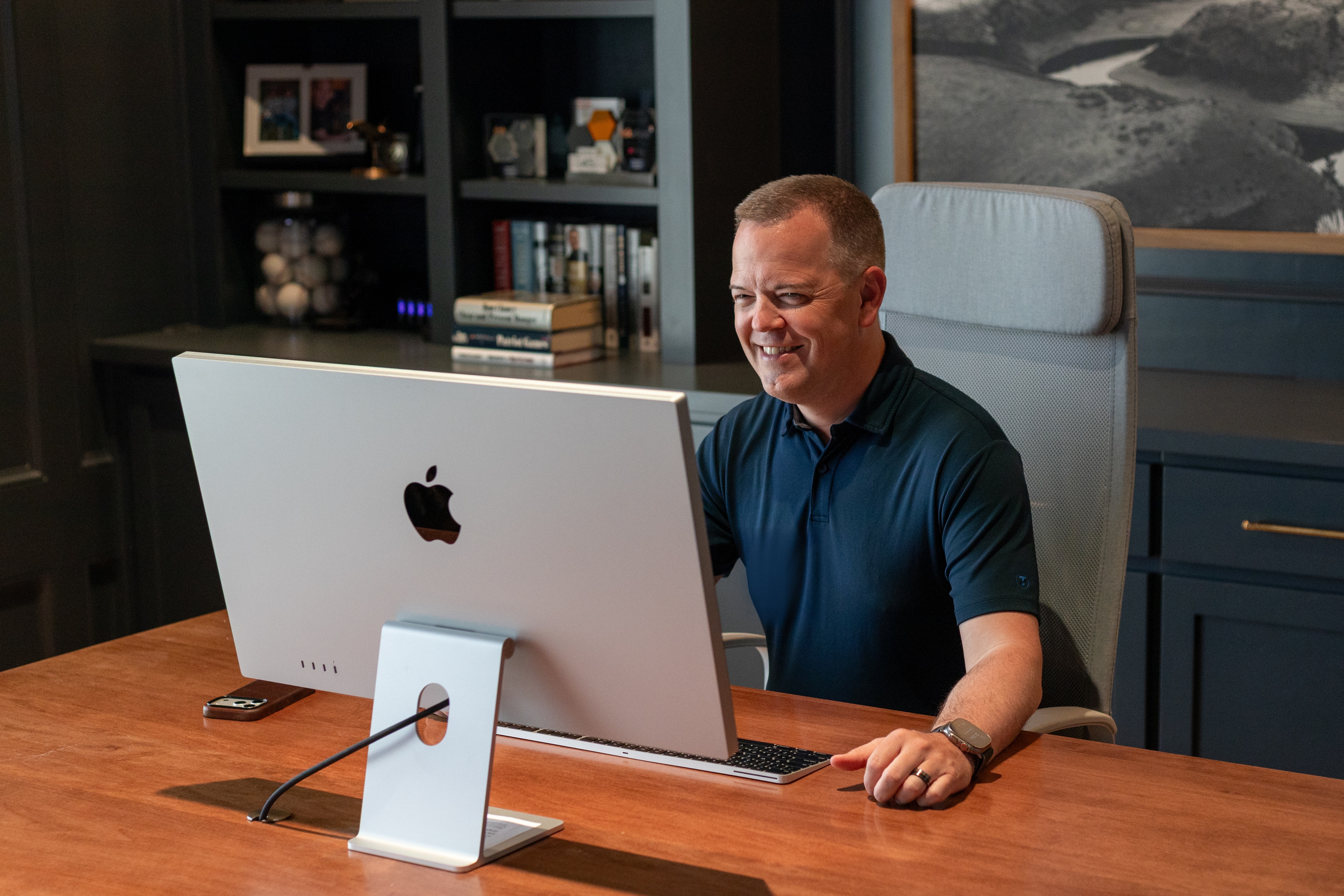
Riskalyze’s Risk Number put investor tolerance and portfolio risk on a scale from 1 to 99. That gave an advisor and a client a shared reference point beyond a label such as conservative or aggressive. A label can sound informative while leaving ample room for disagreement. A number gives the conversation something to interrogate: does the portfolio fit the person who has to live with it?
Klein’s explanation of the product began with behavior. Investors can become eager to accept risk when markets feel comfortable and eager to escape it when markets fall. His aim was to give them a more usable frame for those decisions. The number was a tool for that conversation, rather than a promise that uncertainty could be removed. Putting risk within reach of an ordinary discussion was the commercial idea.
The first version was aimed at self-directed investors. In 2012, users built $2 billion in portfolios on the platform, but the company’s attempts to make money from that consumer product were failing. Attention and validation had arrived without a viable business model. In autumn, the team changed direction. The advisor version emerged from beta in March 2013. Klein described the moment as a last attempt to make the technology work commercially.
Those early portfolios were evidence of use, not a pot of revenue. The team needed a customer with a reason to pay. Advisors gave the product a job inside an existing relationship.
Investor tolerance ↔ Portfolio risk
A conceptual view of the Risk Number scale; not an investment recommendation.Growth, then room for someone else
Riskalyze expanded to serve tens of thousands of financial advisors. FTV Capital invested $20 million in 2016. Hg became majority owner in 2021. In May 2023, the company adopted the Nitrogen name as it broadened its offering. Each change marked a different kind of work: finding paying users, building the organization around them, and carrying a product beyond the thing for which customers first knew it.
Klein’s tenure included 42 consecutive quarters of growth, and the Wealth Management Industry Awards named him CEO of the Year in 2023. Forty-two quarters is ten and a half years. The arithmetic gives the achievement a useful weight. It describes repeated performance across a long stretch of ordinary operating days, rather than one crowded launch party. Someone still had to answer the customers on the morning after.
That November, Nitrogen announced Dan Zitting as Klein’s successor. Klein said he wanted to put more energy into family and contribute through a different role. He remained a director and strategic advisor. He also offered a crisp rule for the transition: “You can only have one CEO at a time.” An outgoing founder may retain the history, the shares and the friendships. The incoming chief still needs authority that employees can understand.
Klein’s answer left little ambiguity about who gets the final word. In his later podcast, Zitting appears as a guest discussing Nitrogen’s adoption of AI. Their conversation continues; the day-to-day leadership belongs to the successor.
Ten and a half years, one quarter at a time.
During Klein’s Riskalyze / Nitrogen tenure.
The calendar came back as a product
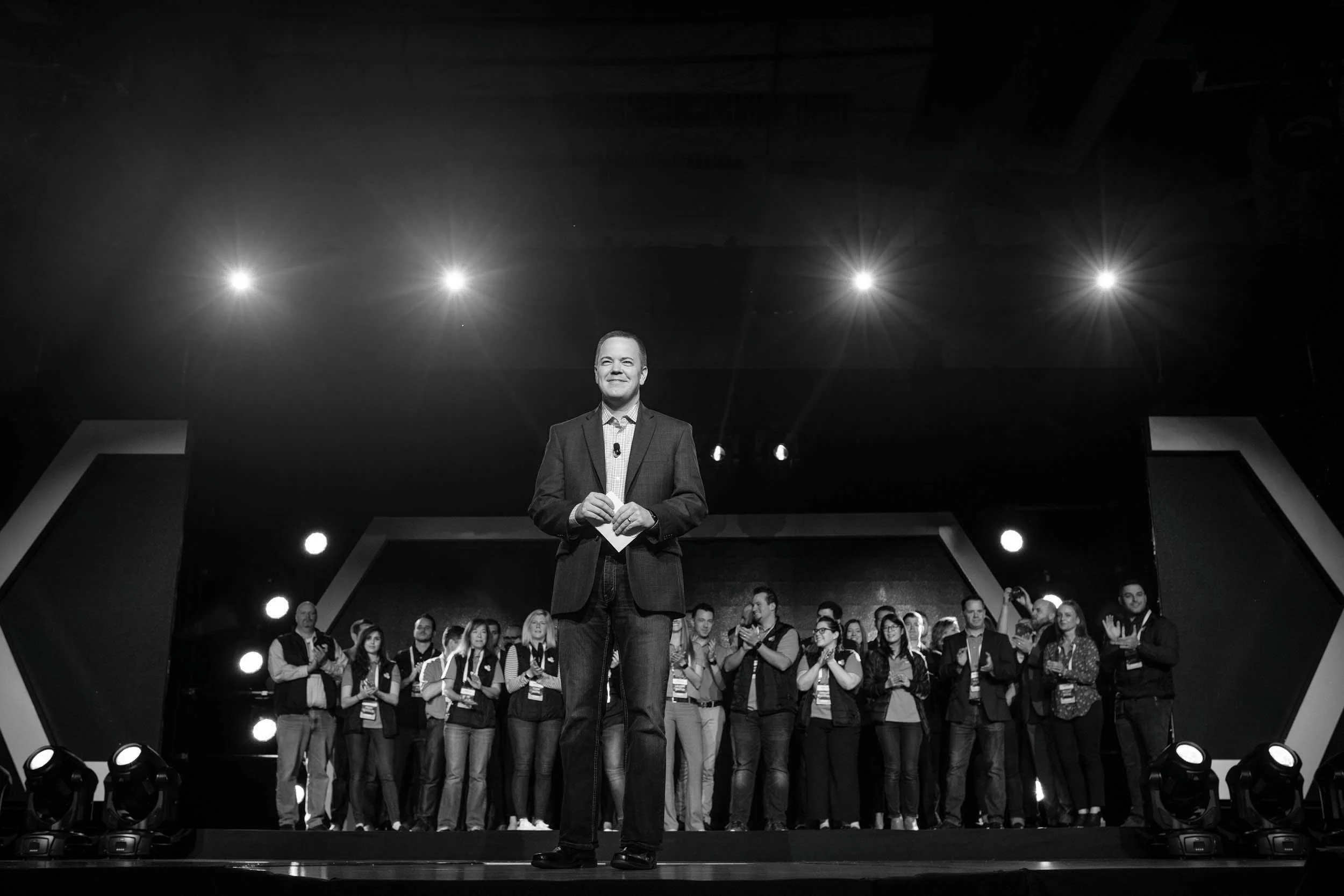
Klein took 2024 off before starting Contio early in 2025. The problem had been accumulating for years. Looking back through his Riskalyze calendars, he counted more than 37,000 meetings over twelve and a half years. He said meetings had occupied around 70 percent of his time. Even allowing for the fact that this was his own retrospective count, it supplies a persuasive explanation for why meeting software caught his attention.
Thirty-seven thousand meetings is enough to develop opinions about an agenda. The irritation he described was fragmentation: agendas in one place, notes in another, documents elsewhere. A conversation could produce a decision while the work required to carry it out remained scattered. Contio began operating on January 2, 2025, with $5.5 million from Klein and other investors. Backers included Scott Hanson, Ric Edelman and Brian McLaughlin.
MeetingOS followed with a January 28, 2026 launch. Its design spans preparation, the meeting itself and subsequent tasks. It can assemble an agenda from existing client information, bring relevant context into a live conversation, and generate notes and follow-up work. Klein returned to financial advisors first, a profession he had spent years serving. He had a new product to explain to people who already knew the earlier one.
The ambition is easy to understand; its test is more demanding. A client conversation needs attention as well as information. A tool that supplies more prompts can also supply more distractions. The practical question for Klein’s second company is whether its help leaves the professional better able to listen. That is a design tension inherent in the proposition, not a result that should be assumed from a product demonstration.
Contio now reaches beyond meeting notes into workflows and first drafts. The requirement to earn a place in a professional relationship has survived the change in technology.
- 01 / BeforePrepare the agenda.
Bring client context. - 02 / DuringSurface relevant details.
Support decisions. - 03 / AfterDraft the next steps.
Carry the work forward.
Three priorities are a crowded podium
Klein’s writing offers another view of the operator behind the products. In a March 2026 essay, he recalls asking a leader for his top priority and receiving three answers. All were worthwhile. One was especially important, yet it was sharing attention with the others. Klein’s response was to give each person one visible first priority and use it to resolve competing demands.
There is some comedy in a three-way tie for first place, until a company has to pay for it. A long task list lets everyone stay occupied without settling the uncomfortable question of what deserves to finish first. Klein’s preference is concrete enough to argue with. Name the priority. Let colleagues see it. Return to it when the day fills with apparently urgent alternatives.
His hiring essay takes a similarly skeptical view of polish. A candidate initially impressed him, then faltered when asked for the people and events behind an account of rebuilding a process. Klein wanted a specific story rather than a recitation of management principles. He advocates defining the job’s outcomes before interviewing. It is the same insistence on a usable test: a persuasive description should eventually meet evidence.
Let the uncomfortable sentence arrive
In September 2026, Klein wrote about observing a leadership meeting in which nobody told a CEO that a key customer had left a project. The leader’s previous reactions had taught people to delay bad news. The information was being managed around him when it should have helped him act. Klein’s proposed first response to an early warning is brief: “Thank you for telling me.” Accountability can follow after the facts are in the room.
The story adds a complication to the familiar portrait of a forceful founder. Insistence is useful when asking a reluctant advisor to watch a demo. Inside a company, a leader also has to make it possible for someone else to insist that something has gone wrong. The two settings ask for different behavior. Klein’s writing acknowledges that culture is shaped by those responses, including the small ones people remember.
He has applied a related appetite for scrutiny to Contio’s governance, recruiting two former Riskalyze directors to the new board. Before a board meeting, he reserves time to think through weaknesses and difficult questions. There is a modest discipline in voluntarily creating a room where your reasoning will be challenged. Owning the company does not relieve its founder of the need to explain himself.
“Thank you for telling me.”
Aaron Klein, on receiving bad news early
A place to come home to
Klein lives in Eagle, Idaho, with his wife Cacey and their three children. He enjoys reading, movies and cycling along the Boise River Greenbelt. He and Cacey co-founded Hope Takes Root, supporting vocational training and mentoring for orphans and at-risk children in Ethiopia. He also serves on the boards of Mountain States Policy Center and Advisors Excel. His public work reaches beyond the software businesses.
The civic strand predates Riskalyze: he served as a Sierra College trustee from 2004 to 2016, winning election three times. His personal biography gives the departure a joke about good behavior. The humor sits comfortably beside the seriousness of his commitments. A calendar can hold board meetings, family time and a bicycle ride, though his own career supplies ample evidence that the allocation needs deliberate attention.
His podcast, Beyond the Meeting, extends his interest in how leaders make decisions. Its guests include his Riskalyze co-founder Mike McDaniel, author Morgan Housel and successor Dan Zitting. He returns to stories with people, choices and consequences in them. That preference also explains why a polished interview answer did not satisfy him. He wants to know what happened when somebody had to do the work.
The Coronado demonstration remains a useful opening scene because it was so small. Five requested minutes. One person who could decline. A product that had to justify the interruption. Years of growth followed, then a handoff, a pause and another company. Klein is asking for room in the conversation again. This time he wants the useful part to survive after everyone leaves.
Continue the conversation
Read Klein’s personal site, essays and Beyond the Meeting. Find him on LinkedIn and X.
Watch his conversation with Dan Zitting or Derrick Kinney. Explore Contio and Nitrogen.